Key Findings
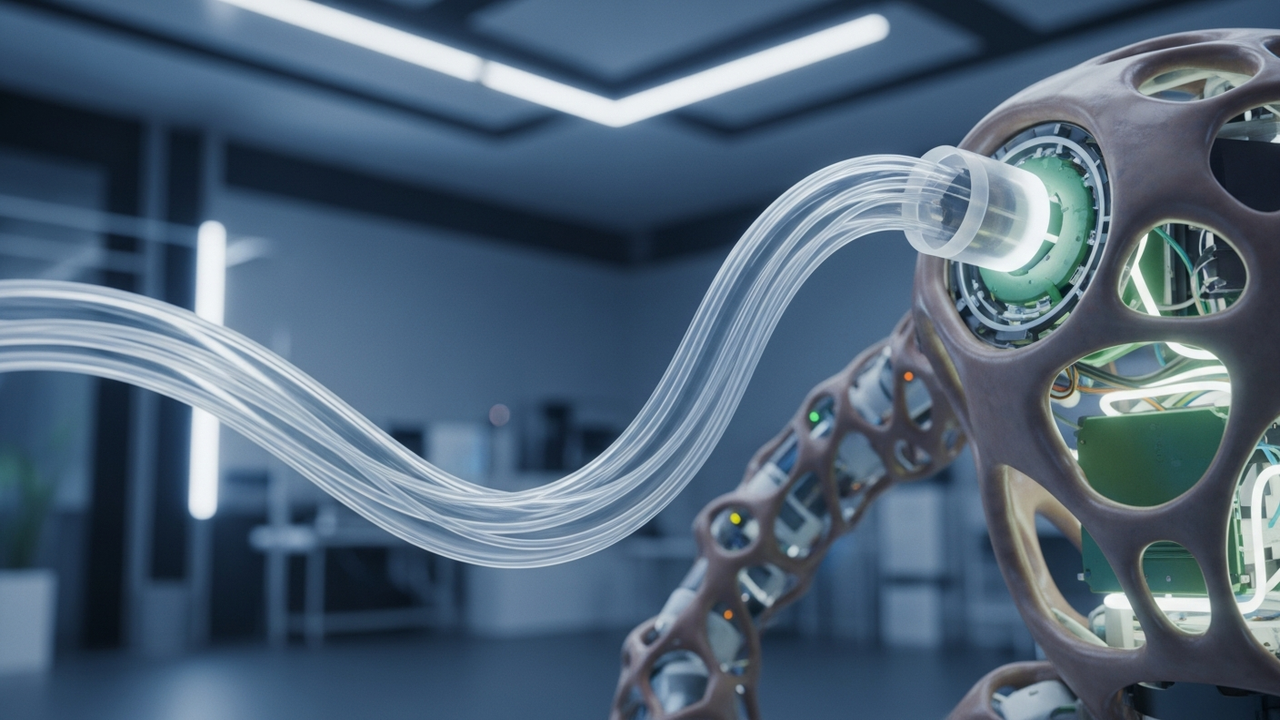
Solid-state batteries (SSBs) are emerging as a transformative technology for robotics, particularly in the realm of soft robotics, addressing the inherent limitations of conventional lithium-ion batteries. A key finding from this perspective article is the significant potential of polymer-based solid electrolytes to provide flexible power solutions that can withstand substantial strains, a critical requirement for soft robotic systems.
Technical / Clinical Details
The article provides a comprehensive survey of current solid electrolyte technologies, categorizing them into oxide-, sulfide-, and polymer-based materials. Each class offers distinct advantages for robotic applications. Polymer electrolytes, in particular, stand out due to their inherent flexibility, which is crucial for robots designed to deform and change shape. Beyond flexibility, SSBs, irrespective of their specific electrolyte chemistry, offer superior intrinsic properties such as non-flammability and broad temperature tolerance, making them significantly safer and more robust than their liquid-electrolyte counterparts. These properties are evaluated through the lens of specific robotic applications, demonstrating how they can directly translate into improved operational safety and expanded environmental applicability for robots.
Background & Context
The advancement of robotics is increasingly constrained by power source limitations. Traditional lithium-ion batteries, while energy-dense, suffer from issues like rigidity, thermal instability, and the risk of electrolyte leakage or fire, which hinder their integration into more agile, human-safe, or extreme-environment robots. Soft robotics, a burgeoning field, requires power sources that can bend, stretch, and conform without compromising performance or safety. SSBs, with their solid-state architecture, eliminate the volatile liquid electrolyte, offering a path toward safer, more reliable, and physically adaptable power solutions essential for the next generation of robotic systems.
Strategic Significance & Outlook
The integration of solid-state battery technology represents a new frontier for the robotics industry. By enabling safer, more flexible, and resilient power systems, SSBs will unlock novel applications in fields such as biomimetic robotics, medical devices, and extraterrestrial exploration. The capacity of polymer-based electrolytes to endure significant mechanical deformation while maintaining high energy density will allow for the development of robots that are more interactive, autonomous, and capable of operating in complex, dynamic environments. This technological shift is expected to extend the operational lifespan of robots, broaden their functional scope, and significantly enhance overall system safety, marking a pivotal step towards highly advanced, pervasive robotic integration in society.
Get our weekly technology intelligence — free
Receive an infographic that lets you judge at a glance whether each field’s analysis report is worth reading.
Subscribe Free — Weekly Tech Intelligence
By subscribing, you’ll receive Troy-Technical’s weekly technology intelligence newsletter.
- Your email and selected fields are used only to deliver the newsletter.
- We never share your information with third parties.
- You can unsubscribe anytime via the link in each email.
See our Privacy Policy for details.
Takes about a minute · Unsubscribe anytime