Key Findings
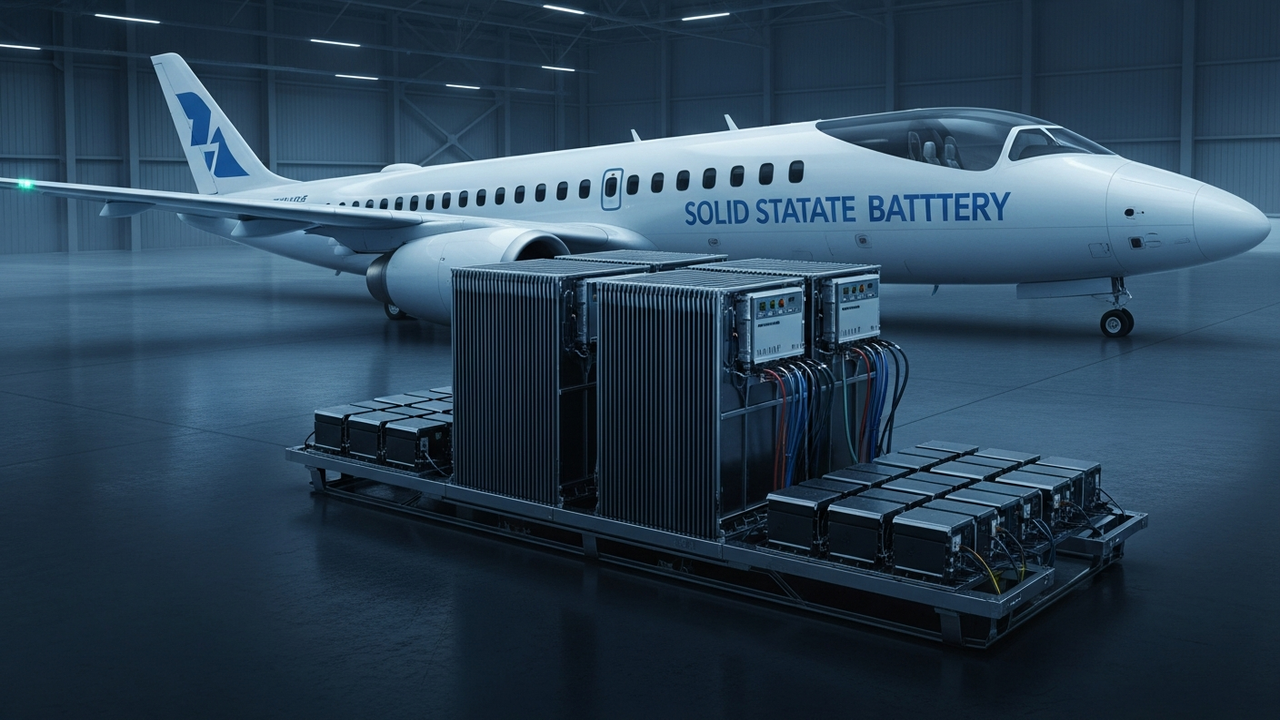
A Reddit post has reported the successful completion of the “World’s First Crewed Solid-State Flight.” The solid-state battery used for this pioneering flight boasts impressive specifications: a nominal voltage of 22.2V, a nominal capacity of 33000mAh, and an exceptional energy density of 410Wh/kg. This achievement marks a significant milestone in advancing the future of electric aviation, signaling a major leap forward in battery technology for aerial applications.
Technical / Clinical Details
This solid-state battery technology holds the potential to revolutionize aviation applications by eliminating the safety risks associated with conventional liquid electrolytes and enabling significantly higher energy densities. An energy density of 410Wh/kg is substantially higher than existing lithium-ion batteries, meaning aircraft can achieve longer flight ranges and carry heavier payloads. It is highly probable that this type of solid-state battery incorporates polymer-based solid electrolytes, which contribute to reduced weight and enhanced flexibility, offering new design freedoms for aircraft. Solid electrolytes inherently improve aircraft safety by minimizing the risk of short circuits and significantly suppressing the potential for thermal runaway, a critical factor for aerospace applications.
Background & Context
The aviation industry is under immense pressure to electrify its fleet to address climate change concerns and reduce fuel costs. However, the primary challenge for aviation electrification has been developing batteries that offer both high energy density and lightweight properties. Previous battery technologies have not delivered sufficient performance for electrifying existing aircraft, making manned electric flight particularly challenging. The success of this “World’s First Crewed Solid-State Flight” suggests that major technological barriers in aviation electrification have been overcome, raising considerable expectations for the commercialization of electric aircraft.
Strategic Significance & Outlook
This advancement in solid-state battery technology is expected to accelerate the development of electric aircraft and profoundly impact future urban air mobility (UAM) and short-to-medium-range regional air transport. Safer, lighter, and higher energy density batteries will directly translate into extended flight durations, simplified charging infrastructure, and reduced operational costs. As further scaling and cost reduction efforts progress, electric aircraft could become a sustainable and economically viable alternative to traditional jet-fueled aircraft. This trajectory will accelerate the decarbonization of the entire aviation industry, bringing closer a future of environmentally friendly air travel, and positioning this technology as a global game-changer.
Get our weekly technology intelligence — free
Receive an infographic that lets you judge at a glance whether each field’s analysis report is worth reading.
Subscribe Free — Weekly Tech Intelligence
By subscribing, you’ll receive Troy-Technical’s weekly technology intelligence newsletter.
- Your email and selected fields are used only to deliver the newsletter.
- We never share your information with third parties.
- You can unsubscribe anytime via the link in each email.
See our Privacy Policy for details.
Takes about a minute · Unsubscribe anytime