Key Findings
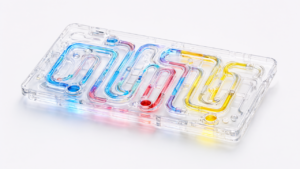
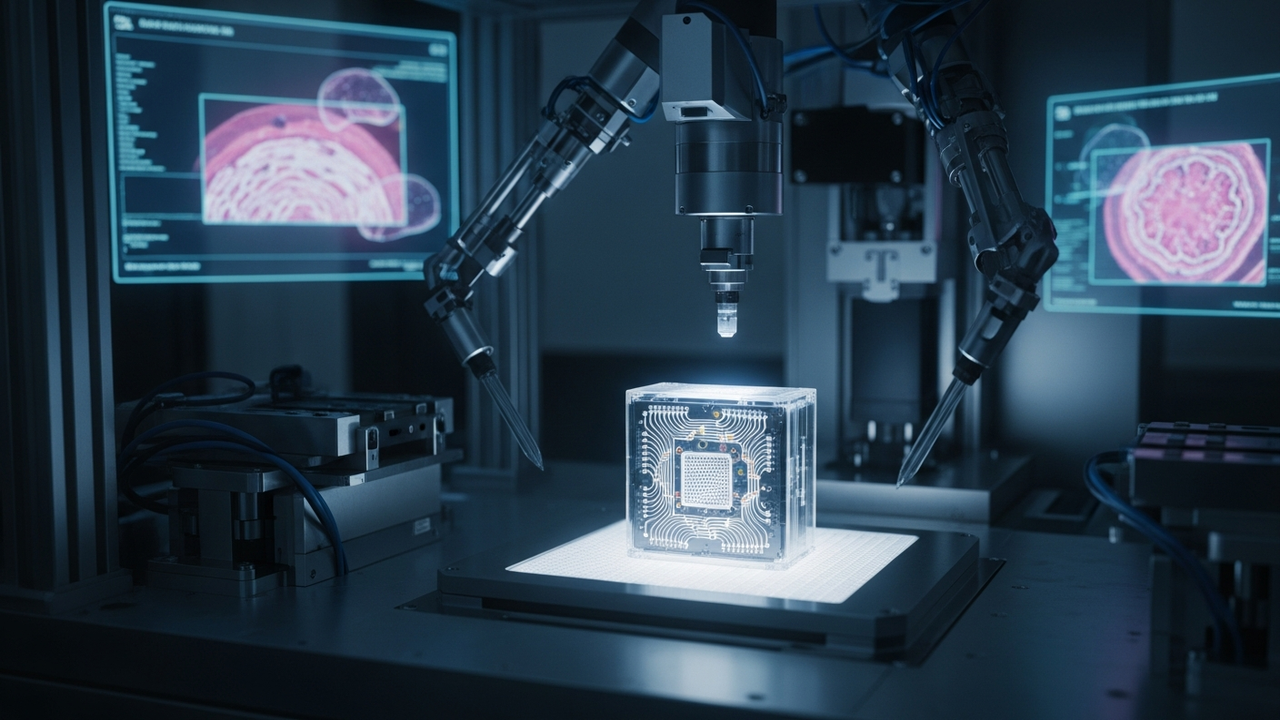
Research highlighted in PubMed Central (PMC) details revolutionary advancements in sensor-integrated organ-on-chip (OoC) devices. The report emphasizes the development of an integrated OoC model platform that effectively incorporates multisensory systems for both drug screening and tissue engineering applications. This system achieves complete automation, significantly reducing the manual labor required for high-throughput and long-term biological analysis. This dramatically enhances research efficiency and promises more reliable experimental outcomes.
Technical & Clinical Details
The developed OoC platform integrates multiple sensors directly onto the chip, enabling real-time monitoring of diverse biological parameters at the cellular level, such as pH, oxygen concentration, metabolites, and mechanical stress. Notably, a new integrated mechanical sensor technology can quantify the dynamics of biological membranes and the effects of drugs on specific cell types, including heart and liver cells. This capability is critical for early assessment of cardiotoxicity and hepatotoxicity in drug candidates. The automated workflow streamlines processes from sample handling to data acquisition and analysis, ensuring highly reproducible experimental results. This provides an ethical and efficient alternative to traditional animal testing for drug evaluation.
Background & Context
Organ-on-chip technology holds immense promise for improving the accuracy of efficacy and toxicity assessments in early drug development stages and for reducing reliance on animal testing. However, recreating complex multi-organ systems and achieving long-term, real-time physiological monitoring have been major challenges for previous OoC technologies. The advancements in sensor integration and automation presented here overcome these hurdles, significantly enhancing the practical utility of OoC devices. This represents a fundamental enabling technology for realizing personalized medicine and accelerating the drug screening process for new drug candidates.
Strategic Significance & Outlook
This advancement in sensor-integrated OoC devices is poised to revolutionize pharmaceutical research and personalized medicine. Future developments are expected to include multi-organ interaction models that mimic more complex physiological responses, as well as patient-specific OoC models. Furthermore, integration with AI will enhance the capability to automatically identify new biomarkers and drug response patterns from vast sensor datasets. This will be a critical step towards reducing the cost and time of drug development and delivering safer, more effective therapeutics to patients globally.
Source: https://pmc.ncbi.nlm.nih.gov/articles/PMC7922590/
Get our weekly technology intelligence — free
Receive an infographic that lets you judge at a glance whether each field’s analysis report is worth reading.
Subscribe Free — Weekly Tech Intelligence
By subscribing, you’ll receive Troy-Technical’s weekly technology intelligence newsletter.
- Your email and selected fields are used only to deliver the newsletter.
- We never share your information with third parties.
- You can unsubscribe anytime via the link in each email.
See our Privacy Policy for details.
Takes about a minute · Unsubscribe anytime