Background
The burgeoning field of artificial intelligence (AI), particularly in image recognition and computer vision, demands immense computational resources and power. Traditional electronic processors are increasingly encountering limitations in improving power efficiency and performance, largely due to the deceleration of Moore’s Law. Optical computing presents an attractive alternative, offering inherent advantages such as ultra-high speed, low latency, and significantly lower power consumption by leveraging photons as information carriers instead of electrons. However, its widespread practical implementation has been hindered by persistent challenges including physical bulk, design complexity, and a lack of versatility. This research directly addresses these obstacles, proposing a pragmatic solution specifically tailored for image classification, a cornerstone task in numerous AI applications.
Key Findings
The rapid proliferation of artificial intelligence (AI) has underscored the limitations of traditional electronic computing, creating an urgent demand for faster and more energy-efficient computational approaches. Addressing this critical challenge, a recent research paper introduces and validates a groundbreaking “broadband, compact, and training-free” optical processor designed for parallel image classification. This innovative device is constructed upon novel wavy diffractive structures. This breakthrough promises to effectively surmount the primary limitations of prior optical computing implementations—specifically, their bulky physical footprint, inherent wavelength specificity, and reliance on intricate training protocols—thereby substantially enhancing both scalability and parallel processing capabilities.
Technical Details
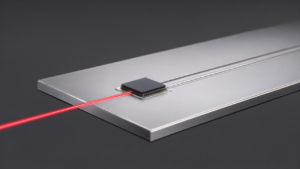
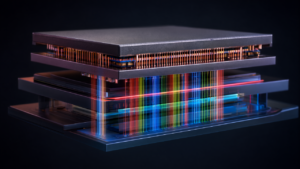
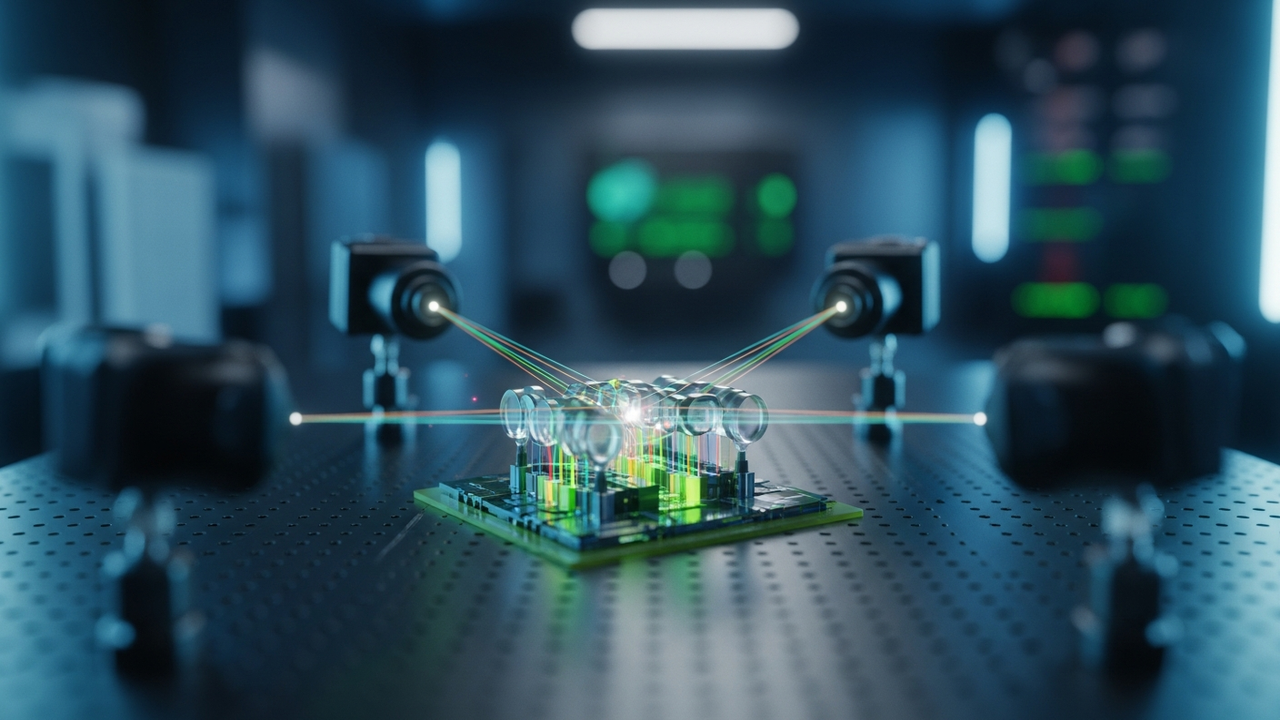
This novel optical processor ingeniously harnesses the fundamental physical laws governing light’s interaction with diffractive structures to process image data in parallel. Specifically, as incident light traverses microstructures meticulously engineered with a wavy pattern, different angles and patterns of light are precisely focused to designated output positions. This mechanism facilitates sophisticated feature extraction and classification without the need for any prior training. Consequently, computationally intensive operations—particularly convolutional operations typically central to deep learning models—can be executed directly through optical phenomena. The training-free nature of the system dramatically simplifies deployment and operation, concurrently achieving substantial reductions in energy consumption. Furthermore, its broadband capability allows for the simultaneous processing of diverse light wavelengths, significantly enhancing information throughput. The miniaturized design is a key enabler for seamless integration into edge AI devices and embedded systems, thus unlocking new frontiers for AI applications.
Strategic Significance and Outlook
This broadband, compact, and training-free optical processor is poised to significantly accelerate the adoption of optical computing within the AI domain. Its combination of high performance and remarkably low power consumption will offer a decisive advantage, particularly for edge AI applications demanding real-time image recognition, such as autonomous driving, sophisticated surveillance systems, and advanced medical imaging. The training-free characteristic notably reduces development costs and timelines, facilitating the rapid market introduction of innovative AI solutions. Looking ahead, it is anticipated that the design principles underpinning these wavy diffractive structures will be further applied to develop optical processors capable of tackling even more complex AI tasks, including advanced object detection and segmentation. This technology holds profound potential to physically extend the capabilities of AI without encountering fundamental electronic limitations, thereby contributing to the creation of a more sustainable and powerful AI ecosystem.
Source: https://pubmed.ncbi.nlm.nih.gov/42319964/
Get our weekly technology intelligence — free
Receive an infographic that lets you judge at a glance whether each field’s analysis report is worth reading.
Subscribe Free — Weekly Tech Intelligence
By subscribing, you’ll receive Troy-Technical’s weekly technology intelligence newsletter.
- Your email and selected fields are used only to deliver the newsletter.
- We never share your information with third parties.
- You can unsubscribe anytime via the link in each email.
See our Privacy Policy for details.
Takes about a minute · Unsubscribe anytime