Key Findings
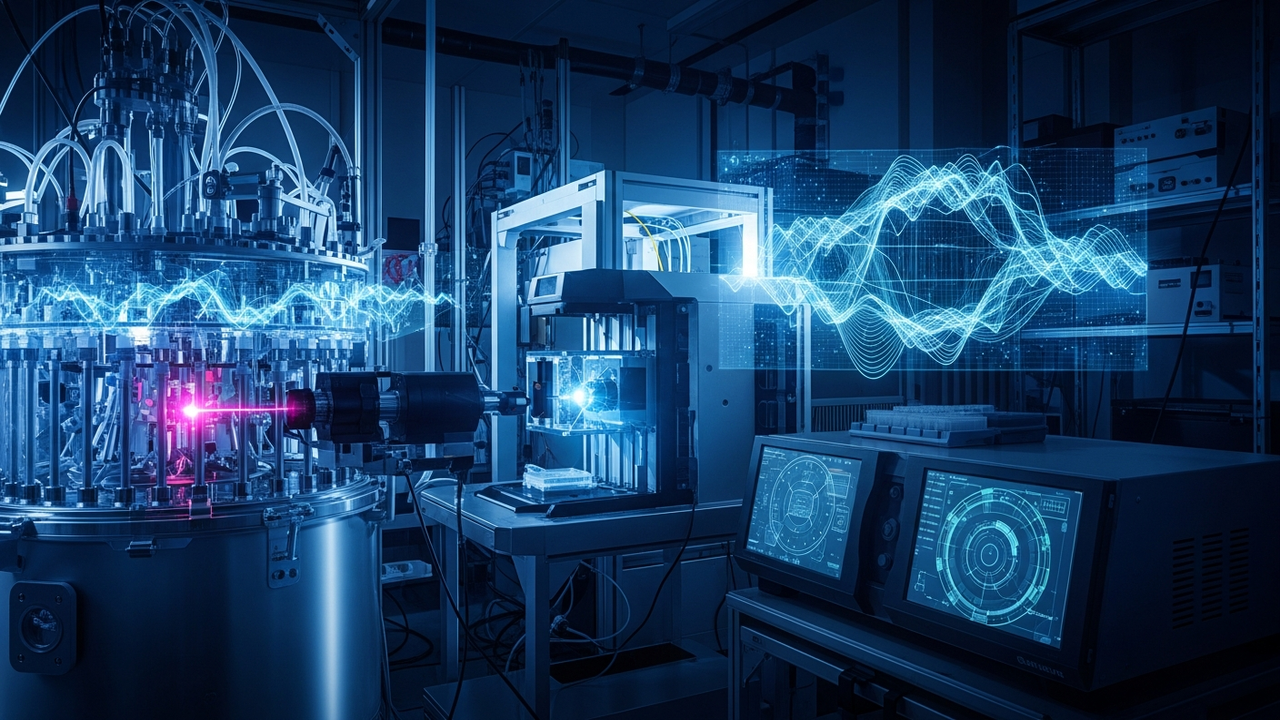
An innovative study published on arXiv introduces a novel approach to significantly enhance cell culture process forecasting accuracy: fusing Raman spectroscopy data with a deep learning model called ‘Multipath Adaptive Gated Bottleneck Latent ODE (MAGBLO).’ This method leverages high-frequency data collected in real-time from Raman spectroscopy, transforming and augmenting it with machine learning soft sensors to enrich information from typically sparse offline measurements (e.g., cell concentration or metabolite levels from sampling). This enables more precise capture of process dynamics and the construction of robust predictive models.
Technical / Clinical Details
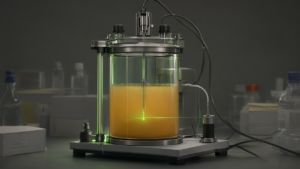
- Raman Spectroscopy Data Fusion: Raman spectroscopy is a powerful Process Analytical Technology (PAT) capable of non-destructive, real-time measurement of critical metabolites and physicochemical parameters like glucose, lactate, and cell density in cell culture processes. This research maximizes the high-frequency information from Raman data, providing dynamic context to sparse offline sampling data.
- Machine Learning Soft Sensors: Raw spectral data from Raman spectroscopy is complex, making direct mapping to cell culture parameters challenging. Machine learning soft sensors are introduced here to process Raman data and transform it into variables with direct biological meaning, such as cell concentration or specific metabolite levels. This allows the predictive model to utilize more interpretable input data.
- Multipath Adaptive Gated Bottleneck Latent ODE (MAGBLO) Model: This deep learning model is a type of Neural Ordinary Differential Equation (NODE) specifically designed to capture the dynamics of continuous processes over time. By incorporating Gated Bottleneck and Multipath Adaptive structures, it efficiently extracts relevant features and enhances the ability to learn long-term process dependencies. This enables high-accuracy prediction of complex variations from early culture stages.
- Augmenting Offline Measurements and Robust Training: The combination of Raman data fusion and the MAGBLO model complements reliance on typically expensive and time-consuming offline measurements. This enables more frequent monitoring, allowing the model to be trained with richer information and exhibit robust predictive performance even against unseen process variations.
Background & Context
Biopharmaceutical manufacturing, particularly cell culture processes, has faced significant challenges in maintaining optimal production conditions and ensuring product quality consistency due to inherent complexity and variability. Real-time monitoring technologies (PAT) and data-driven approaches are key to addressing these challenges. However, effectively integrating high-frequency PAT data with low-frequency biological measurements to build accurate predictive models has remained difficult.
Strategic Significance & Outlook
The proposed approach of Raman data fusion and the MAGBLO model in this research has the potential to bring significant advancements in cell culture process prediction and control. This will improve the efficiency of biopharmaceutical manufacturing, enhancing product yield and quality consistency through optimized culture conditions. In the future, such AI-driven predictive models are expected to become core technologies for fully automated ‘smart biofactories,’ contributing to reduced downtime, improved cost-efficiency, and ultimately, faster delivery of high-quality therapeutics to patients.
Source: https://arxiv.org/html/2606.26520v1
Get our weekly technology intelligence — free
Receive an infographic that lets you judge at a glance whether each field’s analysis report is worth reading.
Subscribe Free — Weekly Tech Intelligence
By subscribing, you’ll receive Troy-Technical’s weekly technology intelligence newsletter.
- Your email and selected fields are used only to deliver the newsletter.
- We never share your information with third parties.
- You can unsubscribe anytime via the link in each email.
See our Privacy Policy for details.
Takes about a minute · Unsubscribe anytime