Key Findings
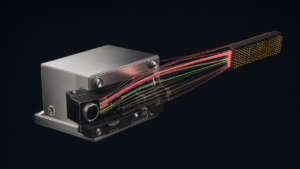
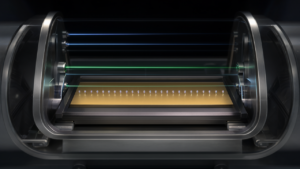
IQM Quantum Computers has announced a groundbreaking achievement in quantum error correction (QEC) with the development of “directional tile codes.” This innovation successfully reduces logical error rates by up to 1,000-fold compared to conventional surface codes. This breakthrough represents a crucial milestone in IQM’s ambitious roadmap to achieve large-scale, fault-tolerant quantum computing by 2030, significantly accelerating the potential for commercial quantum applications.
Technical Details
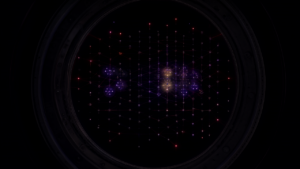
- Error Rate Reduction with Directional Tile Codes: IQM’s directional tile codes introduce a novel quantum error correction (QEC) approach that efficiently leverages qubit interactions to effectively suppress quantum information loss and error propagation. While surface codes are a standard and well-established method for quantum error correction, IQM’s new codes demonstrate a dramatic performance improvement, achieving up to a 1,000-fold reduction in logical error rates. This substantial enhancement enables more stable logical qubit operations, which is critical for the reliable execution of practical quantum algorithms.
- Pathway to Fault-Tolerant Computing: This technical advancement underpins IQM’s strategic goal of delivering large-scale, fault-tolerant quantum computing by 2030. Fault-tolerant quantum computers are systems specifically designed to accurately perform complex computations for extended periods by efficiently correcting errors that occur at the individual physical qubit level, thereby overcoming the inherent fragility of quantum states.
- Collaboration with European Universities: This significant breakthrough was achieved through close collaboration with leading European universities. Such robust academic-industry partnerships are vital for bridging fundamental research with applied development, thereby accelerating the rapid commercialization of innovative quantum technologies.
Background and Context
Quantum computing garners significant global attention as a potential solution for problems currently intractable for classical computers. However, the inherently delicate nature of qubits makes them highly susceptible to errors, rendering quantum error correction (QEC) one of the most critical and challenging research areas for building practical, large-scale quantum computers. This achievement by a European company like IQM underscores Europe’s increasing prominence and leadership as a key player in global quantum technology development. Such improvements in quantum computer performance are poised to revolutionize diverse industrial sectors, including drug discovery, advanced materials science, and financial modeling.
Strategic Significance and Outlook
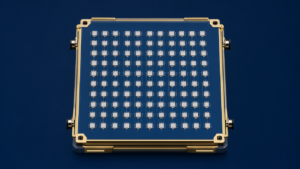
Building on this foundational technical success, IQM aims to dramatically scale its quantum systems to one million qubits, accelerating the path toward commercially viable, large-scale quantum computers. The company’s active preparations for a Nasdaq listing further underscore its ambitious growth strategy and the high expectations from investors for its market potential. The introduction of directional tile codes has the potential to play a decisive and transformative role in transitioning quantum computing from a research-intensive, experimental phase to a practical, application-driven era, with significant future developments and widespread adoption now more tangibly anticipated.
Get our weekly technology intelligence — free
Receive an infographic that lets you judge at a glance whether each field’s analysis report is worth reading.
Subscribe Free — Weekly Tech Intelligence
By subscribing, you’ll receive Troy-Technical’s weekly technology intelligence newsletter.
- Your email and selected fields are used only to deliver the newsletter.
- We never share your information with third parties.
- You can unsubscribe anytime via the link in each email.
See our Privacy Policy for details.
Takes about a minute · Unsubscribe anytime