Key Findings
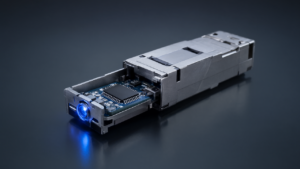
Linear Pluggable Optics (LPO) modules are gaining significant attention and undergoing extensive evaluation within the industry as a critical solution for reducing power consumption in short-reach connections within AI data centers. By obviating the need for expensive and power-hungry Digital Signal Processing (DSP) chips, LPO holds the potential to reduce power consumption by up to 25% compared to conventional DSP-based pluggable optical modules.
Technical / Clinical Details
- The core of LPO technology lies in optimizing the performance of modulators, drivers, receivers, and transimpedance amplifiers (TIAs) to enhance signal linearity. This minimizes signal distortion, enabling high-speed data transmission without the complex compensation processing typically performed by DSPs.
- Specifically, LPO supports various data rates, including 200G, 400G, and 800G, making it ideal for applications in environments with relatively good signal quality, such as intra-rack connections or very short inter-rack links. The absence of a DSP not only reduces module manufacturing costs but also shortens optical module latency, thereby improving the real-time processing capabilities of AI/HPC clusters.
- Leading optical transceiver vendors are actively engaged in promoting LPO interoperability and standardization, aiming to establish a robust ecosystem.
Background & Context
In AI data centers, the scaling of GPU clusters demands hundreds of gigabits to terabits of interconnect bandwidth. However, high-performance DSP chips are costly and consume significant power, imposing a substantial burden on data center operational costs and thermal management. Particularly for short-reach connections, the complex functionalities of DSPs are often unnecessary, leading to a demand for simpler, more power-efficient solutions. LPO has emerged as an optimal choice for this specific niche, serving edge or Top-of-Rack (ToR) switches within data centers.
Strategic Significance & Outlook
The extensive evaluation and deployment of LPO could bring about a significant shift in AI data center design philosophy. LPO and conventional DSP-equipped optical modules are expected to play complementary roles, addressing different distance and application requirements. The widespread adoption of LPO will provide data center operators with more cost-effective and power-efficient options for specific connections, contributing to a reduction in overall Total Cost of Ownership (TCO). The LPO market is projected for significant growth by 2027, becoming an important component of AI infrastructure.
Source: https://www.optical-connections.com/news/lpo-ai-data-centers-evaluation/
Get our weekly technology intelligence — free
Receive an infographic that lets you judge at a glance whether each field’s analysis report is worth reading.
Subscribe Free — Weekly Tech Intelligence
By subscribing, you’ll receive Troy-Technical’s weekly technology intelligence newsletter.
- Your email and selected fields are used only to deliver the newsletter.
- We never share your information with third parties.
- You can unsubscribe anytime via the link in each email.
See our Privacy Policy for details.
Takes about a minute · Unsubscribe anytime