Key Findings
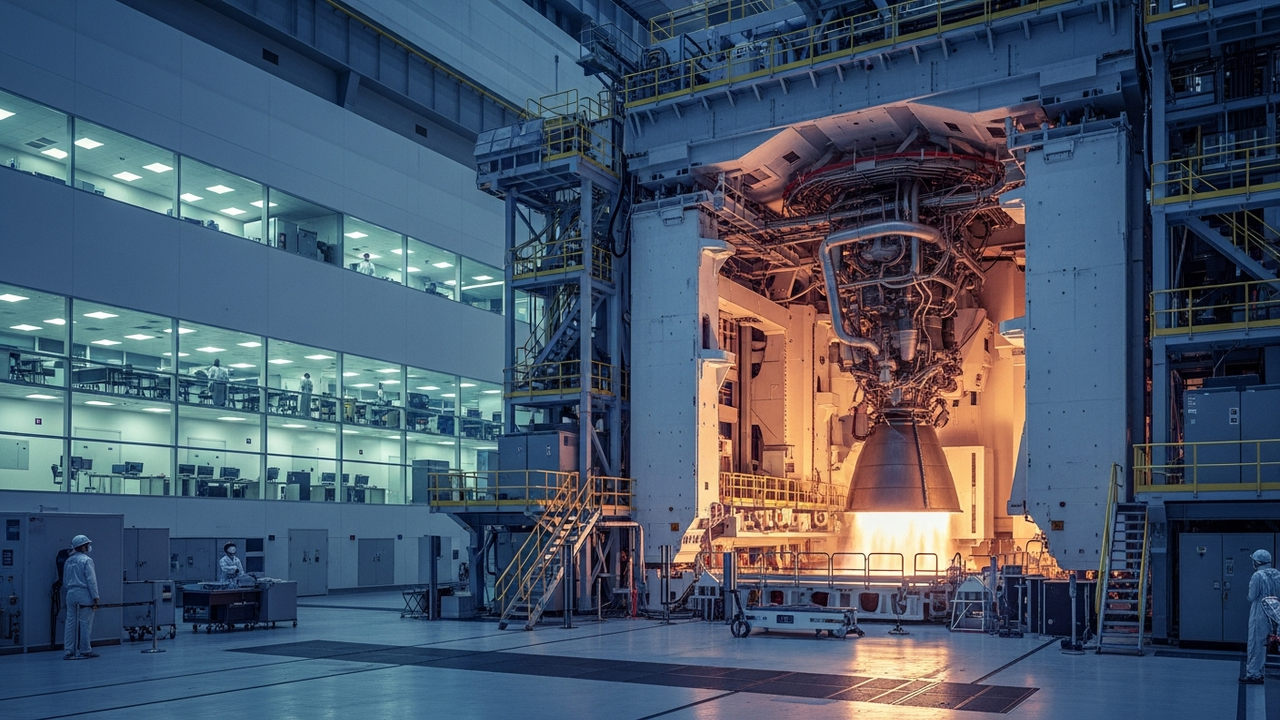
Chinese commercial space company CAS Space has successfully completed a long-duration certification test for its Kinecore-2 liquid oxygen/kerosene engine, a critical component for the reusable Kinetica-2 (Lijian-2) launch vehicle. During the test, the engine achieved a continuous burn time of 620 seconds, which is approximately 3.5 times the duration required for actual flight missions. Furthermore, it set a new record for 400 seconds of stable combustion during a single ignition, unequivocally demonstrating the Kinecore-2’s high reliability and performance. This success marks a pivotal achievement in China’s reusable rocket technology development, poised to significantly enhance its competitiveness in the global space launch market.
Technical Details
The Kinecore-2 engine is a 110-ton thrust liquid oxygen/kerosene propulsion system specifically engineered to serve as the main propulsion unit for CAS Space’s Kinetica-2 (Lijian-2) launch vehicle and its heavy-lift reusable variant. The successful long-duration certification test validated several crucial technical aspects:
- Extended Continuous Burn: The 620-second burn duration demonstrates the engine’s ample capability to cover complex burn profiles required for orbital insertion and reusable mission scenarios. This indicates the engine can endure prolonged operation and reliably execute multiple ignition and re-ignition sequences.
- Stability and Reliability: The record of 400 seconds of stable combustion underscores the exceptionally high level of stability in the engine’s design and manufacturing. For reusable rocket engines, combustion stability is paramount for ensuring both safety and operational reliability across multiple flights.
- Suitability for Reusability: Liquid oxygen/kerosene engines are generally considered amenable to reuse due to their relatively cleaner combustion characteristics and ease of refurbishment. The long-duration certification test suggests the engine possesses the necessary durability for repetitive use and is designed to allow for rapid inspection and maintenance between flights.
The success of this engine is an indispensable factor for China to stand shoulder-to-shoulder with nations possessing advanced reusable rocket technology, such as SpaceX.
Background & Context
Reusable rocket technology remains a top priority in the global space industry, promising dramatic reductions in launch costs and increased launch frequency. China is aggressively pursuing space development as a national strategy, with private enterprises rapidly gaining traction in this domain. CAS Space, founded with investment from the Chinese Academy of Sciences (CAS), leverages a blend of national R&D capabilities and commercial agility to develop advanced rocket technologies in a relatively short timeframe. The Kinecore-2 engine’s success is critical for enhancing China’s international competitiveness in the space launch market and for bolstering its capacity to support large-scale missions, such as future space station construction and lunar/Martian exploration, with indigenous technology.
Strategic Significance & Outlook
The successful long-duration certification test of the Kinecore-2 engine represents a major step towards the operational deployment of the Kinetica-2 rocket. Once operational, this launch vehicle will significantly boost China’s access-to-space capabilities, allowing it to offer more competitive launch services to domestic and international clients. Demand for reusable heavy-lift rockets, particularly for deploying low Earth orbit (LEO) satellite constellations and supporting future deep-space exploration missions, is continuously rising. CAS Space’s achievement lays the foundation for China’s commercial space industry to establish a strong presence in the global market, injecting new dynamism into the evolving space economy.
Get our weekly technology intelligence — free
Receive an infographic that lets you judge at a glance whether each field’s analysis report is worth reading.
Subscribe Free — Weekly Tech Intelligence
By subscribing, you’ll receive Troy-Technical’s weekly technology intelligence newsletter.
- Your email and selected fields are used only to deliver the newsletter.
- We never share your information with third parties.
- You can unsubscribe anytime via the link in each email.
See our Privacy Policy for details.
Takes about a minute · Unsubscribe anytime






Comments