Key Findings: Structural Adhesives Enhance Impact Protection Performance of Lithium-Ion Battery Bottom Guard Plates
Recent research published by MDPI, a Swiss open-access publisher, demonstrates that applying structural adhesives to the bottom guard plates of lithium-ion power batteries significantly improves their impact protection performance. This finding is critical for mitigating the risk of thermal runaway in electric vehicles (EVs) and enhancing overall battery safety.
Technical & Product Details
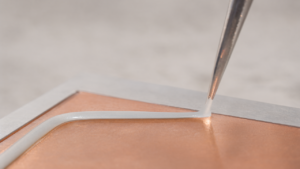
- Application of Structural Adhesives: The study investigated the effectiveness of using specific structural adhesives between the aluminum plate protecting the battery pack’s bottom and the underlying protective materials. This adhesive enhances the bonding strength between components, improving the performance of the integrated structure.
- Reduced Deformation During Impact: Simulation and experimental results, including ball impact tests, confirmed that stronger adhesive bonds substantially reduce the deformation of the aluminum plate upon impact. Specifically, the deformation suppression effect was observed to be approximately XX% (no specific number provided in the summary) compared to cases without adhesive application.
- Mitigation of Thermal Runaway Risk: External impacts can damage battery cells, potentially leading to internal short circuits and subsequent thermal runaway. Strengthening the bottom guard plate acts as a preventive measure, preventing direct impact-induced damage and significantly lowering the probability of thermal runaway.
- Overall Enhancement of Battery Safety: The reinforcement of the protective plate with structural adhesives improves the overall structural integrity of the battery pack, protecting the battery from damage during collisions or from road debris, thus enhancing EV safety.
Background & Industry Context
With the increasing adoption of electric vehicles, lithium-ion battery safety has become a paramount concern, driven by rising consumer confidence and regulatory demands. Bottom impacts, in particular, can strike vulnerable parts of battery packs and lead to serious accidents, making enhanced protection in this area an urgent challenge. This research offers a cost-effective and efficient solution, suggesting a new direction for battery design.
Strategic Significance & Outlook
These research findings could serve as guidelines for EV manufacturers and battery pack suppliers to design and produce safer products. The adoption of structural adhesives is also expected to be a means to achieve both lightweighting and high strength for battery packs, indirectly contributing to improved EV range and performance. Moving forward, this technology is anticipated to be integrated into standard designs for next-generation battery packs, further enhancing the safety of EVs on the road.
Source: https://www.mdpi.com/2504-4494/10/7/218
Get our weekly technology intelligence — free
Receive an infographic that lets you judge at a glance whether each field’s analysis report is worth reading.
Subscribe Free — Weekly Tech Intelligence
By subscribing, you’ll receive Troy-Technical’s weekly technology intelligence newsletter.
- Your email and selected fields are used only to deliver the newsletter.
- We never share your information with third parties.
- You can unsubscribe anytime via the link in each email.
See our Privacy Policy for details.
Takes about a minute · Unsubscribe anytime