Background: Grid Stabilization Challenges in Renewable-Rich Nations
New Zealand leverages abundant renewable energy resources, such as hydropower, to meet a significant portion of its electricity demand. However, the increasing integration of intermittent solar and wind power has led to growing concerns about power grid stability due to output fluctuations. The need for large-scale, fast-response energy storage systems has become paramount, particularly to manage sharp changes in power demand during periods like the ‘duck curve’ phenomenon in the evenings. Enhancing grid flexibility and maintaining stable supply requires the deployment of advanced Battery Energy Storage Systems (BESS).
Key Findings / Results: Tesla Megapack Bolsters New Zealand’s Grid
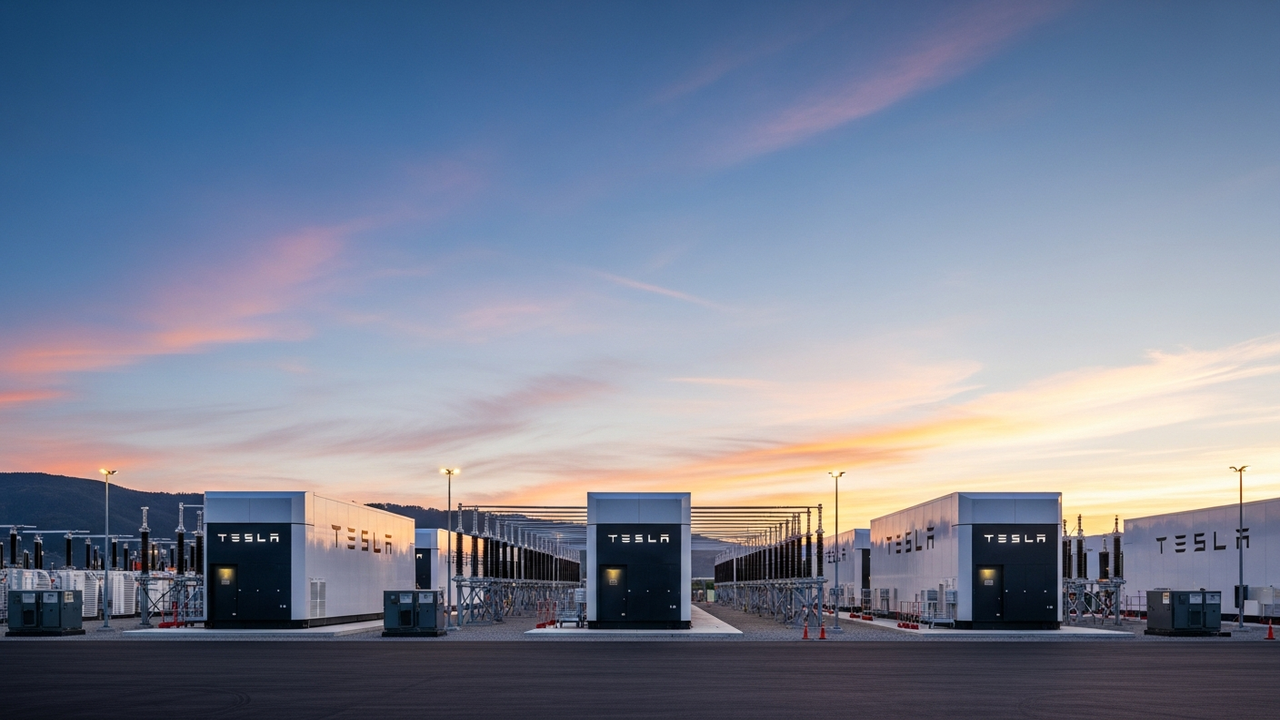
A large-scale BESS project featuring Tesla’s high-performance ‘Megapack’ battery energy storage system has commenced operations in New Zealand. This system boasts a total capacity of 185 MWh and is designed to effectively mitigate grid instability caused by the large-scale integration of renewable energy. Specifically, it contributes to rapid frequency regulation and peak shaving by supplying power during periods of high electricity demand. The project is operated by Mercury Energy, a major local utility, and is considered a core component of its clean energy supply strategy.
- System Deployed: Tesla Megapack.
- Country of Installation: New Zealand.
- Operating Company: Mercury Energy.
- Capacity: 185 MWh.
- Key Functions: Grid frequency regulation, peak shaving, renewable energy integration.
- Objective: Stabilize the power grid and accelerate decarbonization.
Technical Significance & Outlook: Global Model for Grid Modernization
The large-scale deployment of Tesla Megapack in New Zealand exemplifies how lithium-ion BESS is globally demonstrating its effectiveness in providing short- to medium-duration (several hours) grid stabilization services. Megapack integrates advanced Battery Management Systems (BMS) and Energy Management Systems (EMS), giving it the ability to respond instantaneously to grid demands. This capability mitigates power quality issues caused by the variability of renewable energy, offering significant flexibility to grid operators. Such projects serve as important models for utilities worldwide striving to achieve their renewable energy targets. The large-scale BESS market is projected to continue expanding, bringing substantial business opportunities across related industries, from system installation to operation and maintenance services. Meanwhile, initial installation costs, reliance on lithium resources, and continuous improvement and standardization of fire safety measures remain key challenges for future widespread adoption.
Source: https://www.tesla.com/megapack