Background: Growing Demand for Circular EV Battery Utilization
As the adoption of electric vehicles (EVs) rapidly accelerates, a corresponding increase in end-of-life EV batteries is anticipated. These batteries, even after they no longer meet the stringent performance requirements for EVs, often retain significant energy storage capacity. Consequently, there is a strong imperative from both resource efficiency and environmental impact perspectives to repurpose rather than discard them. Stationary energy storage systems, crucial for grid stabilization and renewable energy integration, are emerging as a highly promising application for second-life batteries.
Key Findings / Results: Second-Life Battery Charging Stations Come Online
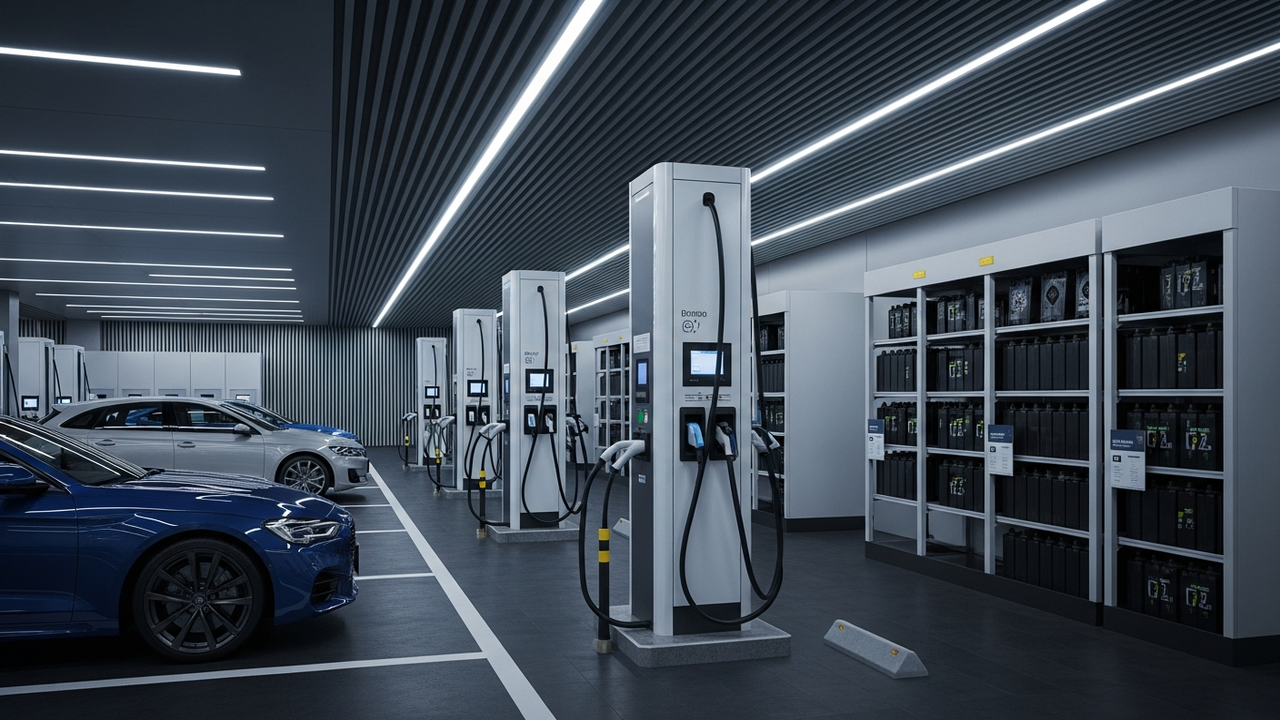
In Japan, a pioneering demonstration project has commenced operation, featuring EV charging stations powered by ‘second-life batteries’ — repurposed used EV batteries configured into stationary energy storage systems. In this innovative setup, batteries collected from EVs undergo thorough inspection and evaluation before being integrated as a power source for charging stations. This not only optimizes power supply from the grid but also, especially when combined with renewable energy sources, helps reduce the operational costs of the charging stations and enhances their sustainability. The project’s primary objective is to evaluate how second-life batteries contribute to the reliability and economic viability of EV charging infrastructure.
- Core Objective: Maximizing the utility of used EV batteries and reducing EV charging infrastructure costs.
- System Architecture: Degraded EV batteries are reconfigured for stationary energy storage applications.
- Key Benefits: Resource efficiency, waste reduction, and lower installation/operational costs for charging infrastructure.
- Stakeholders: Collaboration between automotive manufacturers, trading companies, and government agencies.
- Future Potential: Expected to contribute to a sustainable society by balancing environmental impact reduction with economic viability.
Technical Significance & Outlook: The Future of Circular Economy and Mobility
The operational launch of these EV charging stations utilizing second-life batteries represents a significant stride towards enhancing the sustainability of batteries across their entire lifecycle. Rather than merely discarding batteries, this initiative exemplifies a circular economy model that maximizes their residual value, thereby conserving scarce resources and reducing environmental impact. Technically, critical aspects include advanced battery diagnostics, robust safety management systems, and sophisticated system integration expertise to manage multiple repurposed battery units effectively. If this business model proves viable and scalable, it is expected not only to accelerate the deployment of EV charging infrastructure but also to create new markets for battery recycling and significantly contribute to achieving Sustainable Development Goals. Furthermore, it holds potential for broader applications, such as grid load leveling and emergency power supply.
Source: https://www.env.go.jp/press/