Key Findings
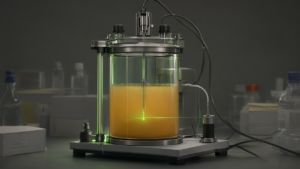
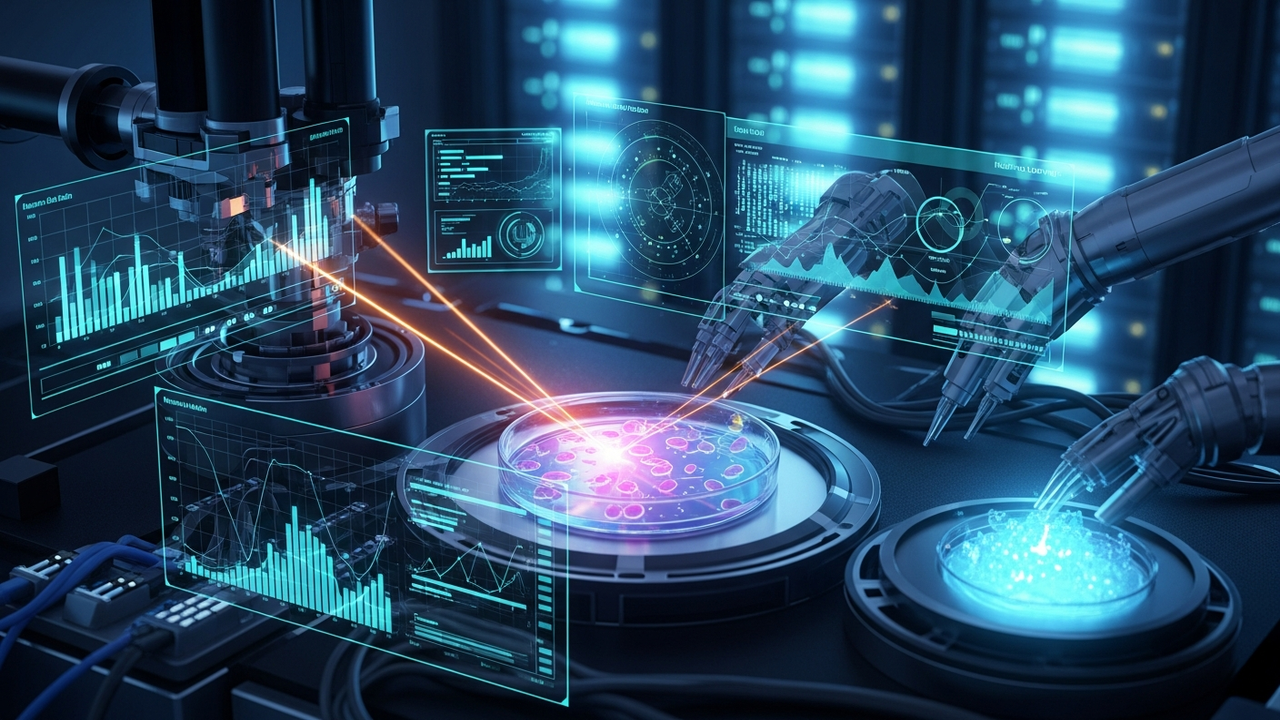
A recently published research paper on arXiv introduces a novel ‘Multipath Adaptive Gated Bottleneck Latent Ordinary Differential Equation (ODE)’ model that significantly enhances the accuracy of cell culture process forecasting. Evaluated on fed-batch 5L bioreactor runs, this model integrates Raman data fusion and machine learning to overcome limitations of traditional predictive models, offering unprecedented insights into dynamic bioprocesses.
Technical / Clinical Details
The core technological advancements presented in this research include:
- Raman Spectroscopy-Based Soft Sensors: Raman spectroscopy serves as a powerful tool for non-invasive, real-time estimation of key metabolite concentrations (e.g., glucose, lactate) and biomass within the culture broth. This allows for continuous monitoring of cellular states during the process, capturing dynamic changes that are critical for timely intervention and optimization. Probes are directly inserted into bioreactors, maintaining sterile conditions while acquiring data.
- Multipath Adaptive Gated Bottleneck Latent ODE Model: This novel machine learning model is designed to learn from time-series data (Raman spectra and sparse offline measurements) and capture the complex, non-linear dynamics inherent in cell culture processes. The ‘latent ODE’ component models the continuous underlying changes, while adaptive gates and bottleneck layers enhance noise resilience and efficient feature extraction from high-dimensional data.
- Data Fusion Approach: The model effectively fuses real-time Raman spectral data with intermittently acquired (sparse) offline measurements (e.g., detailed metabolite analysis by HPLC). This data fusion allows the model to learn from a richer information source, providing robust predictive capabilities even in scenarios where frequent offline measurements are impractical.
- Enhanced Forecasting Accuracy: Evaluations in fed-batch 5L bioreactor runs demonstrated that this model achieved substantially higher predictive accuracy for key process parameters, such as cell growth, metabolite consumption, and product formation, compared to state-of-the-art alternative models.
Background & Context
Cell culture processes in biopharmaceutical manufacturing are complex dynamic systems that significantly impact product quality and yield. Accurate process forecasting and control are essential for efficient manufacturing and ensuring product consistency. However, limitations arise from the scarcity of real-time data and the inherent non-linearity of biological processes. The integration of Process Analytical Technology (PAT) and machine learning is a critical trend aimed at overcoming these challenges, enabling more data-driven biomanufacturing.
Strategic Significance & Outlook
The predictive model presented in this research holds significant promise as a decision-support tool in bioprocess engineering. More accurate process forecasting directly translates to optimized feeding strategies, maximized yields, early detection of process deviations, and reduced risks during scale-up. In the future, such AI-driven models are expected to integrate with autonomous bioreactor systems and digital twin technologies, further enhancing overall manufacturing efficiency and quality. This will accelerate the development timelines for new biopharmaceuticals and improve patient access to groundbreaking therapies.
Source: https://arxiv.org/html/2606.26520v1
Get our weekly technology intelligence — free
Receive an infographic that lets you judge at a glance whether each field’s analysis report is worth reading.
Subscribe Free — Weekly Tech Intelligence
By subscribing, you’ll receive Troy-Technical’s weekly technology intelligence newsletter.
- Your email and selected fields are used only to deliver the newsletter.
- We never share your information with third parties.
- You can unsubscribe anytime via the link in each email.
See our Privacy Policy for details.
Takes about a minute · Unsubscribe anytime