Key Findings
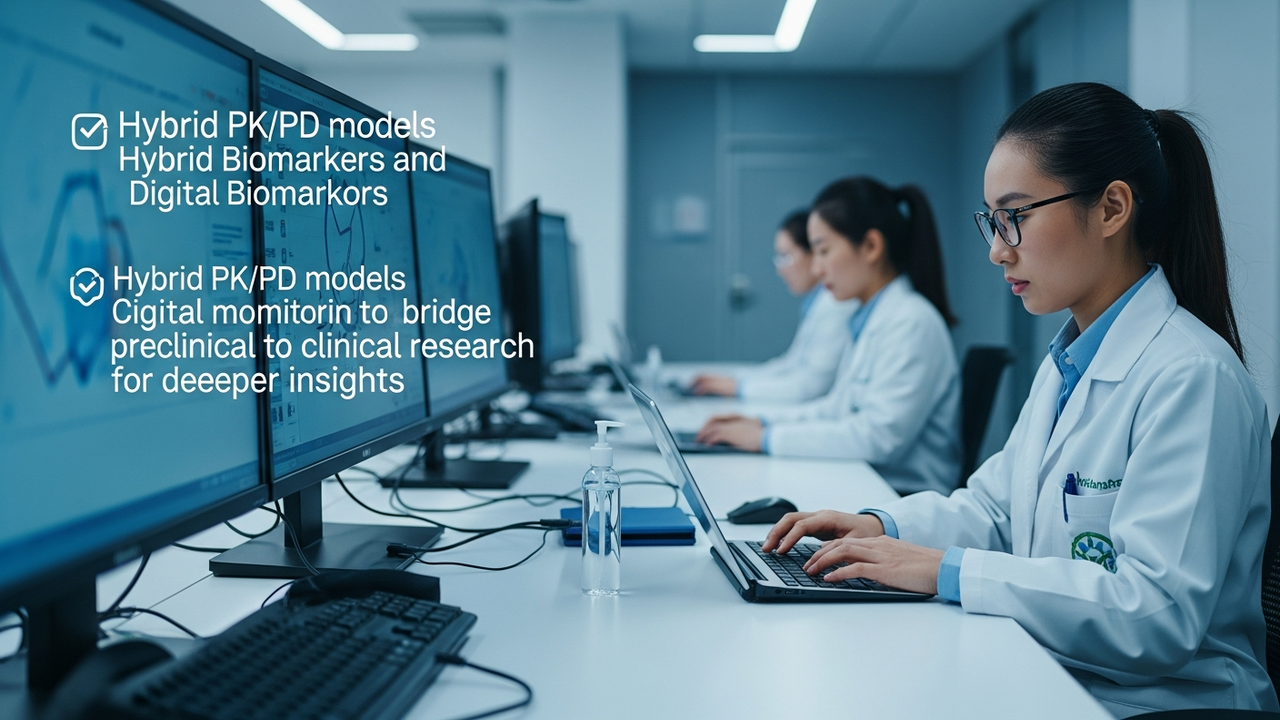
The rapid advancement of digital biomarkers and remote monitoring technologies is enabling continuous measurement of physiological and behavioral endpoints, ushering in a new paradigm for pharmacokinetic (PK) and pharmacodynamic (PD) modeling. This review emphasizes the critical role of both preclinical and clinical digital biomarkers, obtained through wearable sensors and remote patient monitoring (RPM). Notably, the hybrid mechanistic–machine learning (ML) modeling approach is highlighted for its ability to transform raw data into information-rich summary variables using ML, while preserving causal structures and physiological constraints. This allows for deeper insights from digital biomarkers, thereby facilitating a more effective and precise translation from preclinical research to clinical application.
Technical/Clinical Details
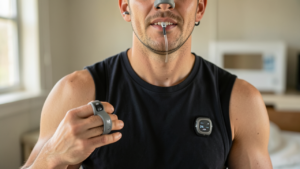
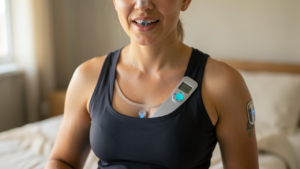
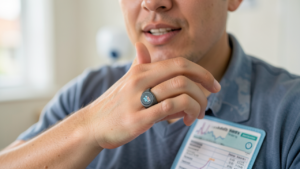
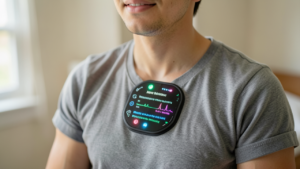
Digital biomarkers continuously collect physiological and behavioral data, such as heart rate, activity levels, sleep patterns, skin temperature, and respiration rate, via wearable devices (smartwatches, fitness trackers, smart patches) and mobile applications. This raw data is then subjected to feature extraction using machine learning algorithms, converting it into higher-order, information-rich summary variables like ‘sleep quality score’ or ‘stress level indicator.’ This feature extraction process filters out noise from the original raw data, highlighting clinically meaningful patterns. In hybrid PK/PD models, mechanistic models describing drug pharmacokinetics and pharmacodynamics are combined with data-driven ML approaches. This integration allows for more accurate modeling of complex relationships between drug exposure and changes in digital biomarkers, while maintaining physiological plausibility. For example, it can predict how a patient’s activity levels or sleep patterns change after antidepressant administration, by integrating mechanistic pharmacokinetics with ML-based behavioral pattern analysis.
Background and Industry Context
Traditional PK/PD modeling has primarily relied on laboratory data and limited time-point measurements from clinical trials. However, physiological and behavioral variations in a patient’s daily life are known to significantly impact drug responses. The advent of digital biomarkers and RPM provides an opportunity to collect this real-world data at scale, improving the precision of drug development and personalized medicine. The pharmaceutical industry is increasingly focusing on integrating these new data sources and modeling techniques to enhance the cost-effectiveness of clinical trials and develop more personalized therapies. This approach enables earlier and more accurate assessment of drug safety and efficacy, contributing to shorter development times and increased success rates.
Strategic Significance & Outlook
Hybrid mechanistic–machine learning PK/PD models will become indispensable tools for realizing precision medicine. In the future, it is expected that these models will further improve the accuracy of predicting treatment responses by integrating more personalized data, such as patient genetic background, lifestyle habits, and other concomitant medications. The development of ‘closed-loop systems,’ where AI continuously analyzes patient digital biomarkers and recommends optimal drug dosages in real-time, is also envisioned. This could automate medication management for chronic disease patients, maximizing therapeutic effects while minimizing side effects. This technology will inform decision-making throughout the entire drug lifecycle, from discovery to post-market surveillance, powerfully advancing patient-centric care.
Source: https://www.frontiersin.org/article/1815118
Get our weekly technology intelligence — free
Receive an infographic that lets you judge at a glance whether each field’s analysis report is worth reading.
Subscribe Free — Weekly Tech Intelligence
By subscribing, you’ll receive Troy-Technical’s weekly technology intelligence newsletter.
- Your email and selected fields are used only to deliver the newsletter.
- We never share your information with third parties.
- You can unsubscribe anytime via the link in each email.
See our Privacy Policy for details.
Takes about a minute · Unsubscribe anytime


Comments