Key Findings
Self-healing protective materials are emerging as a groundbreaking system designed to autonomously restore functional properties of stone after damage. This technology holds the potential to fundamentally resolve long-standing issues in stone preservation, such as degradation of protective layers due to mechanical abrasion, cleaning agents, and chemical attacks. It obviates the need for manual reapplication or repair, automatically recovering protective effects in specific damaged areas.
Technical / Clinical Details
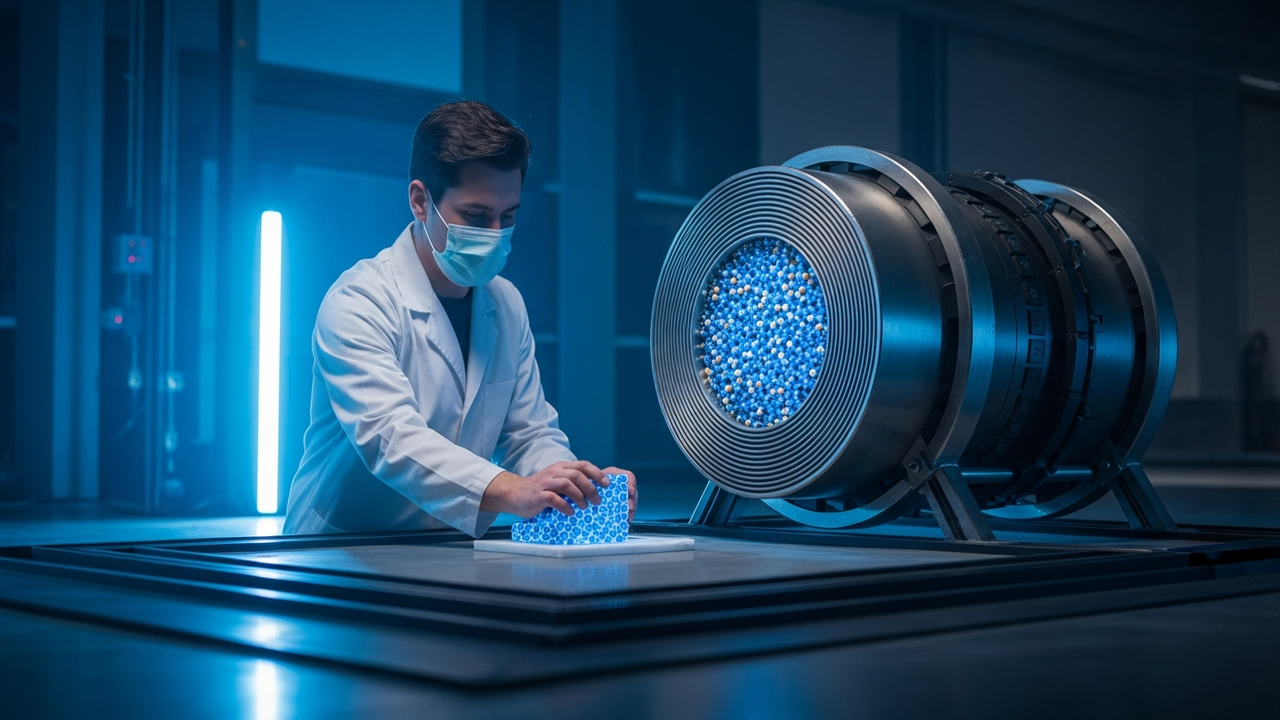
Two primary technological approaches underpin self-healing protective materials. The first is the ‘microencapsulation approach.’ Here, healing agents (e.g., monomers or curing agents) are encapsulated in microscopic capsules and dispersed within the protective layer. When a scratch or crack occurs on the stone surface, the capsules rupture, releasing the healing agent which then undergoes a chemical reaction to harden and repair the damaged protective layer. The second approach utilizes ‘dynamic covalent bond chemistry.’ This involves incorporating chemical bonds (such as Diels-Alder reactions or imine bonds) into the polymer matrix that can reversibly form and break in response to external stimuli like temperature, light, or pH. Upon damage, these bonds rearrange, allowing the material to flow and fill the damaged area, enabling self-healing.
Background & Context
Stone is extensively used in various applications including buildings, sculptures, cultural heritage sites, and infrastructure. Its protection is crucial not only for aesthetic preservation but also for structural integrity and longevity. However, stone surfaces are constantly exposed to external environmental factors (UV radiation, acid rain, pollutants, mechanical impact), making the degradation of protective coatings an unavoidable challenge. Traditional protective agents offer only temporary barrier effects and require costly manual maintenance after damage. The advent of self-healing materials promises to fundamentally transform this maintenance paradigm, offering more sustainable and economic stone protection solutions.
Strategic Significance & Outlook
Self-healing protective materials have the potential to extend their application beyond stone to other structural materials such as concrete, metals, and polymers. Advances in this technology offer a wide array of societal benefits, including extended infrastructure lifespan, reduced maintenance costs, preservation of cultural heritage, and decreased environmental impact. Future research and development will focus on improving healing efficiency, increasing the number of healing cycles, developing environmentally compatible healing agents, and establishing cost-effective manufacturing methods. Self-healing materials are poised to become a game-changer in the fields of future architecture, civil engineering, and materials science.
Get our weekly technology intelligence — free
Receive an infographic that lets you judge at a glance whether each field’s analysis report is worth reading.
Subscribe Free — Weekly Tech Intelligence
By subscribing, you’ll receive Troy-Technical’s weekly technology intelligence newsletter.
- Your email and selected fields are used only to deliver the newsletter.
- We never share your information with third parties.
- You can unsubscribe anytime via the link in each email.
See our Privacy Policy for details.
Takes about a minute · Unsubscribe anytime




Comments