Background
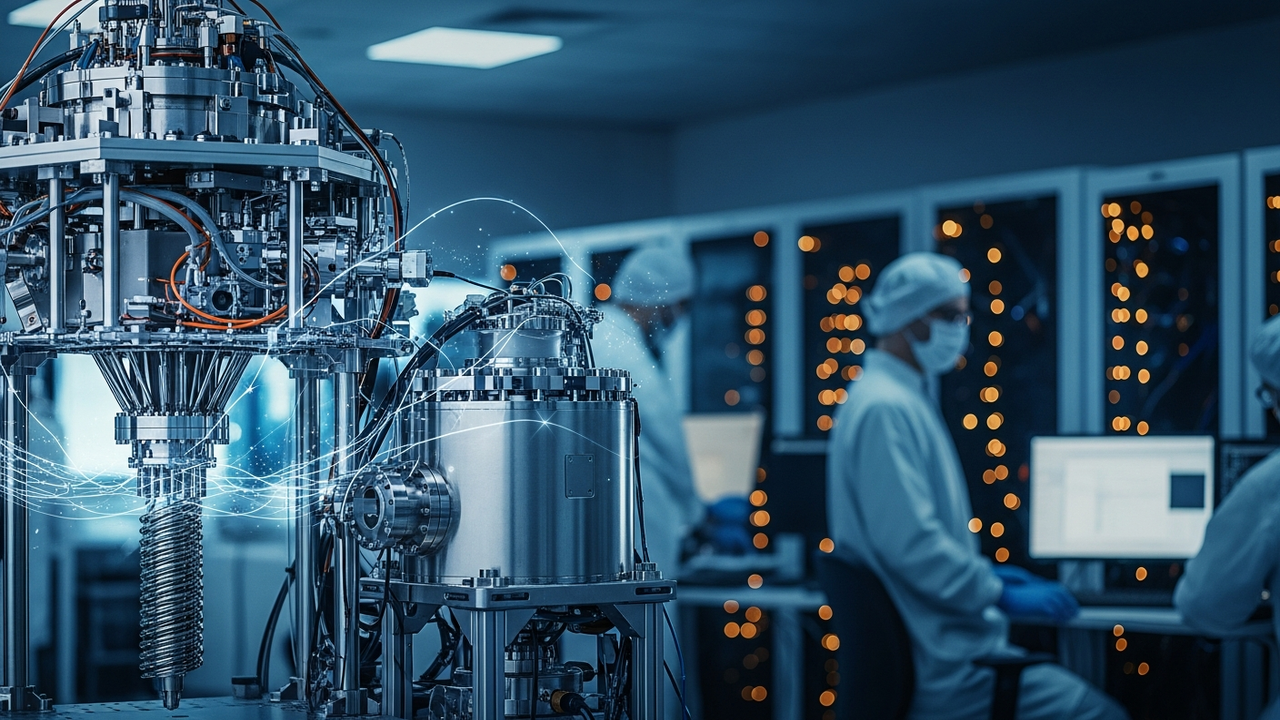
In quantum computing, two paramount technical hurdles are ‘scaling’—increasing the number of qubits—and ‘coherence maintenance’—preserving qubit stability. Short coherence times are a significant impediment, causing quantum computers to accumulate errors before practical computations can be completed. Consequently, extending qubit coherence, alongside the development of robust error correction techniques, is a pivotal research area for realizing fault-tolerant quantum computers. Japan has historically maintained a leading position in global superconducting qubit research, and this recent achievement further solidifies that advantage.
Key Findings
A prominent Japanese national research institute has successfully engineered a novel technology that substantially extends the coherence time—the duration for which quantum information remains stable—of superconducting qubits. This significant advancement has led to a patent filing. This breakthrough constitutes a decisive step toward fundamentally enhancing the stability and computational power of quantum computers, thereby accelerating the development of more practical quantum processors.
Technical & Business Details
Superconducting qubits represent one of the leading hardware platforms in contemporary quantum computing; however, their short coherence times remain a primary limitation. Qubits are inherently susceptible to environmental noise, which rapidly induces decoherence and the loss of quantum information. The new technology, developed by the Japanese research institute, achieves a substantial extension of coherence time compared to conventional approaches. This is accomplished through specific noise suppression mechanisms and innovative qubit design improvements. The extended coherence period allows for more robust, error-free quantum gate operations, which is crucial for implementing complex quantum algorithms and designing larger-scale quantum computing architectures. The accompanying patent filing underscores the uniqueness and significant future commercial potential of this technology.
Strategic Significance & Outlook
This technological advancement is poised to not only accelerate Japan’s domestic quantum computing initiatives but also to exert a significant impact on quantum hardware developers globally. Improved coherence times will directly enhance the performance of current Noisy Intermediate-Scale Quantum (NISQ) devices and significantly bolster the feasibility of future general-purpose, fault-tolerant quantum computers. Should this patented technology be commercialized, it is anticipated to introduce higher-performance, more reliable quantum processors to the market, thereby dramatically advancing quantum computing applications across diverse industries including pharmaceuticals, materials science, finance, and artificial intelligence. Furthermore, there is substantial potential for this technology to contribute to the global quantum ecosystem through international technical collaborations and licensing agreements.
Source: #
Get our weekly technology intelligence — free
Receive an infographic that lets you judge at a glance whether each field’s analysis report is worth reading.
Subscribe Free — Weekly Tech Intelligence
By subscribing, you’ll receive Troy-Technical’s weekly technology intelligence newsletter.
- Your email and selected fields are used only to deliver the newsletter.
- We never share your information with third parties.
- You can unsubscribe anytime via the link in each email.
See our Privacy Policy for details.
Takes about a minute · Unsubscribe anytime





Comments