Materials Informatics– category –
-

Machine Learning Interatomic Potentials: Foundation Models Reshape Materials Discovery
Review of Peer-Reviewed Articles Overview A new comprehensive review critically examines Machine Learning Interatomic Potentials (MLIPs), a transformative technology bridging the accuracy of quantum mechanics with the efficiency of class... -
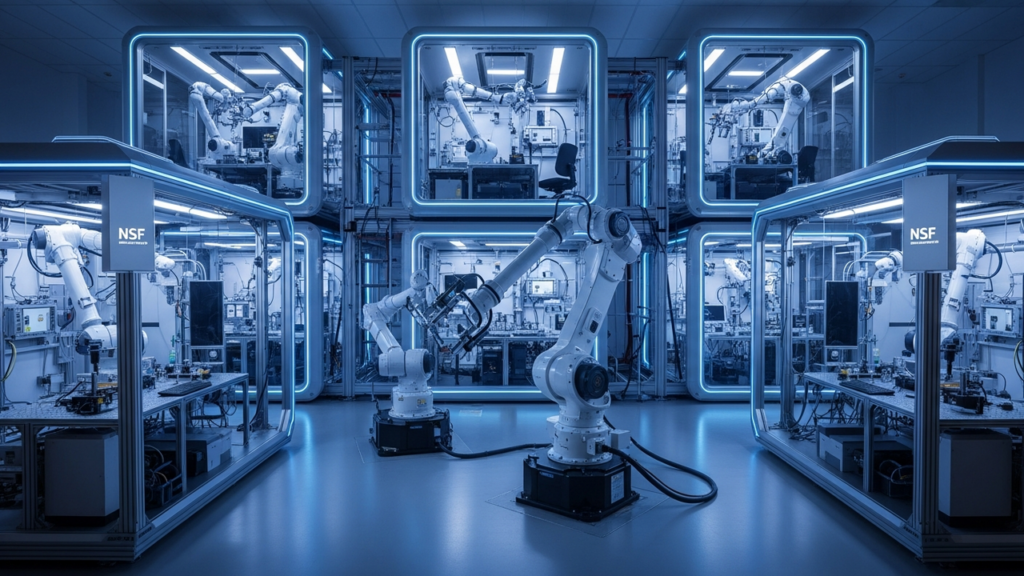
NSF Commits $380M to National Self-Driving Lab Network, Accelerating Discovery 100x
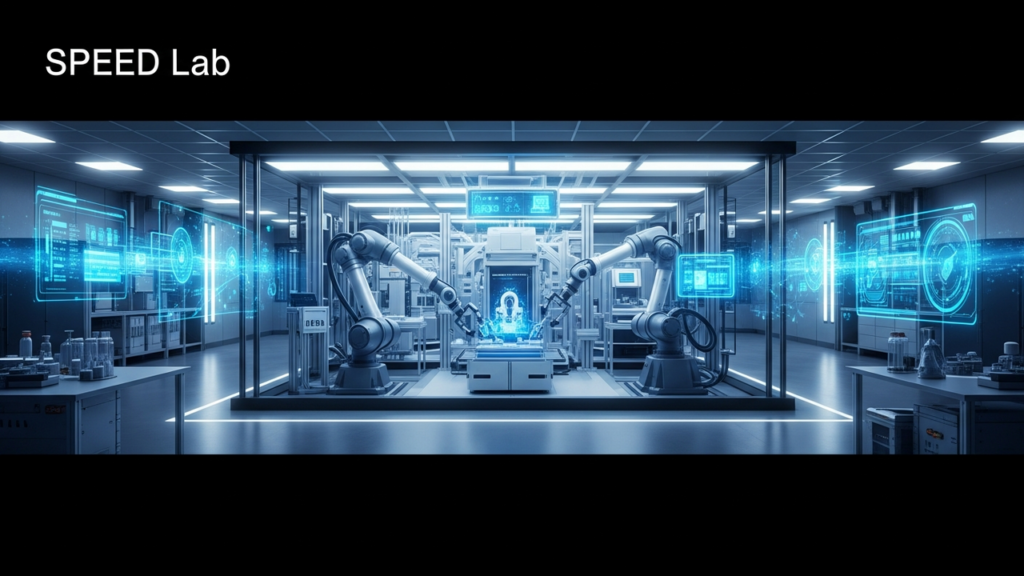
UNC-Chapel Hill USA Overview The National Science Foundation (NSF) has committed $380 million to establish a nationwide network of 'programmable cloud laboratories,' with NC State University's 'SPEED Lab' receiving $20 million to lead ef... -
Physics-Based Generative AI Accelerates Design of High-Performance 3D Porous Media
arXiv Overview A new preprint introduces a physics-based generative AI framework for designing 3D porous media with precise physical properties like porosity and permeability. This framework integrates a property-aware variational autoen... -
NVIDIA and Applied Materials Propel Semiconductor Innovation with GPU-Accelerated AI, Achieving Up to 55x Speedup
NVIDIA Technical Blog USA Overview NVIDIA and Applied Materials have announced a strategic partnership to revolutionize semiconductor innovation through the integration of AI and GPU-accelerated simulations. This collaboration leverages ... -
CUNY and CCNY Secure $18.1M NSF Grant to Establish AI-Driven Bio-Inspired Materials Lab “AI-BIOME”
The City College of New York (National Science Foundation) USA Overview CUNY and CCNY have received an $18.1 million National Science Foundation (NSF) grant to establish "AI-BIOME," an AI-enabled cloud-programmable national laboratory de... -
OMol25-Trained MLIPs Predict Na-Ion Battery Electrolyte Solvation Structures with DFT-Level Accuracy, Outperforming Inorganic-Only Models
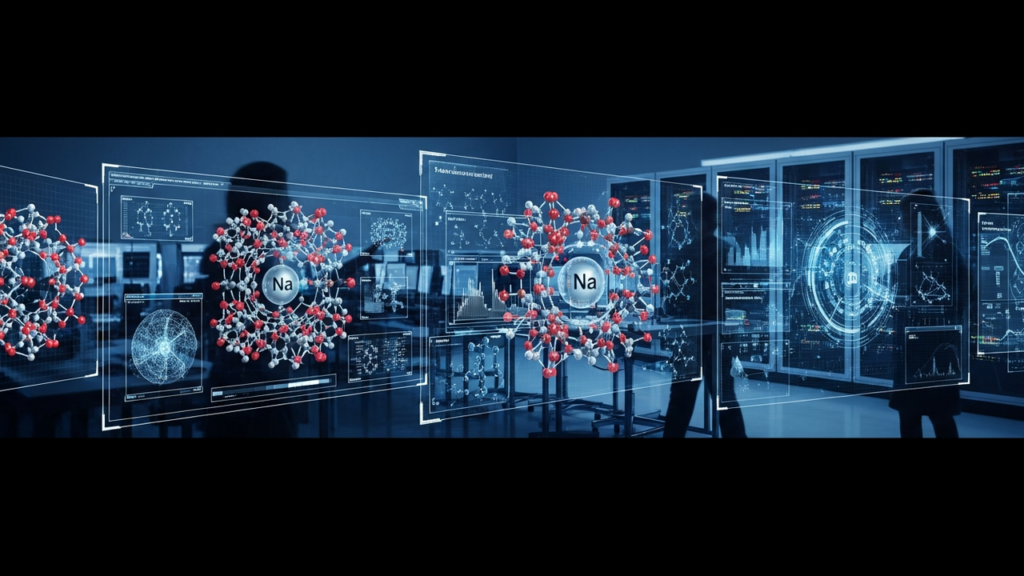
ACS Publications (Journal of Physical Chemistry Letters) Overview This study demonstrates that machine learning interatomic potentials (MLIPs) trained with the Open Molecules 2025 (OMol25) dataset accurately predict and experimentally ve... -
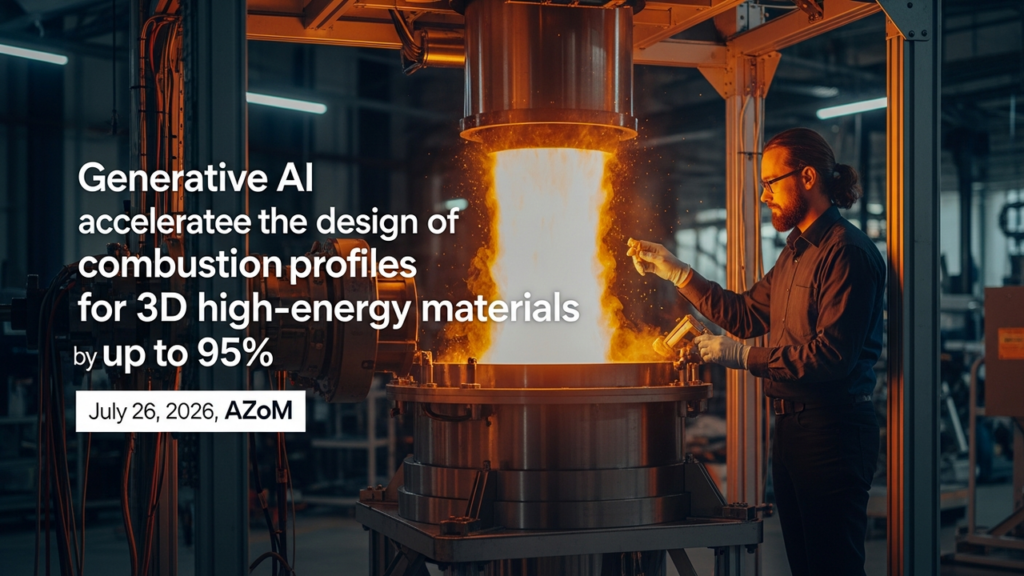
Generative AI Accelerates Custom Combustion Profile Design for 3D High-Energy Materials by Up to 95%
AZoM (Communications Engineering) Overview Researchers developed a hybrid generative AI framework for inverse-designing 3D high-energy material granular structures matching user-defined pressure-time combustion profiles. This framework i... -
Iterative Fine-Tuning Strategy for Universal Machine Learning Interatomic Potentials (uMLIPs) Yields Stable, High-Accuracy Models for Out-of-Domain Tasks
PubMed Overview Research on universal machine learning interatomic potentials (uMLIPs) demonstrates that "iterative fine-tuning" effectively generates stable molecular dynamics simulations and high-accuracy models for out-of-domain tasks... -
Rice University Secures $19.9M NSF Grant for READINESS AI-Driven Lab to Accelerate Electronic and Quantum Material Manufacturing
Rice University (National Science Foundation) USA Overview Rice University received a $19.9 million National Science Foundation (NSF) grant to lead the 'READINESS' project, an AI-driven autonomous laboratory aimed at accelerating the man... -
NSF Commits $380M to National ‘Self-Driving’ Lab Network, Aims for 100x+ Acceleration in Discovery
Source Unknown USA Overview The U.S. National Science Foundation (NSF) has launched a $380 million initiative to establish a national network of 'self-driving' laboratories. These AI-powered labs, featuring robotic execution and closed-l...