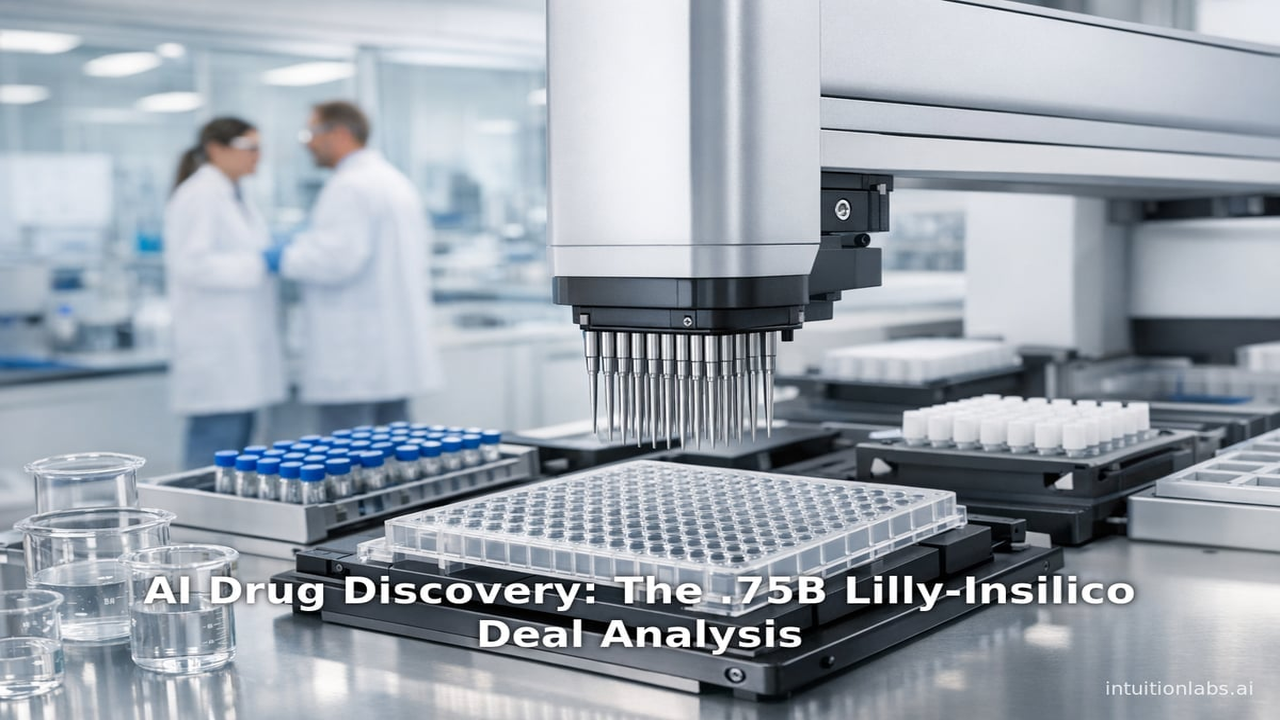
Background: The Ascent of AI in Pharmaceutical Partnerships
The pharmaceutical industry is experiencing a profound shift driven by advancements in artificial intelligence. Major drug developers are increasingly seeking collaborations with AI-native biotech companies to leverage computational power for accelerating drug discovery, optimizing molecular design, and reducing the time and cost associated with bringing new therapies to market. This trend is exemplified by a landmark deal between Eli Lilly and Insilico Medicine, signaling a growing confidence in AI’s transformative potential.
Key Findings / Results: A Multi-Billion Dollar Bet on AI Precision
- Strategic Collaboration Details: Eli Lilly and Insilico Medicine announced a multi-target, multi-billion dollar strategic collaboration that could reach up to $2.75 billion. This includes an immediate upfront payment of $115 million to Insilico, with additional milestone payments contingent on the achievement of specific development, regulatory, and commercial benchmarks. This collaboration represents one of the largest AI drug discovery deals to date, underscoring the industry’s significant investment in this nascent field.
- Leveraging Insilico’s Pharma.AI Platform: At the core of the partnership is Insilico Medicine’s advanced Pharma.AI platform. This integrated suite of deep-learning tools is designed for de novo small-molecule drug candidate generation and optimization. It combines generative AI for molecular design, predictive AI for efficacy and toxicity profiling, and reinforcement learning for optimizing compound properties. Lilly will utilize this platform to identify and advance novel therapeutic candidates for specific disease targets within its strategic focus areas.
- Insilico’s Clinical Traction: Insilico Medicine has a rapidly maturing pipeline, with over 40 programs currently under development and 12 having already received Investigational New Drug (IND) clearance from the FDA. Its lead asset, rentosertib, a TNIK inhibitor for idiopathic pulmonary fibrosis (IPF), is notable as the first AI-discovered and AI-designed drug candidate for IPF to enter Phase II clinical trials. This clinical validation strengthens the credibility of AI-driven drug discovery.
Technical Significance & Outlook: Reshaping the R&D Landscape
This collaboration holds immense technical significance. It demonstrates that AI platforms can move beyond theoretical predictions to generate clinically viable drug candidates with unprecedented speed. By integrating Insilico’s computational prowess with Lilly’s extensive pharmaceutical development expertise, the partnership aims to significantly de-risk the early stages of drug discovery, reduce preclinical timelines from years to months, and increase the probability of success in clinical trials. Insilico’s CEO, Alex Zhavoronkov, has noted the company’s ambition to generate up to 20 development candidates annually and forge “deep partnerships” with major pharmaceutical players, highlighting a shift towards AI-powered pipelines as a core strategic asset. Beyond molecular generation, the broader industry is also exploring “AI operating systems” that coordinate decisions across the entire drug development lifecycle, from target identification to patient tracking. This signals a future where AI is not just a tool but an embedded intelligence layer, fundamentally reshaping how pharmaceutical R&D is conducted globally, and particularly enhancing the competitive landscape for brain health and aging therapeutics, which Insilico aims to target long-term.
Source: https://intuitionlabs.ai/articles/lilly-insilico-ai-drug-discovery-deal



Comments