Key Findings
Google DeepMind has unveiled a comprehensive array of new AI technologies, spanning from advancements in AI training efficiency to applications in robotics and the release of open models. Key announcements include ‘Decoupled DiLoCo’ for vastly improved distributed AI training, ‘Gemini 3.1 Flash TTS’ for highly natural and expressive AI speech synthesis, ‘Gemini Robotics-ER 1.6’ optimized for complex robotic tasks, and ‘Gemma 4’, the latest iteration of their open model series for the developer community. These innovations are designed to dramatically expand the capabilities and real-world applicability of AI systems.
Technical / Clinical Details
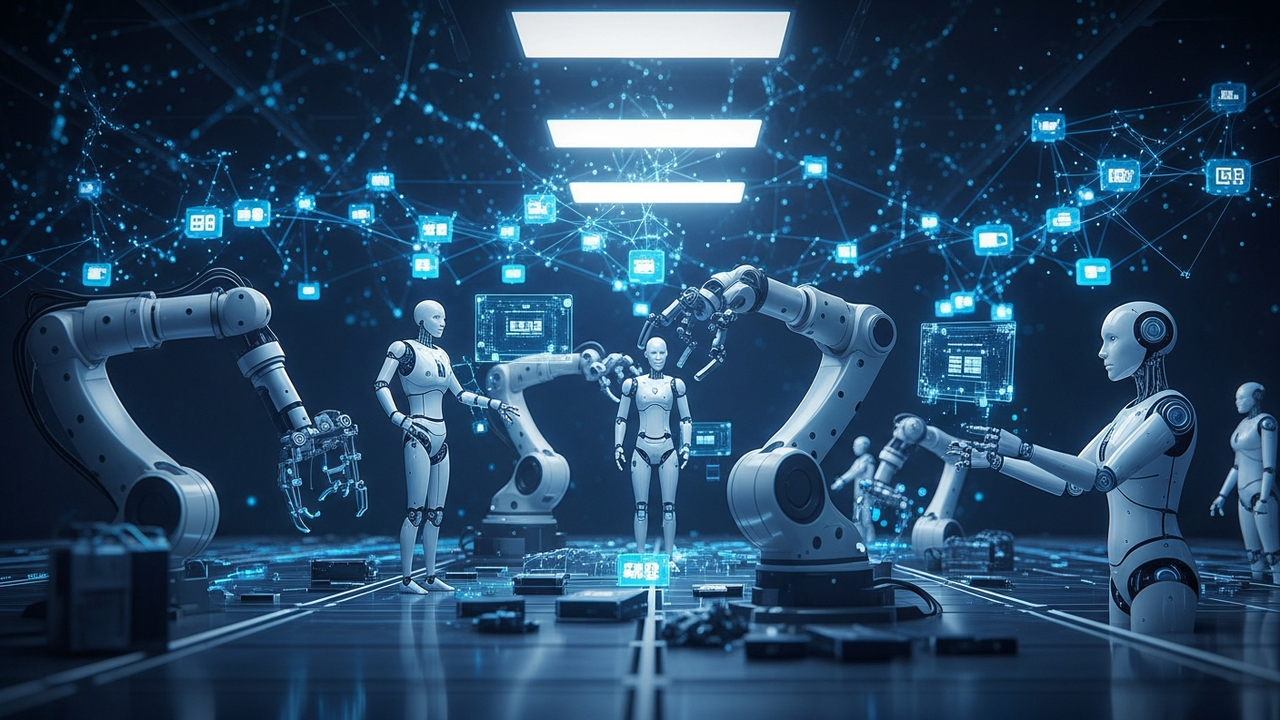
‘Decoupled DiLoCo’ is engineered to enhance the computational resource utilization during large-scale AI model training, thereby reducing training times and costs, which will accelerate the development of more complex and higher-performing AI models. ‘Gemini 3.1 Flash TTS’ significantly improves the naturalness, emotional range, and speed of speech synthesis, facilitating more seamless human-computer interactions. ‘Gemini Robotics-ER 1.6’ enhances the perception, decision-making, and action planning capabilities of robots, enabling them to perform diverse tasks more autonomously and flexibly in uncertain environments. ‘Gemma 4’ is provided as an open-source model, empowering a wider range of researchers and developers to build and experiment with advanced AI models, thus fostering the growth of the broader AI ecosystem.
Background & Context
The evolution of AI continues to face challenges related to high training costs and the complexities of real-world application. Google DeepMind’s announcements represent a strategic effort to address these key barriers, making AI technology more accessible and practical. Improvements in distributed training enhance the scalability of AI models, while advancements in speech synthesis and robotics are poised to accelerate AI’s commercialization across a wide range of sectors, from consumer applications to industrial uses. Strategic partnerships with industry leaders are crucial for driving AI adoption across diverse fields and creating new business opportunities.
Strategic Significance & Outlook
These technological innovations are expected to further deepen AI’s impact on daily life and industrial structures. More efficient AI training will accelerate the development of next-generation foundational models, and advanced speech AI could transform personal assistants and customer service into more human-like experiences. Progress in robotics will expedite the practical deployment of autonomous systems in sectors such as manufacturing, logistics, and healthcare, driving productivity gains and the creation of new services. Open models like Gemma 4 are anticipated to democratize innovation, contributing to the overall advancement of the AI community and fostering a collaborative environment for future development.