Key Findings
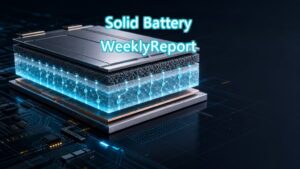
The Atlantic Council has issued a call for the United States and South Korea to forge a strategic alliance in advanced battery chemistries, including solid-state and lithium-sulfur technologies. This proposed collaboration aims to counteract China’s growing dominance in dual-use battery supply chains, fostering innovation and resilience in the global energy sector.
Technical / Clinical Details
The report meticulously details South Korea’s formidable leadership in both conventional lithium-ion and emerging solid-state battery technologies, spearheaded by industry giants such as LG Energy Solution, Samsung SDI, and SK On. These companies are actively engaged in pioneering research and development to achieve higher energy densities, faster charging capabilities, and enhanced safety profiles for next-generation batteries. Concurrently, China has aggressively accelerated its expansion into the European Union and significantly bolstered its domestic battery production, raising geopolitical concerns about its increasing control over critical energy supply chains. The Atlantic Council’s brief argues that a coordinated effort between the U.S. and South Korea, involving joint investments and R&D in cutting-edge battery chemistries like solid-state and lithium-sulfur, is essential. This partnership would enable them to sustain technological superiority and mitigate China’s market leverage. Solid-state batteries, with their promise of superior energy density and inherent safety, are particularly strategic not only for electric vehicles but also for critical dual-use applications in defense and aerospace.
Background & Context
Battery technology has become a cornerstone of national security and economic competitiveness, underpinning industries from electric vehicles and renewable energy storage to defense applications. China’s rapid advancements and increasing control over significant portions of the battery supply chain pose substantial economic and security concerns for the United States and its allies. The competition for leadership in next-generation battery technologies is a pivotal arena shaping future international technological and geopolitical balances.Strategic Significance & Outlook
A U.S.-South Korea partnership is anticipated to play a decisive role in accelerating the development and commercialization of advanced battery technologies, thereby reducing over-reliance on Chinese supplies. The report suggests concrete actions, including establishing joint research programs, facilitating funding mechanisms, and coordinating policy to strengthen supply chain resilience. Such a strategic alliance could foster a more balanced international competitive environment in the next-generation battery market, promoting healthy technological innovation and safeguarding critical infrastructure globally.
Get our weekly technology intelligence — free
Receive an infographic that lets you judge at a glance whether each field’s analysis report is worth reading.
Subscribe Free — Weekly Tech Intelligence
By subscribing, you’ll receive Troy-Technical’s weekly technology intelligence newsletter.
- Your email and selected fields are used only to deliver the newsletter.
- We never share your information with third parties.
- You can unsubscribe anytime via the link in each email.
See our Privacy Policy for details.
Takes about a minute · Unsubscribe anytime