Key Findings
Experts have pointed out that NTT’s ambitious initiatives in optical network technology, exemplified by its ‘IOWN (Innovative Optical and Wireless Network) concept,’ are confronting a significant industrial transformation brought about by the rapid evolution of artificial intelligence (AI) technology and the emergence of AI hardware giants like NVIDIA.
Technical / Clinical Details
- Core of IOWN Concept: IOWN is a next-generation communication infrastructure designed to achieve low latency, high capacity, and low power consumption by configuring everything from the network to terminals with light. Specifically, the All-Photonics Network (APN) aims for end-to-end optical transmission, eliminating conventional electrical signal processing.
- Impact of AI and NVIDIA: AI workloads demand unprecedented volumes and speeds of data within and between data centers. NVIDIA’s GPU-centric ecosystem drives this demand, requiring NTT’s optical network to support connections between these AI accelerators with power efficiency and low latency.
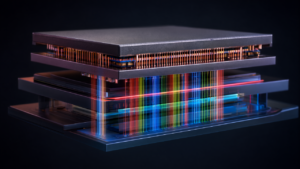
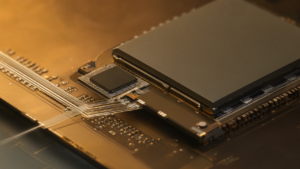
- Challenges of Transformation: Experts emphasize that it is crucial for NTT to rapidly and effectively commercially deploy the IOWN concept as a practical solution meeting the stringent requirements of the AI era, beyond just R&D. Integration with technologies like Co-Packaged Optics (CPO) and Near-Package Optics (NPO) will be key.
- Demand for Power Efficiency: Power consumption in AI data centers is a severe issue, and IOWN’s goal of ‘overwhelmingly low power consumption’ is an indispensable element for the sustainable growth of AI infrastructure.
Background & Context
The global telecommunications industry is undergoing an unprecedented transformation with the deployment of 5G and the full-scale introduction of AI. Telecommunication operators and technology companies must rebuild their network infrastructure to cope with new services and data demands brought by AI. NTT’s IOWN concept is positioned at the forefront of this transformation, but competition is intensifying.
Strategic Significance & Outlook
The success of NTT’s optical network strategy hinges on how effectively it can commercialize the technological superiority of the IOWN concept and rapidly respond to market demands driven by AI and NVIDIA. This challenge will be a critical test for NTT, as well as for major global telecommunication operators, determining their competitiveness and future growth in the AI era. The role of optical technology in the AI ecosystem is expected to expand even further in the future.
Get our weekly technology intelligence — free
Receive an infographic that lets you judge at a glance whether each field’s analysis report is worth reading.
Subscribe Free — Weekly Tech Intelligence
By subscribing, you’ll receive Troy-Technical’s weekly technology intelligence newsletter.
- Your email and selected fields are used only to deliver the newsletter.
- We never share your information with third parties.
- You can unsubscribe anytime via the link in each email.
See our Privacy Policy for details.
Takes about a minute · Unsubscribe anytime