Key Findings
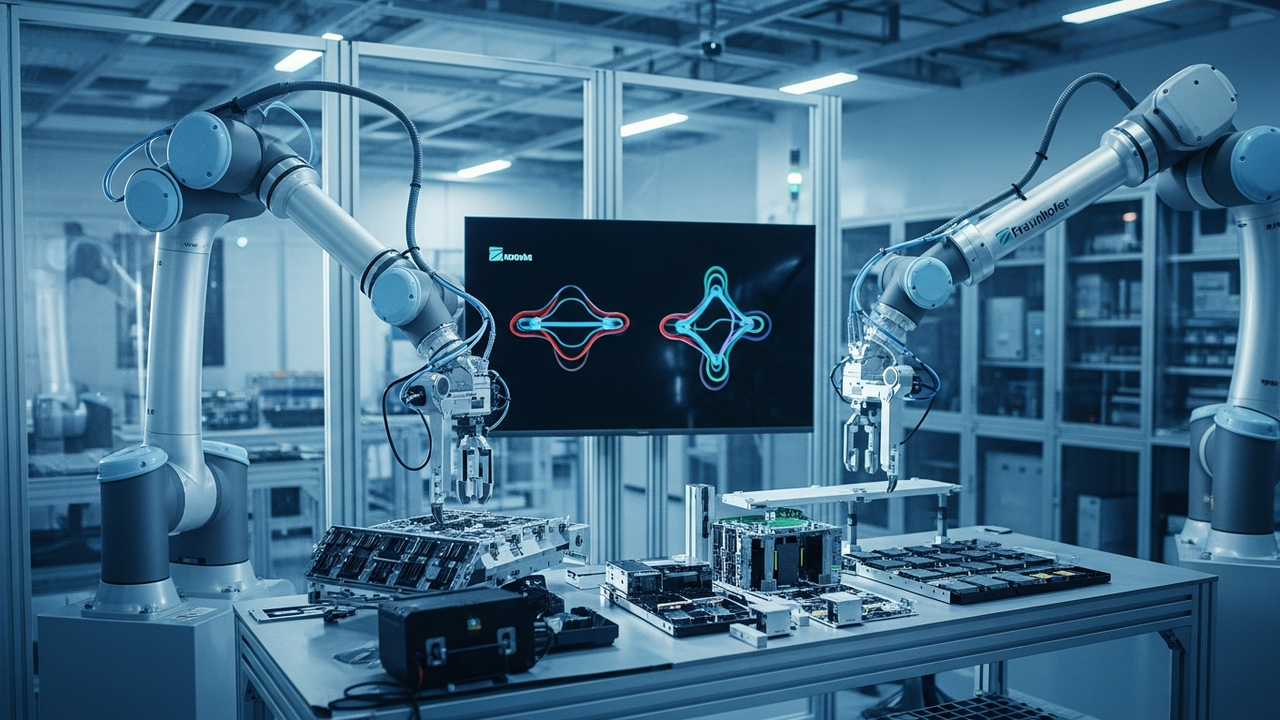
Researchers at Germany’s Fraunhofer Institute have reported a breakthrough in debondable adhesive technology, holding the potential to fundamentally transform electronics recycling processes. This new technology is characterized by its ability to facilitate the easy separation of components, despite their strong initial bonding, through the application of specific external stimuli (e.g., heat or certain solvents), allowing components to be recovered undamaged. This breakthrough significantly enhances the efficiency of recovering precious resources such as noble metals and rare earths from electronic waste (e-waste), directly contributing to environmental load reduction and resource circulation.
Technical Details
- Selective Debonding Mechanism: The new adhesive maintains strong adhesion under normal operating conditions but is designed to rapidly lose its adhesive strength when exposed to specific temperatures, pH values, or certain chemical solvents. This enables component separation only when desired.
- Improved Material Recovery Efficiency: The ease of component separation allows for efficient sorting and recovery of valuable metals (gold, silver, copper, etc.) and rare earths from IC chips, capacitors, connectors, and other components. This improves both the purity and quantity of recovered materials compared to conventional mechanical shredding and chemical dissolution processes.
- Reduced Environmental Impact: The technology lowers energy consumption and chemical usage in the recycling process, mitigating environmental pollution associated with e-waste incineration and landfilling.
- Broad Applicability to Electronics: Expected to be applied across a wide range of electronic devices, including smartphones, tablets, PCs, and home appliances, contributing to enhanced sustainability throughout the product lifecycle.
Background & Context
In modern society, the consumption of electronic devices is growing exponentially, leading to a critical escalation of the e-waste problem. While e-waste contains environmentally harmful substances, it also harbors significant quantities of valuable resources such as gold, silver, palladium, cobalt, and rare earths. However, traditional adhesives permanently bond components, making disassembly for recycling difficult and resulting in low recovery rates for these valuable resources. Strict regulations aimed at improving e-waste recycling rates have been introduced worldwide, including in the EU, driving high expectations for debondable adhesive technologies.
Strategic Significance & Outlook
The Fraunhofer Institute’s technology will be a crucial factor in accelerating the transition to a circular economy within the electronics industry. Debondable adhesives will promote the concept of ‘ecodesign,’ where recyclability is considered from the product design stage, potentially becoming a standard method for component reuse and resource recovery in future electronic devices. This is expected to lead to reduced manufacturing costs, stabilized resource supply, and enhanced corporate image, significantly contributing to the realization of a sustainable society. Further research and development, alongside collaboration with industry, will be key focal points.
Source: https://www.iap.fraunhofer.de/en/press_releases/2026.html?refreshed=true
Get our weekly technology intelligence — free
Receive an infographic that lets you judge at a glance whether each field’s analysis report is worth reading.
Subscribe Free — Weekly Tech Intelligence
By subscribing, you’ll receive Troy-Technical’s weekly technology intelligence newsletter.
- Your email and selected fields are used only to deliver the newsletter.
- We never share your information with third parties.
- You can unsubscribe anytime via the link in each email.
See our Privacy Policy for details.
Takes about a minute · Unsubscribe anytime




Comments