Key Findings
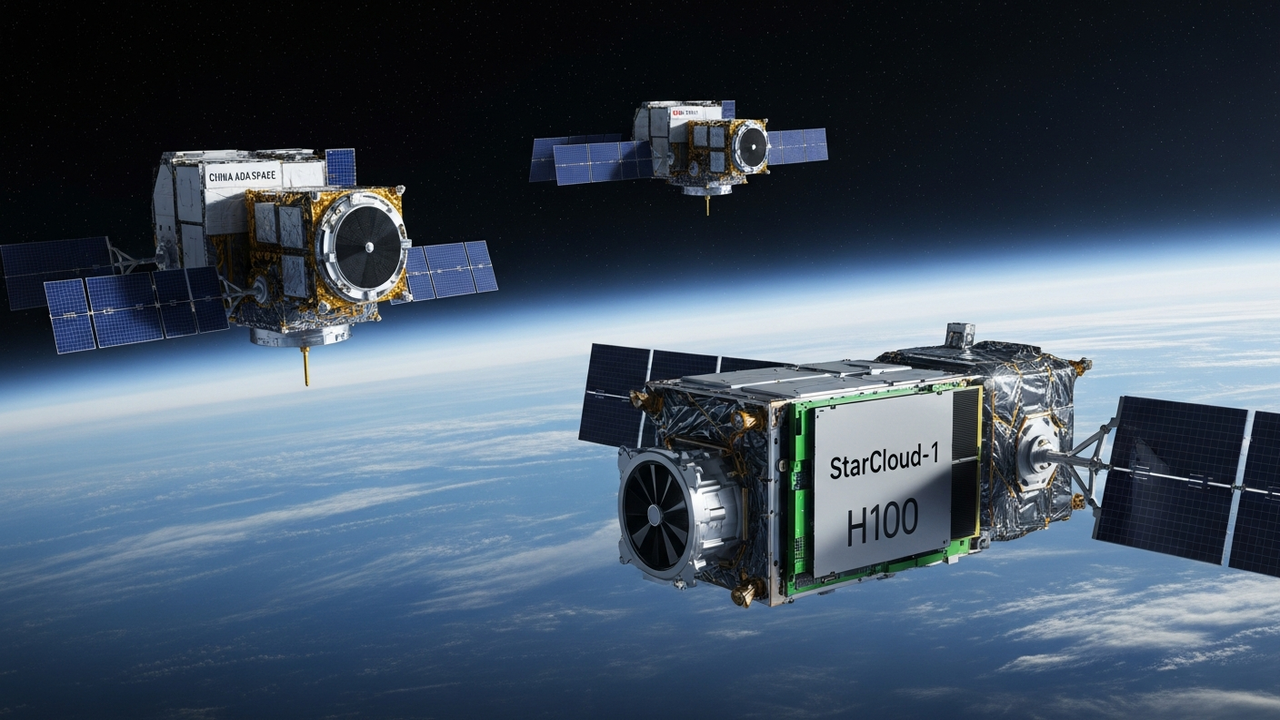
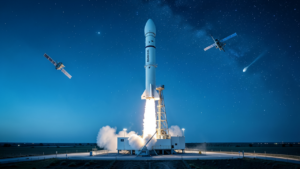
The race for in-space data processing capabilities is rapidly accelerating, bringing the concept of orbital data centers (ODCs) closer to reality. This trend is highlighted by the Starcloud-1 satellite, which successfully trained Google AI models using NVIDIA H100 chips in orbit, and China’s ADA Space, which has launched the initial 12 satellites of its ambitious 2,800-satellite constellation designed for in-orbit AI processing. Furthermore, Sophia Space aims to deliver megawatt-class power via its innovative ‘TILEs’ thin satellites, collectively promising a significant leap in high-performance computing and AI processing in space, which is expected to unlock new opportunities across the space economy.
Technical Details
The realization of orbital data centers is underpinned by several key technological advancements:
- High-Performance AI Chips in Space: The Starcloud-1 satellite successfully integrated NVIDIA’s powerful H100 AI chip and demonstrated its ability to train Google AI models directly in orbit. This capability signifies a paradigm shift, enabling large-scale AI computations traditionally performed in terrestrial data centers to occur in space. This reduces data transfer latency, enhances real-time processing, and improves data security. Ongoing innovations focus on radiation hardening and efficient thermal management to ensure chip longevity and performance in harsh space environments.
- Large Satellite Constellations for AI Processing Networks: China’s ADA Space is deploying a massive constellation of 2,800 satellites, with the first 12 already launched. These satellites are designed to perform AI inference and processing directly on board, handling vast amounts of data from Earth observation, communication, and navigation. By processing data at the source, they reduce the demand on downlink bandwidth and accelerate analysis, transmitting only actionable insights to Earth.
- Megawatt-Class Space Power Generation: High-performance computing in orbit necessitates substantial power. Sophia Space’s developing ‘TILEs’ (Thin-Integrated Large-area Enclosures) satellites are designed to provide megawatt-class power, far exceeding traditional satellite capabilities. This innovation is crucial for powering future orbital data centers, large-scale in-space manufacturing facilities, and ambitious deep-space exploration missions. The thin-film design allows for efficient deployment and significant power generation from solar energy.
Background & Context
Terrestrial data centers face challenges related to immense energy consumption, physical security, and geographic limitations. Moreover, the sheer volume of data collected by Earth observation satellites often overwhelms downlink bandwidth, leading to delays in processing and analysis. The concept of in-orbit computing and space data centers emerged as a transformative solution to these issues. By processing data at its point of generation (in space), only essential information needs to be transmitted to Earth, reducing communication loads, enhancing real-time decision-making, and fostering autonomous operations. This creates fertile ground for new service models and business opportunities within the burgeoning space economy.
Strategic Significance & Outlook
The intensifying competition in in-orbit computing is poised to redefine the role of AI in space and impact various industries globally. Real-time analysis by onboard AI will enable faster and more precise responses in sectors such as Earth observation, weather forecasting, disaster monitoring, defense, and deep-space exploration. The adaptation of high-performance chips like NVIDIA’s H100 for space applications ensures continuous improvement in space computing capabilities as hardware evolves. ADA Space’s constellations and Sophia Space’s power technologies are foundational elements of future space infrastructure, transforming space from merely a data collection point into a platform for advanced data processing and service delivery. This trend has the potential to exponentially expand the scale and scope of the space economy, driving innovation and enabling unprecedented capabilities for humanity.
Source: https://aerospaceamerica.aiaa.org/features/inside-the-space-data-race/
Get our weekly technology intelligence — free
Receive an infographic that lets you judge at a glance whether each field’s analysis report is worth reading.
Subscribe Free — Weekly Tech Intelligence
By subscribing, you’ll receive Troy-Technical’s weekly technology intelligence newsletter.
- Your email and selected fields are used only to deliver the newsletter.
- We never share your information with third parties.
- You can unsubscribe anytime via the link in each email.
See our Privacy Policy for details.
Takes about a minute · Unsubscribe anytime



Comments