
Key Findings
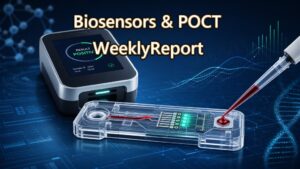
According to recent research, biosensors significantly enhanced by the integration of nanomaterials and artificial intelligence (AI) are rapidly modernizing the field of asthma diagnostics. Optical biosensors, in particular, are gaining prominence due to their capacity for real-time, label-free detection and their easy miniaturization into Point-of-Care Testing (POCT) devices. Furthermore, recently developed electrochemical biosensors have demonstrated a high-sensitivity capability to detect asthma-related biomarkers such as Interleukin-8 (IL-8), Interleukin-10 (IL-10), and IP-10 in saliva samples at previously challenging low concentrations. This breakthrough promises to enable earlier and more accurate diagnosis of asthma, contributing to the optimization of personalized treatment strategies tailored to individual patient pathologies.
Technical / Clinical Details
Optical biosensors operate on the principle of detecting optical changes (e.g., refractive index, fluorescence, surface plasmon resonance) that occur from the interaction between biomolecules and the sensor surface. The incorporation of nanomaterials (e.g., nanoparticles, nanowires) dramatically boosts sensitivity and specificity by increasing the sensor’s surface area, amplifying signals, and lowering detection limits. Electrochemical biosensors measure changes in current or potential generated by the redox reactions of biomarkers. Cytokines like IL-8, IL-10, and IP-10 in saliva are known indicators of airway inflammation, but their concentrations are typically very low, necessitating highly sensitive detection methods. The developed electrochemical sensors, by combining nanostructured electrodes with specific receptor molecules, have demonstrated the ability to detect these biomarkers at picogram/mL levels, achieving sensitivity comparable to or even surpassing traditional lab-based ELISA methods. AI algorithms further enhance diagnostic accuracy and clinical utility by analyzing complex data patterns collected from the sensors, reducing false positives, and building models to predict asthma severity and exacerbation risk.
Background & Context
Asthma is a chronic respiratory disease affecting hundreds of millions worldwide, for which accurate diagnosis and effective management are crucial for improving patients’ quality of life. However, current diagnostic methods (e.g., spirometry, symptom assessment) often suffer from subjectivity or difficulty in detecting early pathological changes. Biosensors enhanced by nanomaterials and AI aim to overcome these challenges, offering more objective, rapid, and non-invasive diagnostic tools. Their integration into POCT devices facilitates diagnosis at clinics or even patients’ homes, improving healthcare access and shortening diagnostic turnaround times. This technological advancement drives personalized medicine for asthma, potentially reducing unnecessary treatments and minimizing drug side effects.
Strategic Significance & Outlook
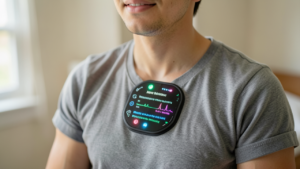
Nanomaterial and AI-enabled biosensors hold promise for application beyond asthma diagnostics, extending to the diagnosis and monitoring of other respiratory and allergic diseases. In the future, these sensors are expected to be integrated into wearable devices, allowing patients to continuously monitor their respiratory health status in their daily lives. This capability would enable early detection of symptom exacerbation and timely medical intervention, thereby preventing severe asthma attacks and reducing hospitalization rates. Furthermore, anonymized population health data analyzed by AI could help identify regional allergen triggers and optimize public health strategies, establishing new standards in asthma management and potentially transforming how respiratory health is monitored and treated globally.
Source: https://www.mdpi.com/2624-845X/7/3/16
Get our weekly technology intelligence — free
Receive an infographic that lets you judge at a glance whether each field’s analysis report is worth reading.
Subscribe Free — Weekly Tech Intelligence
By subscribing, you’ll receive Troy-Technical’s weekly technology intelligence newsletter.
- Your email and selected fields are used only to deliver the newsletter.
- We never share your information with third parties.
- You can unsubscribe anytime via the link in each email.
See our Privacy Policy for details.
Takes about a minute · Unsubscribe anytime







Comments