Key Findings
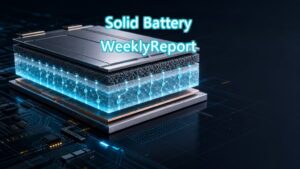
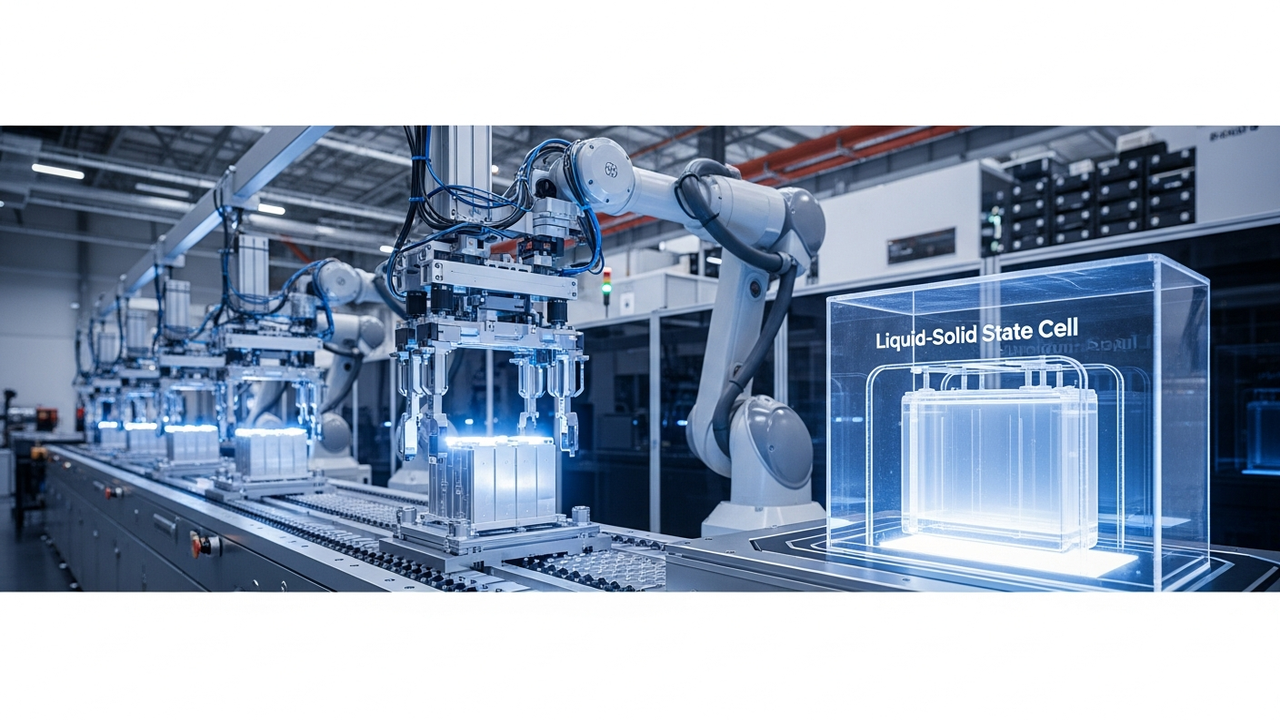
Tianmu Lake Institute of Advanced Energy Storage Technologies (TIES), a key battery supplier for Nio, has unveiled new high-capacity ‘liquid-solid cells’ in 314Ah and 588Ah formats. The company claims its proprietary ‘in-situ solidification’ manufacturing process allows existing lithium-ion battery production lines to be converted to semi-solid battery manufacturing with less than 10% modification to equipment. This innovative approach promises to alleviate significant bottlenecks in manufacturing costs and scaling up production.
Technical Details
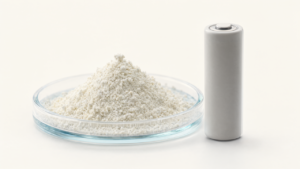
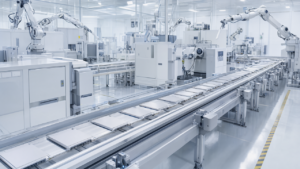
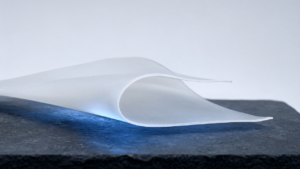
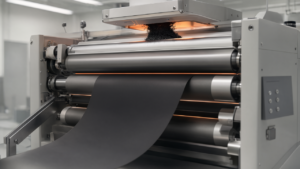
TIES’s ‘in-situ solidification’ process capitalizes on a mechanism where the liquid electrolyte solidifies within the battery cell, enabling existing lithium-ion battery factory equipment to adapt to semi-solid battery production without substantial capital investment. This method is significantly more efficient and economical than constructing entirely new dedicated manufacturing lines. The newly announced liquid-solid cells comply with China’s new national standard, which came into effect on July 1, 2026. This standard defines ‘liquid-solid batteries’ as those with a liquid content ranging from 5% to 20%, placing TIES’s products squarely within this category. This technology aims to enhance safety and energy density compared to conventional liquid electrolyte batteries, serving as a critical transitional technology until the full commercialization of all-solid-state batteries.
Background & Context
The transition to all-solid-state batteries represents the ultimate goal for providing high energy density and superior safety to EVs, but manufacturing complexity and high costs remain significant barriers. China is committed to establishing global leadership in the EV and battery industries, and semi-solid batteries are viewed as a crucial, pragmatic intermediate step toward achieving this objective. TIES’s technology, by leveraging existing infrastructure, enables the rapid market introduction of semi-solid batteries and ensures cost competitiveness, thereby bolstering the overall competitiveness of China’s battery industry. The enactment of national standards in China plays a vital role in preventing market confusion and fostering healthy technological development.
Strategic Significance & Outlook
TIES’s ‘liquid-solid cells’ and ‘in-situ solidification’ process are poised to significantly impact the acceleration of semi-solid battery mass production and the expansion of high-performance battery supply in the EV market. The ability to convert existing factories substantially reduces investment risks, incentivizing more companies to enter semi-solid battery manufacturing. This is expected to drive improvements in EV performance and enhance price competitiveness, potentially further accelerating consumer adoption of EVs. China’s new national standard could also influence future global battery technology classification and regulations, making TIES’s technological trajectory a key area to watch.
Get our weekly technology intelligence — free
Receive an infographic that lets you judge at a glance whether each field’s analysis report is worth reading.
Subscribe Free — Weekly Tech Intelligence
By subscribing, you’ll receive Troy-Technical’s weekly technology intelligence newsletter.
- Your email and selected fields are used only to deliver the newsletter.
- We never share your information with third parties.
- You can unsubscribe anytime via the link in each email.
See our Privacy Policy for details.
Takes about a minute · Unsubscribe anytime