Key Findings
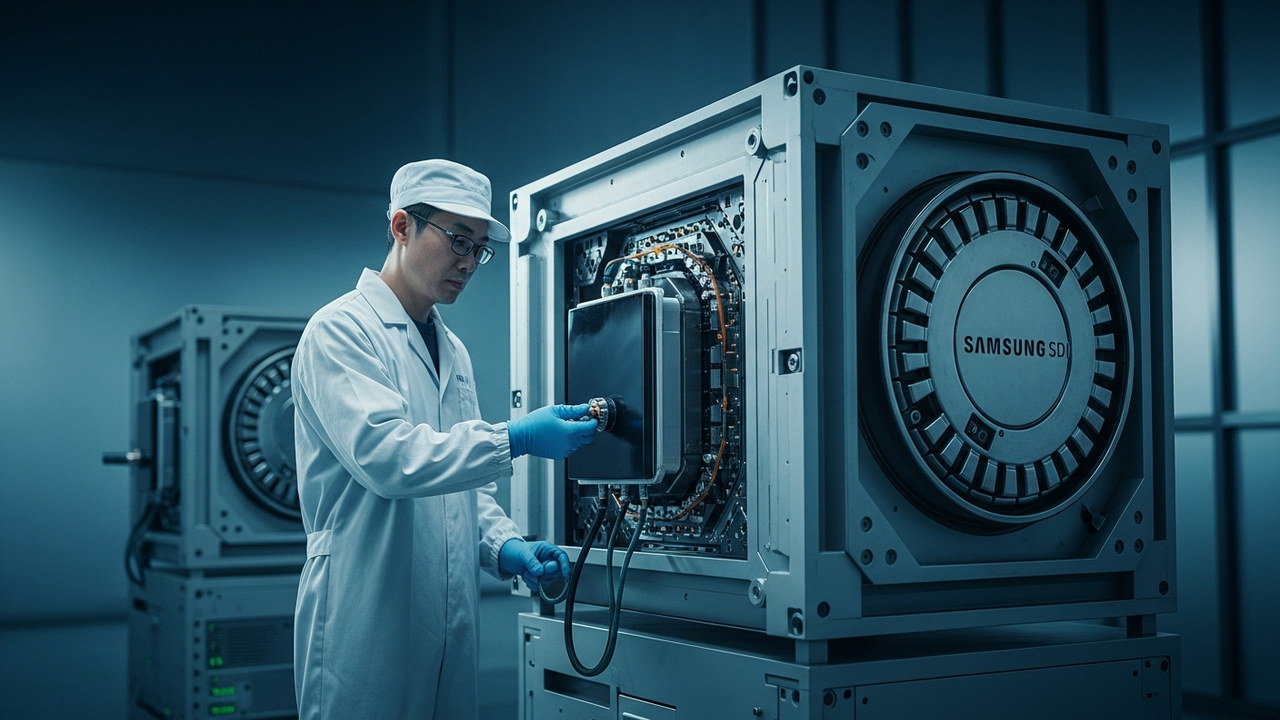
Samsung SDI has announced that its prototype samples of all-solid-state batteries (ASBs) have received highly positive evaluations from leading global customers across key performance indicators: safety and energy density. The company is targeting mass production of this technology by late 2027 for diverse applications, including electric vehicles (EVs), robotics, and mobile devices.
Technical Details
Samsung SDI is developing solid-state battery technology based on sulfide solid electrolytes, incorporating proprietary techniques to suppress lithium metal anode dendrite growth and establish stable interfaces. The positive customer feedback suggests that these batteries not only achieve high energy density (specific numbers are undisclosed but expected to significantly surpass current lithium-ion batteries) but also meet the stringent safety standards required for EVs and other high-power applications. The target of late 2027 for mass production implies that the company is overcoming challenges related to manufacturing scalability and cost efficiency.
Background & Context
All-solid-state batteries are attracting global attention as a next-generation technology capable of overcoming the primary weaknesses of current lithium-ion batteries: safety (thermal runaway risk) and energy density limitations. Automakers, in particular, are strongly advocating for the early adoption of solid-state batteries to meet the needs for extended EV range and reduced charging times. Announcements of mass production targets by major battery manufacturers like Samsung SDI significantly influence overall market technology trends and the competitive landscape. Furthermore, applications in robotics and mobile devices reflect the growing demand for compact, high-reliability power solutions.
Strategic Significance & Outlook
If Samsung SDI can commence mass production of solid-state batteries in late 2027, the company is poised to establish early leadership in the global ASB market. The commercialization of this technology is expected to dramatically enhance EV safety and performance, encouraging broader consumer adoption. It will also contribute to advancements in robotics and the development of more powerful, longer-lasting mobile devices. Future focus will be on further cost reduction post-mass production, establishing a robust supply chain, and ensuring the capacity to meet global demand.
Get our weekly technology intelligence — free
Receive an infographic that lets you judge at a glance whether each field’s analysis report is worth reading.
Subscribe Free — Weekly Tech Intelligence
By subscribing, you’ll receive Troy-Technical’s weekly technology intelligence newsletter.
- Your email and selected fields are used only to deliver the newsletter.
- We never share your information with third parties.
- You can unsubscribe anytime via the link in each email.
See our Privacy Policy for details.
Takes about a minute · Unsubscribe anytime