Key Findings
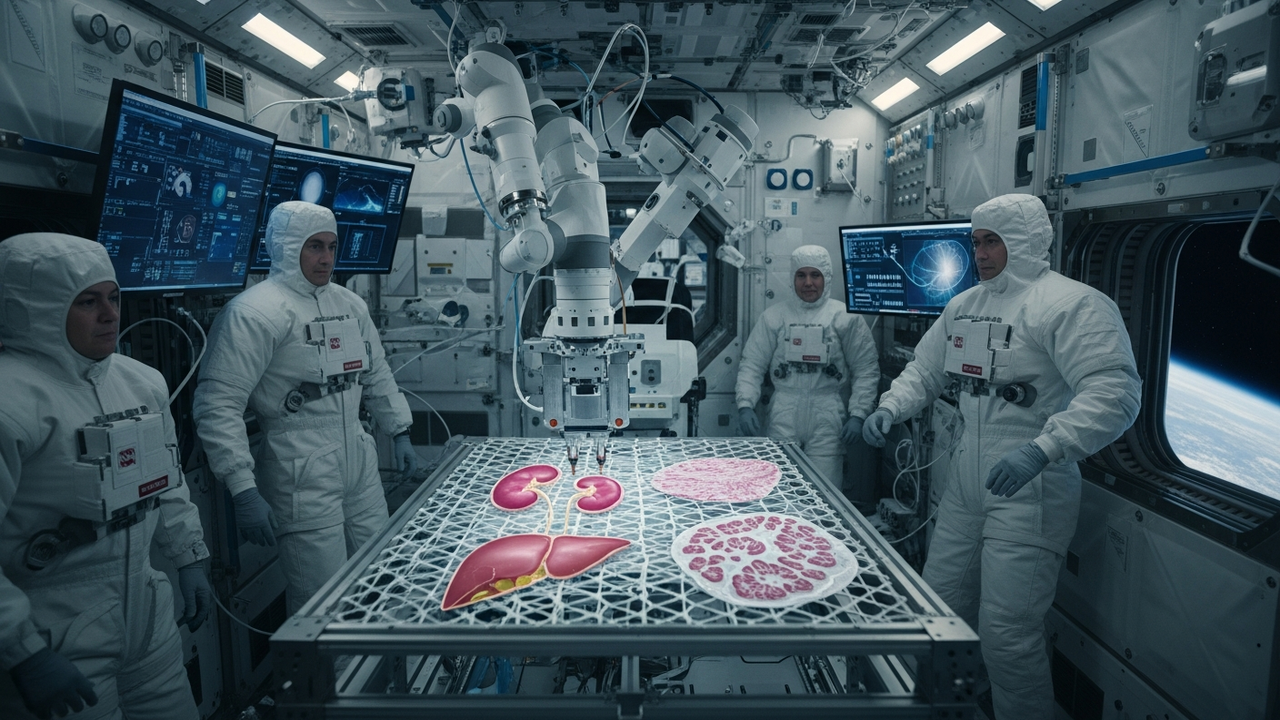
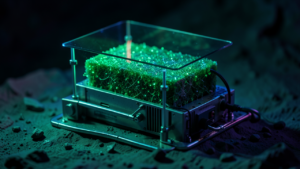
Auxilium Biotechnologies has achieved a significant breakthrough by successfully bioprinting kidney tissue, liver tissue, and 28 neural repair implants aboard the International Space Station (ISS). This unprecedented feat marks the first time three different types of tissues have been printed simultaneously in a single spaceflight mission, providing compelling evidence that microgravity facilitates uniform cell distribution and can significantly accelerate cell biology research.
Technical & Clinical Details
On Earth, 3D bioprinting faces challenges due to gravity-induced cell sedimentation, which compromises the uniformity and structural integrity of printed tissues. In contrast, the microgravity environment eliminates this sedimentation issue, enabling the construction of more precise and complex tissue architectures with uniformly dispersed cells. Auxilium Biotechnologies successfully printed tissue models with appropriately arranged cells relevant to kidney filtration and liver metabolic functions. The neural repair implants, designed to promote regeneration of damaged nervous tissue, are expected to benefit from the uniform structure achieved in microgravity, which could favor cell growth and integration. This technology holds vast potential for developing advanced in vitro models for drug screening, elucidating disease mechanisms, and eventually for organ transplantation applications.
Background & Context
The field of regenerative medicine aims to restore the function of tissues and organs lost due to chronic diseases or injury, with bioprinting technology emerging as a crucial tool for this endeavor. However, as noted, terrestrial manufacturing has inherent limitations. While space-based manufacturing has already demonstrated advantages in areas like protein crystallization and novel material development, bioprinting complex biological tissues represents a new frontier. Auxilium Biotechnologies’ success unequivocally demonstrates that utilizing space as the ultimate manufacturing environment can enable the production of high-quality biological tissues that are challenging to achieve on Earth. This fusion of the space and biotechnology industries is creating new business models and opportunities for technological innovation.
Strategic Significance & Outlook
This milestone strongly suggests that space bioprinting will play a pivotal role in shaping the future of regenerative medicine. Building on this success, Auxilium Biotechnologies aims to increase the complexity and functionality of printed tissues, with an eye toward large-scale manufacturing on future commercial space stations. High-quality tissues manufactured in microgravity could not only improve the accuracy of drug discovery research on Earth but also potentially lead to the development of transplantable artificial organs. This advancement indicates that space is becoming a new platform contributing to human health and medical progress, holding revolutionary potential for the regenerative medicine sector.
Get our weekly technology intelligence — free
Receive an infographic that lets you judge at a glance whether each field’s analysis report is worth reading.
Subscribe Free — Weekly Tech Intelligence
By subscribing, you’ll receive Troy-Technical’s weekly technology intelligence newsletter.
- Your email and selected fields are used only to deliver the newsletter.
- We never share your information with third parties.
- You can unsubscribe anytime via the link in each email.
See our Privacy Policy for details.
Takes about a minute · Unsubscribe anytime




Comments