
Key Findings
The semiconductor supply chain for AI chips is facing severe bottlenecks, primarily due to the scarcity of High-Bandwidth Memory (HBM), indispensable for GPUs/XPUs from leading manufacturers like Nvidia, AMD, and Google, and the complex packaging capacity it demands. A further critical constraint is the global shortage of Ajinomoto Build-up Film (ABF), a foundational material for virtually all advanced semiconductor packaging. Ajinomoto anticipates an ABF supply gap exceeding 20% by 2027, which is expected to significantly restrict the production and delivery of AI chips.
Technical / Clinical Details
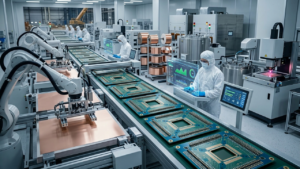
HBM is a technology that vertically stacks multiple DRAM dies, enabling ultra-fast and low-power data exchange, crucial for determining the performance of AI accelerators. Producing more HBM requires not only DRAM wafer fabrication capacity but also sophisticated packaging capabilities such as CoWoS (Chip-on-Wafer-on-Substrate). In this packaging process, ABF is extensively used as an insulating layer in IC package substrates. ABF plays a vital role in transmitting electrical signals, dissipating heat, and providing mechanical protection, directly impacting the manufacturing yield and performance of advanced semiconductors. However, the explosion in AI demand has led to a rapid surge in demand for specialized materials like ABF, outstripping suppliers’ ability to scale up. Ajinomoto’s projected supply gap of over 20% presents a substantial hurdle for future AI infrastructure deployment.
Background & Context
The exponential growth of AI data centers has profoundly reshaped the entire semiconductor supply chain. While logic chip miniaturization processes once represented the primary bottleneck, today, HBM, advanced packaging, and the specialized materials they require are the biggest impediments to the efficient supply of AI accelerators. The ABF shortage, exacerbated by Ajinomoto’s near-monopoly in the market, is having widespread repercussions across the industry. This situation underscores that semiconductor manufacturing now faces complex challenges spanning material science, back-end processing, and global supply chain management. Governments and semiconductor companies worldwide are focusing on strengthening regional manufacturing capabilities and developing alternative materials to enhance supply chain resilience, but immediate solutions remain elusive.
Strategic Significance & Outlook
The HBM and ABF shortages are expected to constrain AI chip supply in the short term, potentially leading to price increases and delays in AI infrastructure development. Semiconductor manufacturers must enhance both DRAM wafer fab and packaging capacities for HBM production, but increasing the output of specialized materials like ABF takes time. Although Ajinomoto is investing in increased production, it is anticipated to take time to catch up with demand growth. This bottleneck could prompt AI chip designers to explore alternative memory solutions (e.g., using GDDR6 or new memory architectures), develop ABF substitutes, or seek more efficient packaging methods. In the long run, supply chain diversification and the establishment of regional production capabilities for critical materials and components will be essential for the sustainable growth of the semiconductor industry in the AI era.
Source: https://semiengineering.com/data-center-ai-growth-faces-challenging-bottlenecks/
Get our weekly technology intelligence — free
Receive an infographic that lets you judge at a glance whether each field’s analysis report is worth reading.
Subscribe Free — Weekly Tech Intelligence
By subscribing, you’ll receive Troy-Technical’s weekly technology intelligence newsletter.
- Your email and selected fields are used only to deliver the newsletter.
- We never share your information with third parties.
- You can unsubscribe anytime via the link in each email.
See our Privacy Policy for details.
Takes about a minute · Unsubscribe anytime







Comments