Key Findings
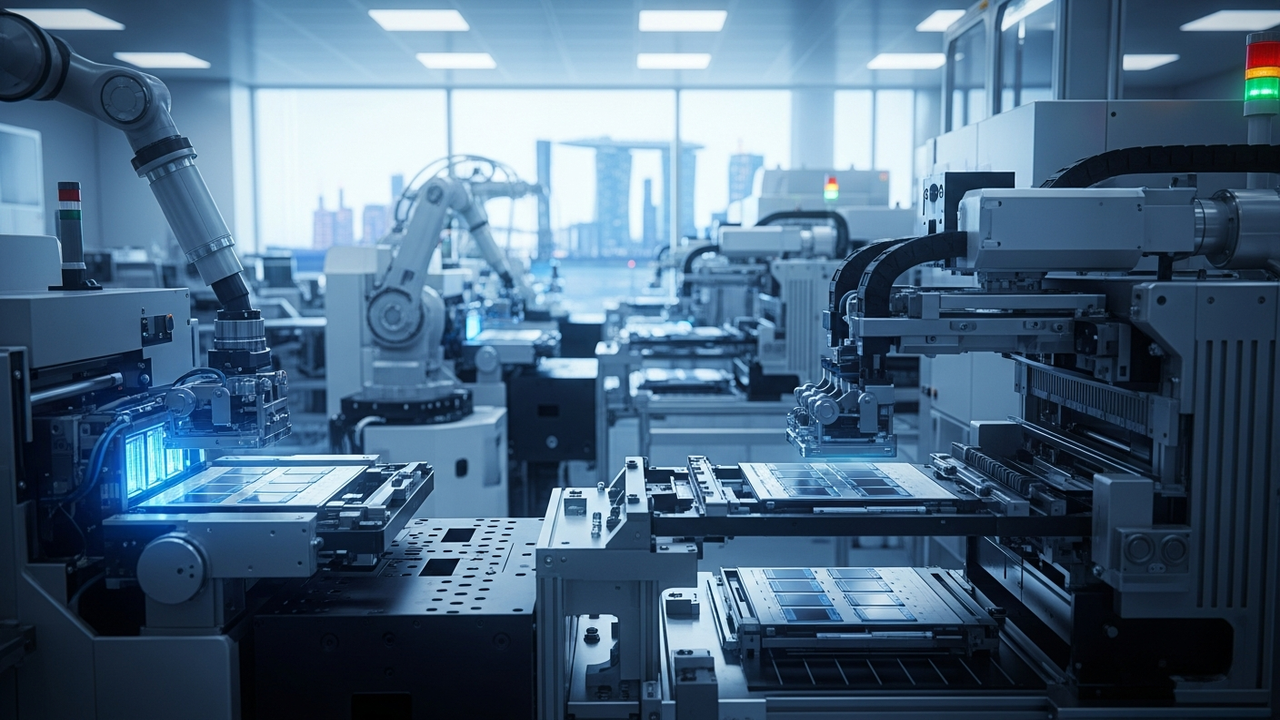
Micron Technology has initiated a massive expansion project at its Hiroshima, Japan factory, committing approximately $9.3 billion (around 1.4 trillion JPY) to enhance High-Bandwidth Memory (HBM) production, crucial for AI processors. The new facility aims to begin shipments around summer 2028 and is receiving substantial support from Japan’s Ministry of Economy, Trade and Industry. Concurrently, Micron is actively expanding its HBM packaging capacity in Singapore, with operations scheduled to start in 2026 and significant additional capacity anticipated by H1 2027. These investments represent a strategic move to alleviate the HBM supply shortage, which has become a primary bottleneck for AI infrastructure, and to solidify Micron’s competitive position in the global AI race.
Technical / Clinical Details
HBM is an innovative memory technology that vertically stacks multiple DRAM dies, interconnected using Through-Silicon Vias (TSVs), to achieve ultra-high-speed and low-power data transfer. AI accelerators, which require processing vast amounts of data at high speeds, rely on HBM for bandwidth and efficiency that traditional DRAM cannot provide. Micron’s Hiroshima facility will incorporate state-of-the-art HBM manufacturing processes, supporting HBM3E and future HBM4 generations. The expansion of packaging capacity in Singapore reflects the critical importance of back-end processes in HBM production, with advanced technologies like 3D stacking and Thermo-Compression Bonding (TCB) expected to be deployed. HBM production demands extremely high yields; even minor defects can render an entire multi-layer stack unusable, necessitating precise manufacturing techniques and rigorous quality control. Micron’s investment aims to overcome these technical challenges and enable large-scale, reliable HBM supply.
Background & Context
The exponential growth of AI has dramatically boosted the demand for high-performance AI chips, making HBM the most significant bottleneck in their supply. Leading AI chip manufacturers, such as Nvidia and AMD, are strengthening long-term agreements with memory suppliers to secure a stable HBM supply. Micron’s investment in its Hiroshima factory aligns perfectly with Japan’s government strategy to bolster its semiconductor industry, emphasizing economic security and domestic manufacturing capabilities, thus receiving substantial subsidies. This move is part of a global trend to diversify supply chains and secure more stable manufacturing bases amid intensifying geopolitical competition, particularly between the U.S. and China. Samsung and SK Hynix in South Korea are also making substantial investments in HBM packaging capacity, indicating a heated competitive landscape in the AI memory market.
Strategic Significance & Outlook
Micron’s significant investments in Hiroshima and Singapore are expected to substantially expand HBM supply capacity in the long term, supporting the sustained growth of the AI industry. The Hiroshima plant’s operation from 2028 onwards is particularly anticipated to contribute significantly to HBM supply for next-generation AI infrastructure. However, the pace of HBM demand growth is exceptionally fast, and these investments may not fully resolve short-term supply shortages. Competition in the HBM market will increasingly be determined not just by production capacity, but also by yield rates, power efficiency, and the ability to adopt next-generation technologies (HBM4, HBM4E, hybrid bonding). Micron’s strategy is poised to establish the company as a key player in the HBM market, playing a crucial role in supporting the future evolution of AI technology.
Source: https://techscurrent.com/2026/07/micron-hiroshima-hbm-ai-memory-supply/
Get our weekly technology intelligence — free
Receive an infographic that lets you judge at a glance whether each field’s analysis report is worth reading.
Subscribe Free — Weekly Tech Intelligence
By subscribing, you’ll receive Troy-Technical’s weekly technology intelligence newsletter.
- Your email and selected fields are used only to deliver the newsletter.
- We never share your information with third parties.
- You can unsubscribe anytime via the link in each email.
See our Privacy Policy for details.
Takes about a minute · Unsubscribe anytime





Comments