Key Findings
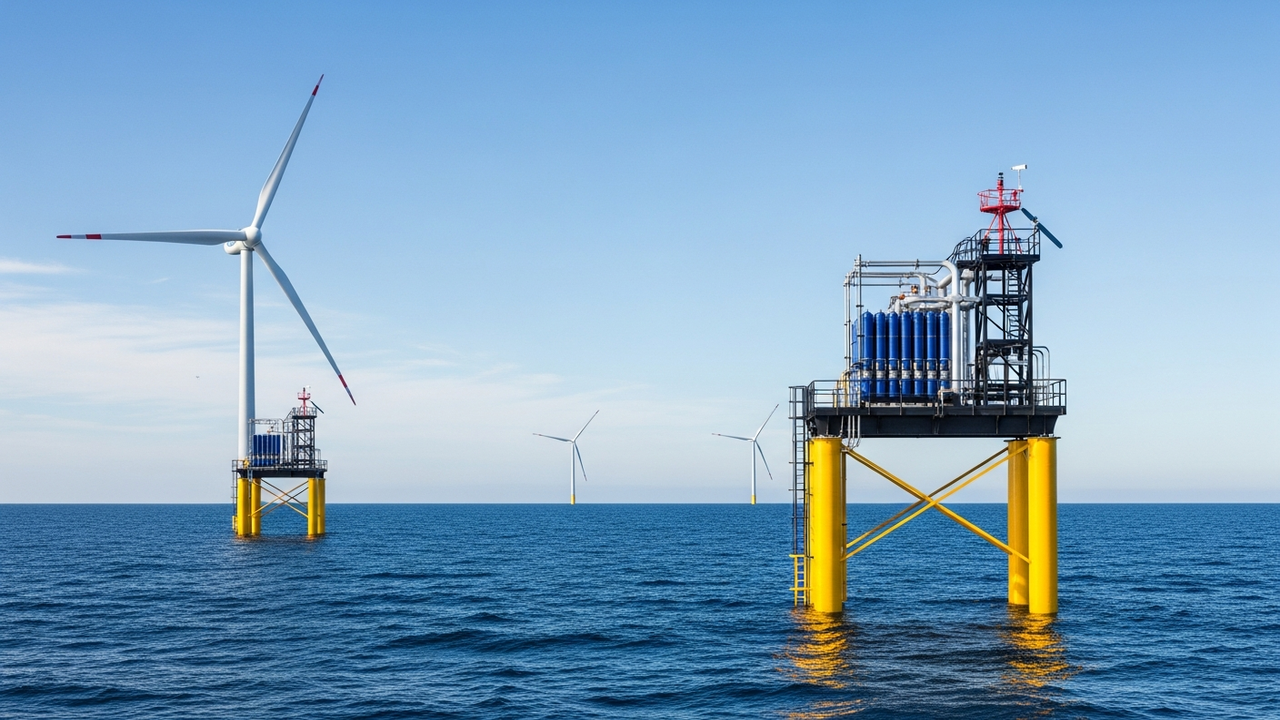
The academic review, “Offshore Integrated Energy Systems for Low-Carbon Transition,” critically examines energy storage and management challenges within offshore wind-based green hydrogen production. The study provides a detailed analysis of the intricate energy-flow dynamics between offshore wind generation and electrolyzers, emphasizing the vital need for system adaptation and efficiency optimization in variable marine environments.
Technical / Clinical Details
- Offshore Wind and Electrolyzer Integration: The concept involves utilizing electricity generated by offshore wind farms directly for offshore water electrolysis to produce green hydrogen. This approach is expected to alleviate grid congestion and enhance hydrogen transport flexibility.
- Energy Storage and Management: To cope with the inherent variability of offshore wind power, effective energy storage systems (such as hydrogen itself or batteries) and advanced energy management systems are indispensable. These ensure stable operation of electrolyzers and efficient hydrogen production.
- Technology Maturity and Challenges: The review assesses individual technologies—offshore wind power, water electrolysis, hydrogen storage, and hydrogen transport—as generally mature. However, it points out that integrating these technologies to function optimally in harsh and variable marine environments requires further research and optimization in terms of overall system design, operation, and durability.
Background & Context
Large-scale green hydrogen production is crucial for achieving global decarbonization targets, and offshore wind power is emerging as a leading power source for this purpose. Offshore hydrogen production avoids large-scale land-use constraints onshore and potentially allows for the repurposing of existing gas pipelines and infrastructure for hydrogen transport. Nevertheless, the complexity of system integration and operational costs remain significant challenges.
Strategic Significance & Outlook
This review highlights the immense potential of offshore wind-based green hydrogen production while outlining concrete research and development directions for its practical implementation. Future focus areas will include improving the resilience of integrated systems in dynamic offshore conditions, developing advanced efficiency optimization algorithms, and establishing robust maintenance strategies. If these challenges are addressed, offshore green hydrogen is poised to play a pivotal role in the global energy mix.
Source: https://www.mdpi.com/2227-9717/14/13/2162
Get our weekly technology intelligence — free
Receive an infographic that lets you judge at a glance whether each field’s analysis report is worth reading.
Subscribe Free — Weekly Tech Intelligence
By subscribing, you’ll receive Troy-Technical’s weekly technology intelligence newsletter.
- Your email and selected fields are used only to deliver the newsletter.
- We never share your information with third parties.
- You can unsubscribe anytime via the link in each email.
See our Privacy Policy for details.
Takes about a minute · Unsubscribe anytime






Comments