Key Findings
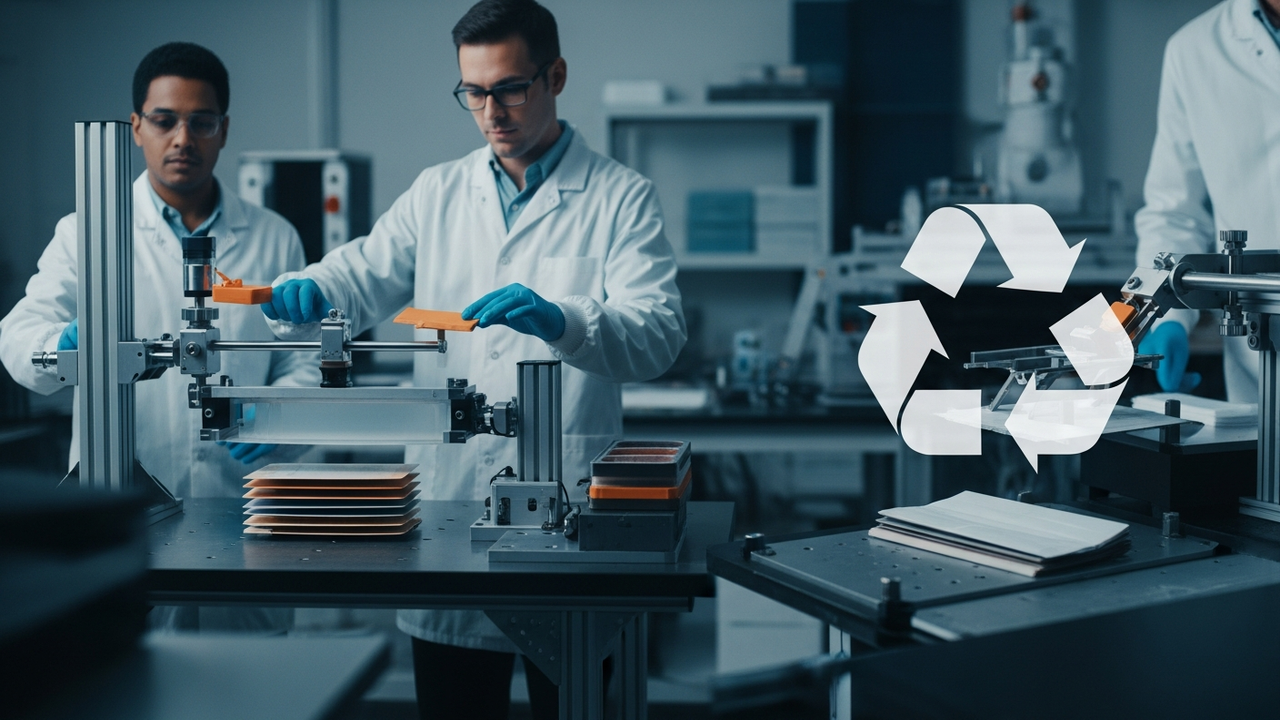
Researchers have developed a groundbreaking UV-cured coating system featuring reversible adhesion, achieved by integrating substrate silanization with dynamic disulfide chemistry. This novel technology enables robust adhesion while allowing for on-demand debonding. Crucially, the system is photoinitiator-free, leading to a reduced environmental footprint and a cleaner manufacturing process. This achievement addresses significant challenges in recycling complex multi-material composites and paves the way for advanced sustainable packaging solutions.
Technical/Clinical Details
The developed coating enhances adhesion through silanization of the substrate surface, followed by UV curing of a polymer network incorporating dynamic disulfide bonds. Disulfide bonds possess a unique dynamic property, allowing them to reversibly cleave and reform in response to specific external stimuli (e.g., heat or certain chemicals), thus enabling on-demand debonding and re-adhesion of the coating. The ‘photoinitiator-free’ approach circumvents contamination and toxicity issues associated with byproducts typically generated by photoinitiators in conventional UV curing processes, offering a safer and more eco-friendly material. For multi-layer packaging, where different materials are often strongly bonded and difficult to separate, this technology facilitates layer separation, enabling the recycling of individual components.
Background & Context
The packaging industry faces immense pressure to address plastic waste and increase recycling rates, with multi-layer composite materials posing a particularly difficult challenge. Conventional adhesives create exceptionally strong bonds, making it arduous to efficiently separate the distinct polymer layers that constitute multi-layer films. This difficulty has historically been a major barrier to effective recycling processes. The reversible adhesion coating presented in this research offers a highly promising solution to this problem. By enabling easy separation of individual layers within multi-layer packaging, it facilitates high-quality recycling of each material, expected to contribute significantly to the realization of a circular economy.
Strategic Significance & Outlook
This reversible adhesion UV-cured coating technology holds broad application potential beyond multi-layer packaging, including electronic device disassembly and repair, automotive component recycling, and medical device reusability. Particularly in modern manufacturing, which demands both high performance and sustainability, this technology offers the potential to reduce environmental impact across the entire material lifecycle and enhance resource efficiency. Further research and commercialization efforts are anticipated to position this as a transformative solution for waste reduction and recycling promotion across numerous industries.
Get our weekly technology intelligence — free
Receive an infographic that lets you judge at a glance whether each field’s analysis report is worth reading.
Subscribe Free — Weekly Tech Intelligence
By subscribing, you’ll receive Troy-Technical’s weekly technology intelligence newsletter.
- Your email and selected fields are used only to deliver the newsletter.
- We never share your information with third parties.
- You can unsubscribe anytime via the link in each email.
See our Privacy Policy for details.
Takes about a minute · Unsubscribe anytime



Comments