Key Findings
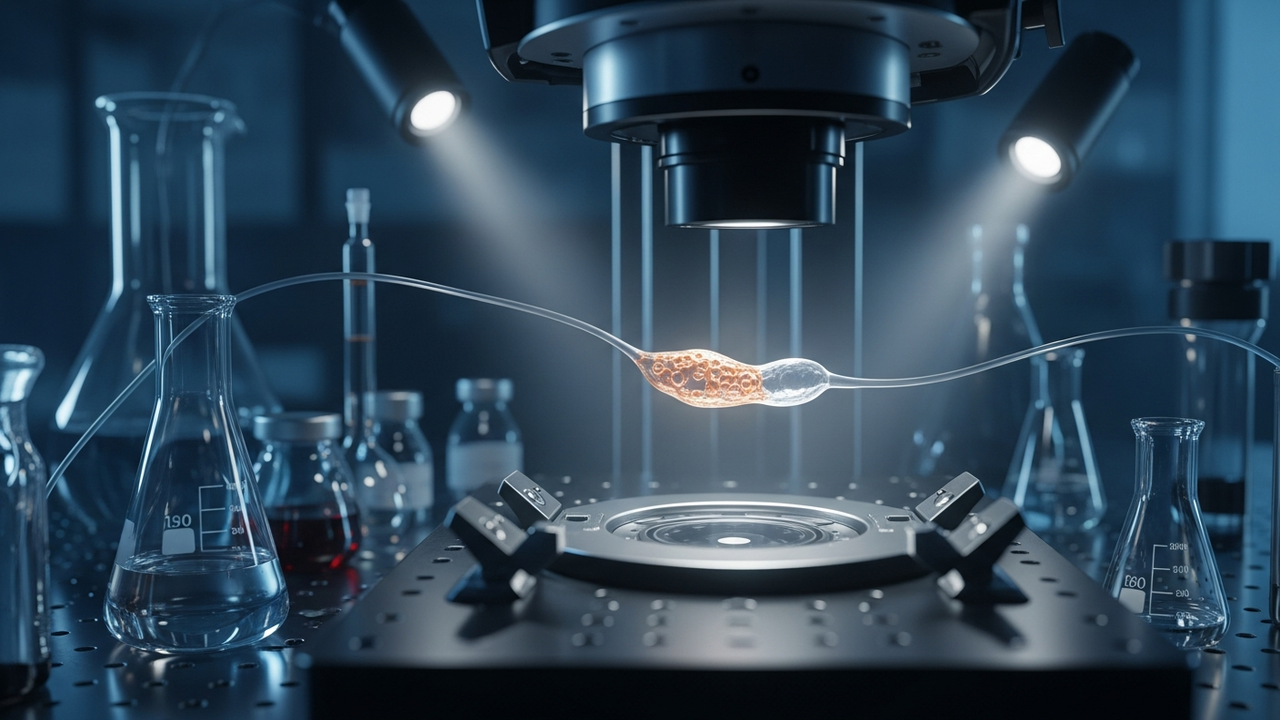
A recent research paper published in ACS Applied Polymer Materials reports the development of groundbreaking bioadaptive neural electrode coatings based on catechol-functionalized basic amino acid alternating copolymers. These novel materials uniquely combine exceptional adhesion, superior biocompatibility, and favorable electrochemical properties, indicating significant potential as high-performance biomaterial coatings. This technology is critically important for enhancing the long-term stability and performance of neural interfaces, addressing key challenges in implantable medical devices.
Technical / Clinical Details
The research team synthesized unique polymers by alternately copolymerizing monomers containing catechol groups (known for their strong surface adhesion) with monomers containing basic amino acids (which promote biocompatibility and cell interactions). Inspired by dopamine, the catechol structures enable strong adhesion to various material surfaces (metals, polymers, ceramics). Simultaneously, the basic amino acid segments facilitate cell attachment and growth, aiding the integration of the electrode with biological tissues. Electrochemical characterization revealed that the coated electrodes maintain low impedance and good charge transfer capability, suggesting high performance in recording and stimulating neural signals. This bioadaptive characteristic ensures stable function post-implantation while minimizing undesirable reactions with surrounding tissues.
Background & Context
Neural electrodes play a vital role in modern medicine, particularly in applications like deep brain stimulation (DBS), neural prostheses, and brain-machine interfaces (BMIs). However, implanted electrodes consistently face challenges related to biocompatibility (inflammatory responses, fibrous capsule formation) and a lack of long-term stability at the electrode-tissue interface. These issues can lead to device performance degradation over time and necessitate re-operations. The coating materials developed in this study offer a promising solution to these challenges, enabling more effective and prolonged interaction between electrodes and neural tissue.
Strategic Significance & Outlook
This bioadaptive neural electrode coating technology is poised to significantly impact the development of next-generation neuro-medical devices. By improving long-term biocompatibility and functional stability, it not only enhances patients’ quality of life but also opens new avenues for treating neurological disorders. Researchers and engineers will further validate the safety and efficacy of these coating materials and develop scale-up technologies for eventual clinical application. Investors are keenly interested in the potential market impact and growth opportunities this innovative material presents within the neuroscience and medical device sectors.
Source: https://pubs.acs.org/doi/10.1021/acsapm.6c02118
Get our weekly technology intelligence — free
Receive an infographic that lets you judge at a glance whether each field’s analysis report is worth reading.
Subscribe Free — Weekly Tech Intelligence
By subscribing, you’ll receive Troy-Technical’s weekly technology intelligence newsletter.
- Your email and selected fields are used only to deliver the newsletter.
- We never share your information with third parties.
- You can unsubscribe anytime via the link in each email.
See our Privacy Policy for details.
Takes about a minute · Unsubscribe anytime




Comments