Key Findings
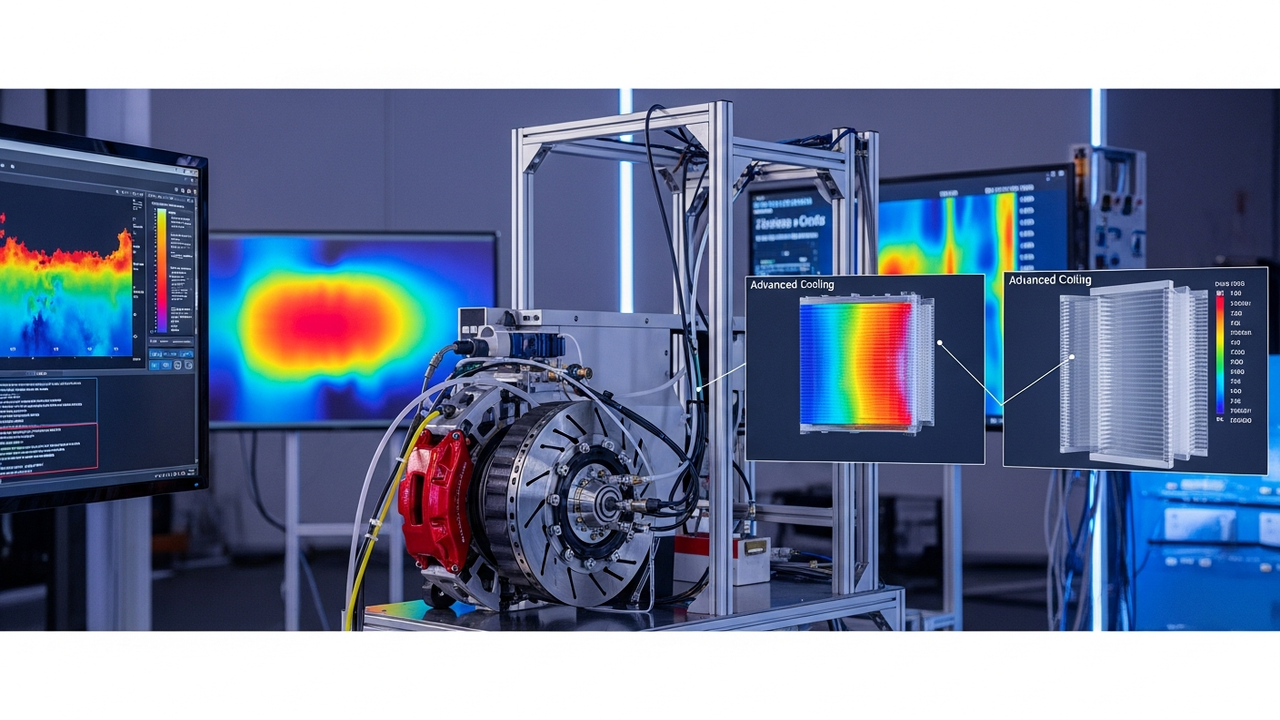
A recent Computational Fluid Dynamics (CFD) evaluation paper published in MDPI presents research focused on the thermal management mechanisms of zero-emission magnetorheological brakes (MRBs). MRBs are garnering significant interest in fields such as electric vehicles and industrial machinery due to their unique advantages of wear-free, electrically controllable braking torque. However, excessive heat generation under repeated high-load operations, leading to performance degradation and challenges in ensuring long-term reliability, has been a major concern. This study emphasizes the promising advancements in phase change materials (PCMs) for thermal energy storage as a potential solution to this critical thermal management issue.
Technical / Clinical Details
MRBs generate braking force by utilizing magnetorheological fluids (MRFs), whose viscosity changes in response to a magnetic field. Controlling this magnetic field allows for precise braking torque adjustment within milliseconds. However, braking inevitably generates heat due to shear friction within the MRF, which can alter MRF properties and lead to system failure. CFD simulations conducted in the study provide a detailed analysis of the internal thermal distribution and fluid flow within MRBs, identifying thermal management bottlenecks. The paper suggests that integrating PCMs into the MRB’s cooling system can absorb excess thermal energy as latent heat, thereby stabilizing the system temperature. PCMs function as a ‘thermal buffer,’ absorbing heat during phase transition at a specific melting point and preventing temperature spikes during this process.
Background & Context
With the proliferation of electric vehicles (EVs) and highly automated industrial machinery, there is a growing demand for more efficient and reliable braking systems. Traditional friction brakes generate wear particles, require regular maintenance, and pose environmental concerns. MRBs are considered a next-generation braking technology, offering non-contact, wear-free operation with fast and precise control, addressing many of these issues. However, thermal management, particularly during continuous high-load operation, has been the greatest technical barrier to their practical implementation. Phase change materials, having made significant strides in thermal energy storage over the past few decades, are expected to greatly enhance MRB performance and reliability when applied to this technology.
Strategic Significance & Outlook
This CFD evaluation study underscores the potential of PCM integration in MRB thermal management. Future research will be crucial, focusing on selecting different types of PCMs, their microencapsulation techniques, and optimal integration designs within MRB systems. If this technology is commercialized, it is anticipated to accelerate the adoption of MRBs in a wide range of applications, including enhancing the efficiency of EV regenerative braking systems, improving the reliability of industrial robots and Automated Guided Vehicles (AGVs), and in precision equipment for aerospace. Researchers, engineers, and investors hold high expectations for the potential of this zero-emission braking technology to contribute to a sustainable and safe future.
Source: https://www.mdpi.com/2032-6653/17/7/370
Get our weekly technology intelligence — free
Receive an infographic that lets you judge at a glance whether each field’s analysis report is worth reading.
Subscribe Free — Weekly Tech Intelligence
By subscribing, you’ll receive Troy-Technical’s weekly technology intelligence newsletter.
- Your email and selected fields are used only to deliver the newsletter.
- We never share your information with third parties.
- You can unsubscribe anytime via the link in each email.
See our Privacy Policy for details.
Takes about a minute · Unsubscribe anytime




Comments