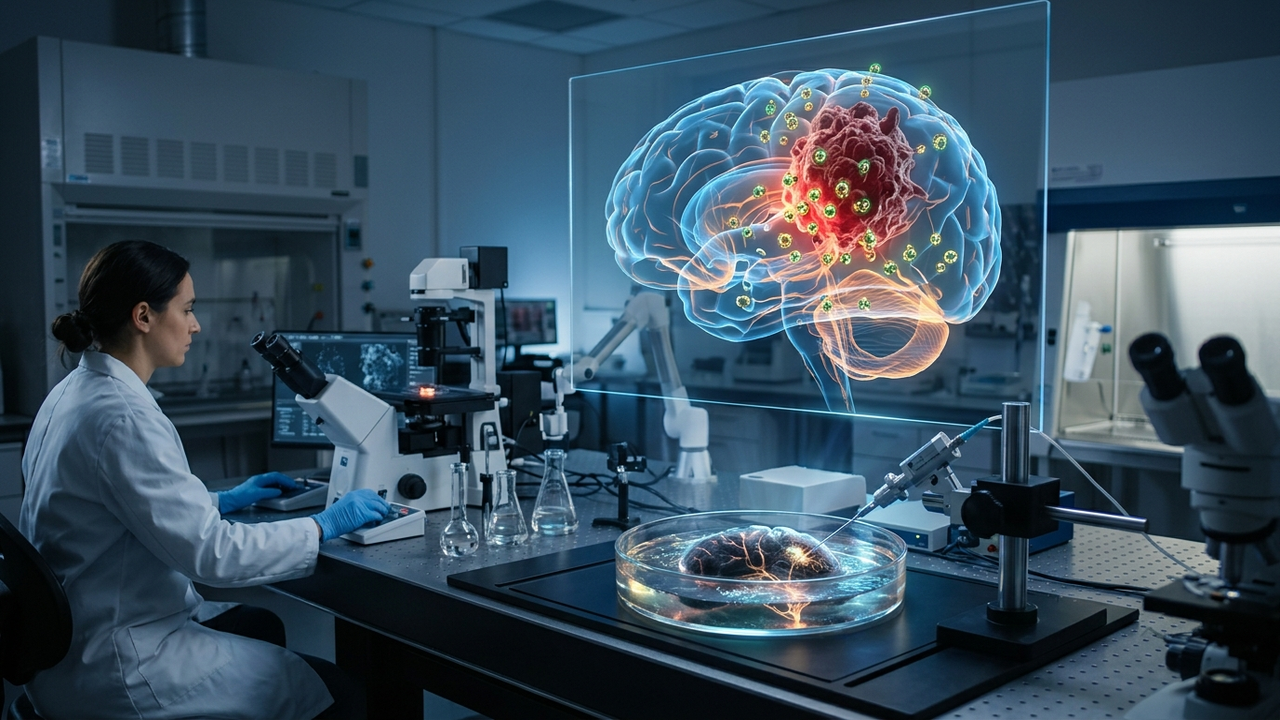
Researchers at the Massachusetts Institute of Technology (MIT) Media Lab have developed ‘HITMAN’ (Heat-Inducible Therapeutics for MAliGNAnt Tumors), a groundbreaking injectable nanoantenna system designed to target and ablate drug-resistant glioblastoma (GBM) cells, an aggressive and difficult-to-treat form of brain cancer. This technology is activated by an external magnetic field, generating a localized therapeutic electric field specifically at the tumor site, thereby minimizing damage to surrounding healthy brain tissue while efficiently destroying cancerous cells.
Key Findings
- Developed injectable ‘HITMAN’ nanoantennas for specific targeting of drug-resistant glioblastoma cells.
- Generated localized therapeutic electric fields via magnetic activation, preserving healthy brain tissue.
- Demonstrated significant suppression of tumor growth and prolonged survival in in vivo models.
- Promises a minimally invasive and effective new treatment for intractable brain tumors.
Technical & Clinical Details
HITMAN nanoantennas are nanoscale structures designed to traverse the blood-brain barrier and accumulate within tumor tissue. Once localized, they are activated by applying a specific frequency magnetic field from outside the body. This activation causes the nanoantennas to generate a localized electric field in their immediate vicinity. This electric field induces apoptosis (programmed cell death) in cancer cells by destabilizing their cell membranes or disrupting specific intracellular processes. Studies in mouse models have shown that HITMAN administration followed by magnetic field activation significantly inhibited tumor volume growth and substantially extended the survival period of treated subjects compared to untreated controls. A key advantage of this technology is its potential effectiveness against drug-resistant tumors, offering new hope for patients unresponsive to standard therapies.
Background & Context
Glioblastoma is the most aggressive primary brain tumor, and despite current standard treatments (surgery, radiation therapy, and chemotherapy), prognosis remains poor with high recurrence rates. The acquisition of drug resistance further complicates treatment, limiting effective therapeutic options. Nanotechnology-based drug delivery systems and targeted therapies have garnered significant interest in cancer treatment, but the blood-brain barrier poses a major obstacle for brain tumors. Injectable, locally acting nanodevices like HITMAN offer a novel approach to overcome this barrier, delivering therapeutic agents directly to the tumor or physically ablating cancer cells through localized stimuli.
Strategic Significance & Outlook
The development of HITMAN nanoantennas holds the potential to introduce a paradigm shift in glioblastoma treatment. It is anticipated to progress through further preclinical studies and into clinical trials. If successfully commercialized, this technology could significantly improve treatment outcomes and quality of life for glioblastoma patients. Moreover, this concept may be applicable to other solid tumors beyond glioblastoma, as well as to therapies targeting specific cell types, potentially opening new avenues in localized treatment using magnetically activated nanodevices. Alongside advancements in personalized medicine, this next-generation cancer therapy, emphasizing precise targeting and minimal invasiveness, will attract considerable attention.
Get our weekly technology intelligence — free
Receive an infographic that lets you judge at a glance whether each field’s analysis report is worth reading.
Subscribe Free — Weekly Tech Intelligence
By subscribing, you’ll receive Troy-Technical’s weekly technology intelligence newsletter.
- Your email and selected fields are used only to deliver the newsletter.
- We never share your information with third parties.
- You can unsubscribe anytime via the link in each email.
See our Privacy Policy for details.
Takes about a minute · Unsubscribe anytime








Comments