Key Findings
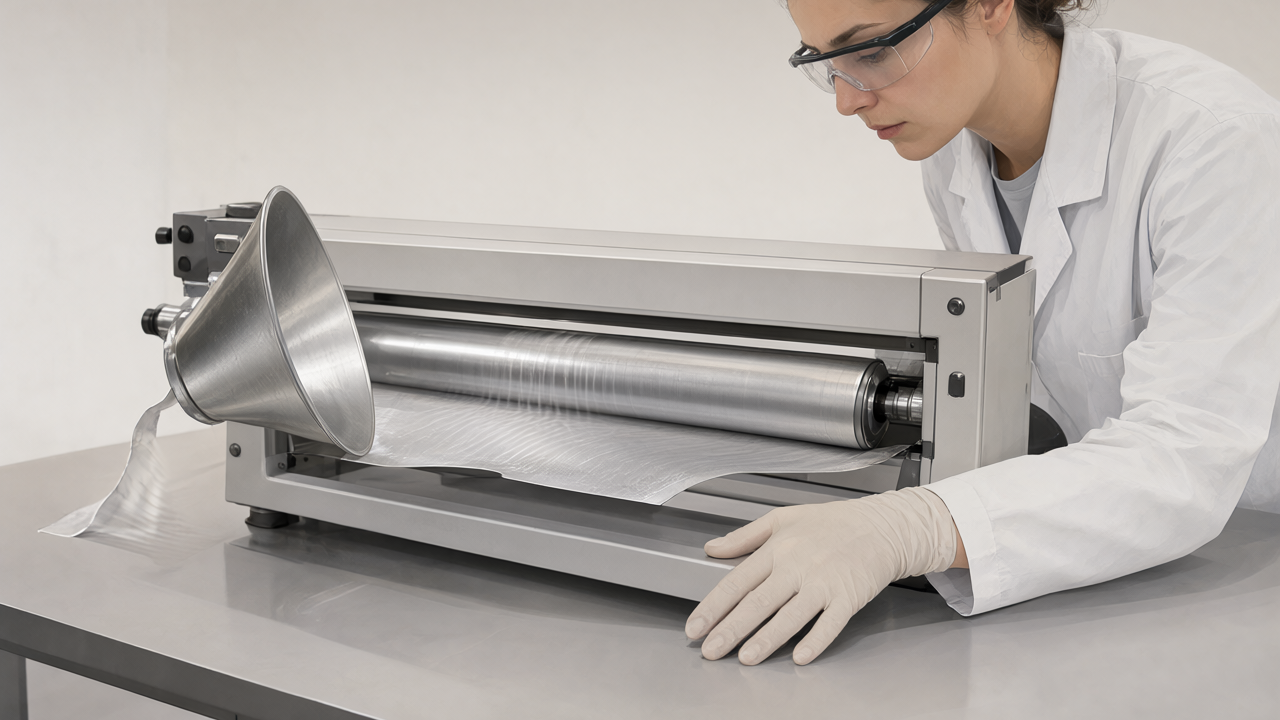
Purdue University researchers have unveiled a groundbreaking manufacturing technique called “Rolling Sonication Microstructure Orientation (RSMO)” that rapidly produces flexible heat spreading films in just one second. This innovative process, which combines an ultrasonic roller with a high-frequency acoustic horn, boasts a production speed of approximately 36 square meters per hour, roughly 100 times faster than traditional industrial hot presses. This advancement is poised to resolve one of the most significant thermal management issues plaguing foldable electronic devices.
Technical / Clinical Details
The RSMO process leverages ultrasonic vibrational energy to effectively align heat-conductive fillers, such as graphene or boron nitride nanosheets, within the film material. This precise control over the microstructure optimizes thermal pathways, resulting in films that combine high thermal conductivity with exceptional mechanical flexibility. Experimental validation has shown that these flexible thermal spreading films exhibit remarkable durability, resisting cracks and maintaining cooling performance even after being folded completely in half or subjected to over 5,000 bending cycles around a pencil tip. This represents a substantial improvement over the resilience of existing flexible thermal dissipation materials.
Background & Context
Flexible electronic devices, including foldable smartphones, tablets, and wearables, inherently face significant challenges in efficiently dissipating heat due to their unique form-changing capabilities. Conventional thermal spreading materials have often fallen short, either lacking the necessary bending durability or being too costly for mass production. The RSMO technology developed in this study simultaneously addresses these issues, offering a pathway to high-volume, cost-effective manufacturing of durable, high-performance thermal films. This innovation is a crucial enabler for the continued growth and evolution of the flexible electronics market.
Strategic Significance & Outlook
The high-speed and efficient RSMO manufacturing technique holds immense promise beyond foldable electronics, with potential applications in flexible displays, advanced batteries, and IoT sensors. For devices where thermal issues bottleneck performance and longevity, these flexible heat spreading films will enhance design freedom and enable new functionalities and form factors. The research team aims to further optimize the material composition and scale up production, seeking collaborations with industry partners to bring this transformative technology to market.
Get our weekly technology intelligence — free
Receive an infographic that lets you judge at a glance whether each field’s analysis report is worth reading.
Subscribe Free — Weekly Tech Intelligence
By subscribing, you’ll receive Troy-Technical’s weekly technology intelligence newsletter.
- Your email and selected fields are used only to deliver the newsletter.
- We never share your information with third parties.
- You can unsubscribe anytime via the link in each email.
See our Privacy Policy for details.
Takes about a minute · Unsubscribe anytime