Key Findings
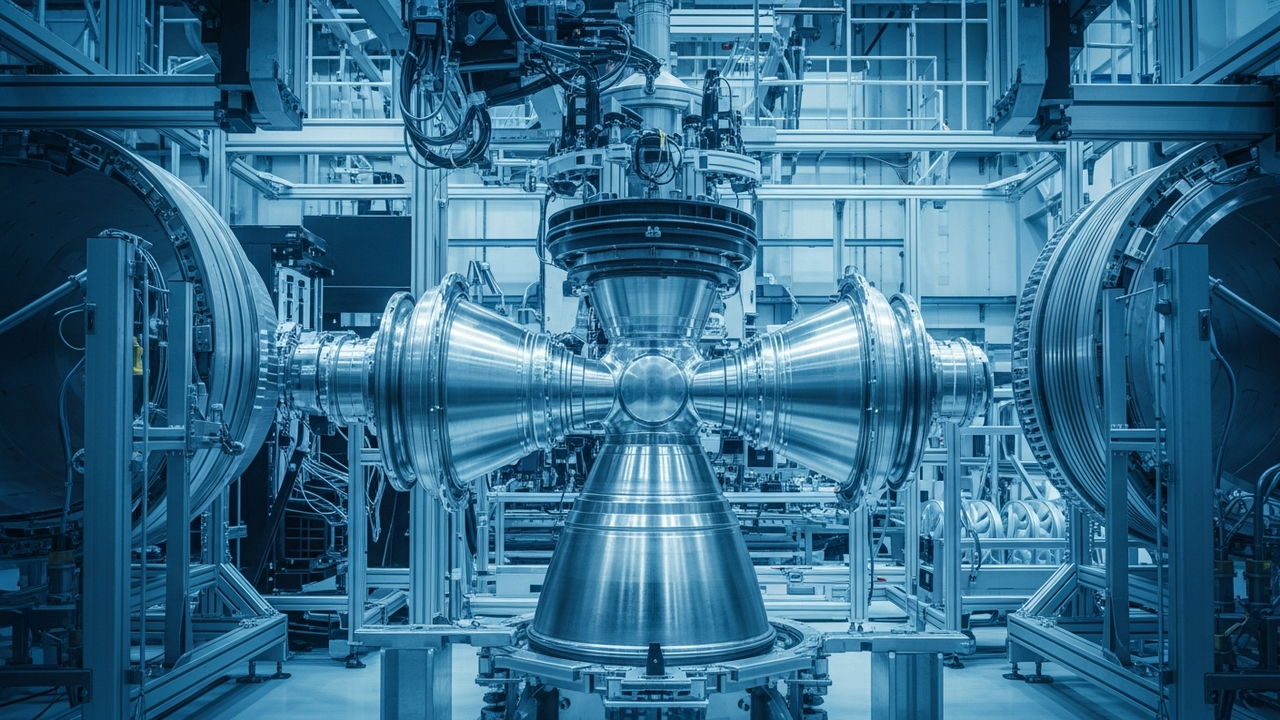
Additive Manufacturing (AM) has achieved groundbreaking results in the production of reusable rocket engine components. Specifically, it has successfully fabricated combustion chambers with exceptionally complex cooling channels using heat-resistant alloys (e.g., Inconel 718). This technology demonstrates the potential for up to 25% weight reduction, a 5% improvement in combustion efficiency, and a significant reduction in manufacturing costs—up to 30% compared to traditional machining and casting processes. This represents an indispensable advancement for dramatically improving the economics and performance of reusable rockets.
Technical Details
The developed additive manufacturing process is based on Selective Laser Melting (SLM) or Electron Beam Melting (EBM) techniques, fabricating components layer by layer from high-precision metal powder. This method enables the design and production of parts with intricate internal structures, such as latticed cooling channels and optimized fluid pathways, which are difficult to achieve with conventional manufacturing technologies. Prototypes of the combustion chamber, subjected to ground-based hot-fire tests (full-scale engine firing), demonstrated more uniform heat distribution and more efficient heat removal compared to existing components, leading to a reduction in combustion chamber wall temperatures by over 100°C. This is expected to improve the engine’s thrust-to-weight ratio and enhance component durability, thereby significantly reducing maintenance frequency and costs associated with reusability. Furthermore, part consolidation (e.g., integrated manufacturing of multiple components) contributes to reduced assembly time and improved reliability.
Background & Context
Reusable rockets are key to making space access cheaper and more frequent, but their realization faces significant challenges in engine component durability, lightweighting, and manufacturing cost reduction. Rocket engines, in particular, must withstand extreme temperatures, pressures, and vibrations, requiring components to be precisely manufactured from advanced heat-resistant alloys. Conventional manufacturing methods (casting, machining) struggle with complex internal geometries, often leading to long lead times and high costs. Additive manufacturing offers an innovative approach that addresses these challenges comprehensively, maximizing design freedom while enabling both high performance and economic viability.
Strategic Significance & Outlook
This additive manufacturing technology is expected to be applied not only to reusable rocket combustion chambers but also to turbopumps, nozzles, valves, and other high-performance engine components. Future efforts will focus on long-term reliability assessment of materials in the space environment, further optimization and standardization of manufacturing processes, and qualification testing for integration into flight-ready rockets. Widespread adoption of this technology could fundamentally transform rocket engine design and manufacturing, further driving down launch costs and enhancing the overall competitiveness of the space transportation industry. By the 2030s, we may see reusable rockets equipped with additively manufactured engine components soaring into space.
Source: #
Get our weekly technology intelligence — free
Receive an infographic that lets you judge at a glance whether each field’s analysis report is worth reading.
Subscribe Free — Weekly Tech Intelligence
By subscribing, you’ll receive Troy-Technical’s weekly technology intelligence newsletter.
- Your email and selected fields are used only to deliver the newsletter.
- We never share your information with third parties.
- You can unsubscribe anytime via the link in each email.
See our Privacy Policy for details.
Takes about a minute · Unsubscribe anytime








Comments