Key Findings
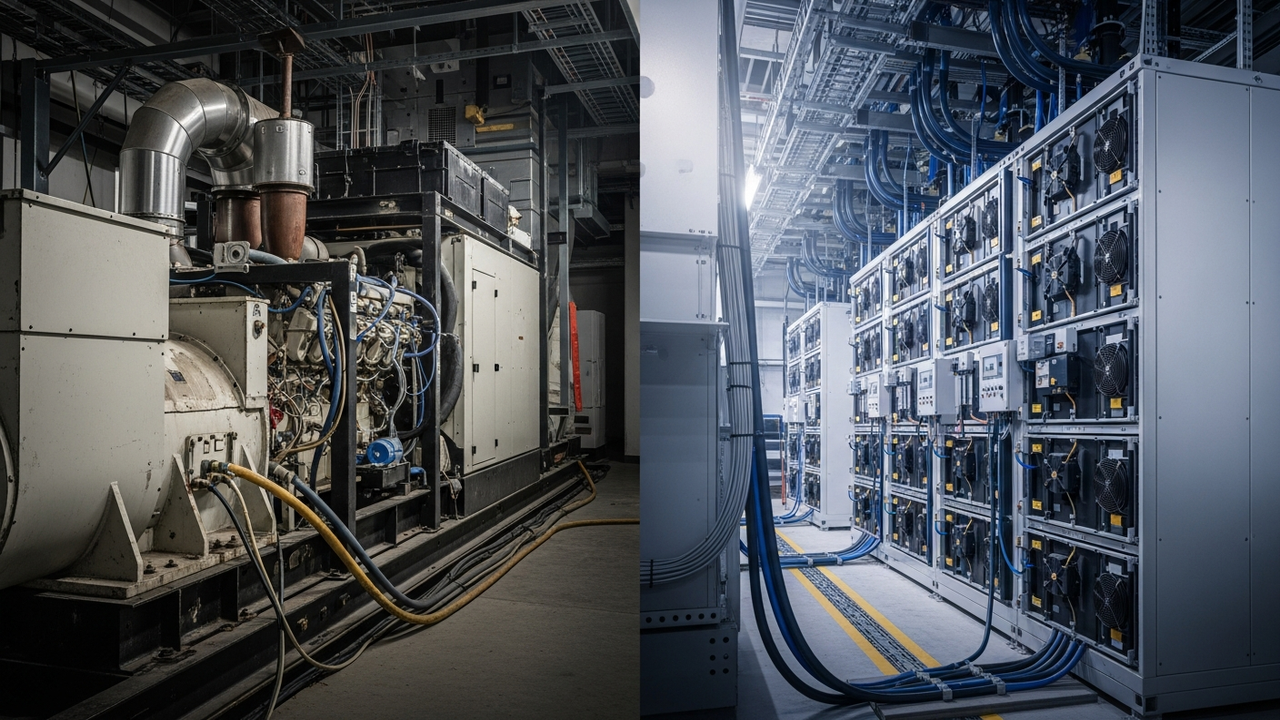
The power infrastructure for data centers, particularly those supporting AI workloads, is undergoing a dramatic transformation, moving away from traditional diesel generator backups to Battery Energy Storage Systems (BESS). This paradigm shift is being accelerated by utility demand response requirements and regional policies promoting renewable energy integration, solidifying BESS’s position as a standard component in contemporary data center design.
Technical & Project Details
Hyperscale data center operators are realizing multiple benefits from BESS implementation. Firstly, BESS enables efficient management of consistent power delivery essential for demanding AI workloads. Secondly, it offers potential reductions in Capital Expenditure (CAPEX) and operational costs compared to diesel generators. Moreover, BESS simplifies grid integration and allows for more flexible power management. Specifically, it can offset peak power demands, alleviate strain on the electrical grid, and ensure instantaneous power delivery. A variety of battery chemistries, including lithium-ion, but also emerging aqueous batteries and long-duration flow batteries, are being deployed to meet the diverse needs of data centers.
Background & Industry Context
The proliferation and advancement of AI have led to an exponential increase in data center power consumption, raising concerns about their environmental footprint and impact on grid stability. Traditional diesel backups posed challenges related to emissions, fuel storage, and operational complexity. In contrast, BESS addresses these issues by offering cleaner power delivery, high reliability, and the ability to participate in demand response programs. Policy mandates for renewable energy integration and incentives for distributed energy resources across many regions are further fueling this transition, making BESS an economically and environmentally compelling solution.
Strategic Significance & Outlook
Battery storage will play an increasingly indispensable role in enabling AI data centers to meet sustainability targets and enhancing the resilience of the broader power grid. The adoption of BESS facilitates the evolution of data centers from mere power consumers to active participants in grid services, fostering “grid-interactive data centers.” In the future, the combination of BESS with advanced power conversion technologies such as solid-state transformers (SSTs) is expected to further improve data center power efficiency and reliability, establishing new benchmarks for critical infrastructure power supply.
Source: https://www.ess-news.com/2026/07/15/data-center-power-shifts-favor-bess-solid-state-transformers/
Get our weekly technology intelligence — free
Receive an infographic that lets you judge at a glance whether each field’s analysis report is worth reading.
Subscribe Free — Weekly Tech Intelligence
By subscribing, you’ll receive Troy-Technical’s weekly technology intelligence newsletter.
- Your email and selected fields are used only to deliver the newsletter.
- We never share your information with third parties.
- You can unsubscribe anytime via the link in each email.
See our Privacy Policy for details.
Takes about a minute · Unsubscribe anytime







Comments