Key Findings
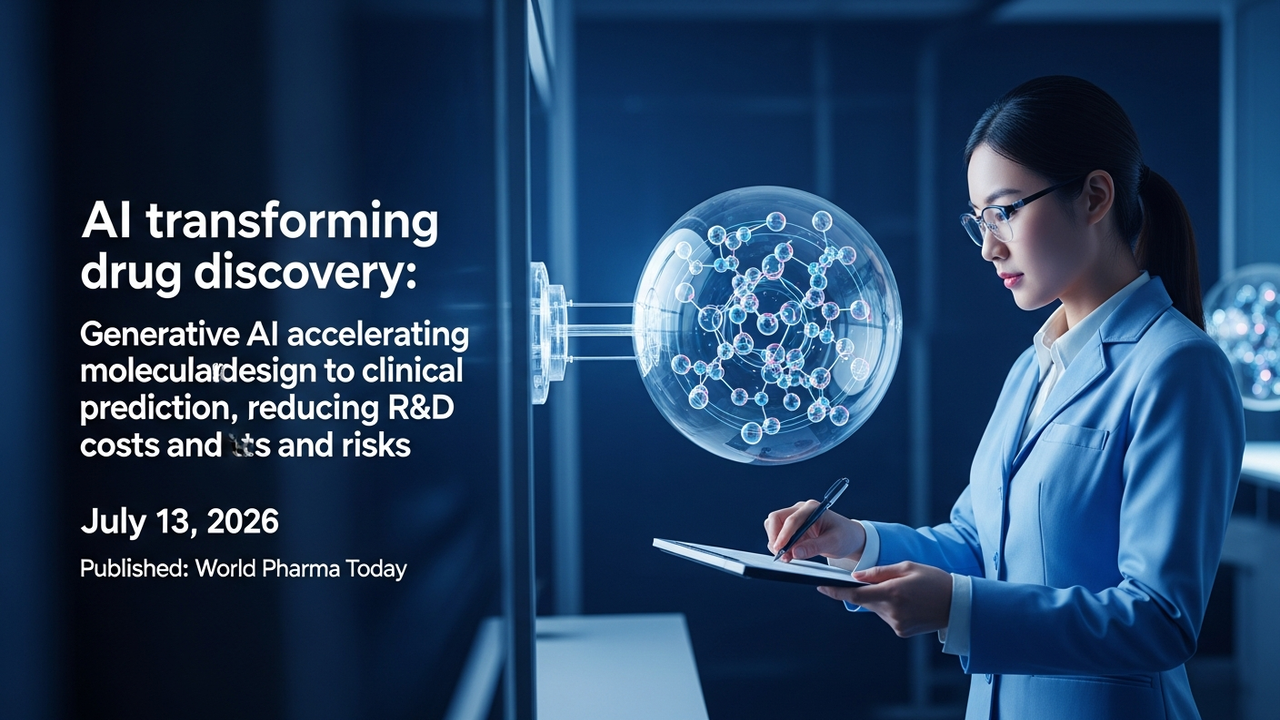
In 2026, Artificial Intelligence (AI), particularly generative AI, is bringing about revolutionary changes in the field of drug discovery. This technology is dramatically accelerating target identification, molecule design, and the prediction of clinical outcomes, leading to substantial reductions in research and development (R&D) costs, timelines, and risks. Generative AI is transcending the limitations of traditional screening methods, opening up new opportunities for therapeutics targeting pathways previously considered ‘undruggable.’
Technical & Clinical Details
AI-driven platforms leverage advanced algorithms and machine learning models to rapidly screen millions of molecular possibilities computationally. This process includes the ability to de novo design novel molecular structures optimized for specific biological targets, as exemplified by NVIDIA and AstraZeneca’s MegaMolBART and Insilico Medicine’s use of AI to identify fibrosis treatment candidates. Generative AI allows researchers to define desired drug properties and design molecules from scratch, shifting from a traditional trial-and-error approach to a more efficient, target-oriented design process. This expands the molecular design exploration space, shortens the time from lead identification to optimization, and enhances the probability of success in clinical trials.
Background & Context
The conventional drug discovery process is notoriously inefficient, high-risk, and expensive, typically taking over a decade and costing billions of dollars, with success rates often in the low single digits. The advent of generative AI offers a powerful solution to these longstanding challenges. Particularly in areas of high unmet medical need, such as oncology and rare diseases, AI is reshaping pipelines and accelerating the progression of innovative drug candidates to the clinic. While generative AI’s effectiveness is still more pronounced in controlled research settings, its practical application is steadily advancing.
Strategic Significance & Outlook
Generative AI will become an indispensable technology in shaping the future of drug discovery. Moving forward, AI’s role is expected to expand beyond molecular design to encompass all aspects of drug development, including protein engineering, predictive toxicology, multi-omics analysis, and clinical trial automation. AI will lower barriers to drug discovery, accelerate the development of new treatments for more diseases, and ultimately contribute to delivering innovative medicines to patients more quickly. The era where humans and AI collaborate to create previously unimaginable molecular designs and therapeutic strategies is on the horizon.
Get our weekly technology intelligence — free
Receive an infographic that lets you judge at a glance whether each field’s analysis report is worth reading.
Subscribe Free — Weekly Tech Intelligence
By subscribing, you’ll receive Troy-Technical’s weekly technology intelligence newsletter.
- Your email and selected fields are used only to deliver the newsletter.
- We never share your information with third parties.
- You can unsubscribe anytime via the link in each email.
See our Privacy Policy for details.
Takes about a minute · Unsubscribe anytime






Comments