Key Findings
The Center for Advanced Systems Understanding (CASUS) at Helmholtz-Zentrum Dresden-Rossendorf (HZDR) has developed a novel AI-driven computational approach, leading to the discovery of next-generation solar fuel catalysts capable of efficiently converting sunlight into chemical energy. This innovative methodology accelerates the search for sustainable catalyst materials that are less reliant on noble metals.
Technical / Clinical Details
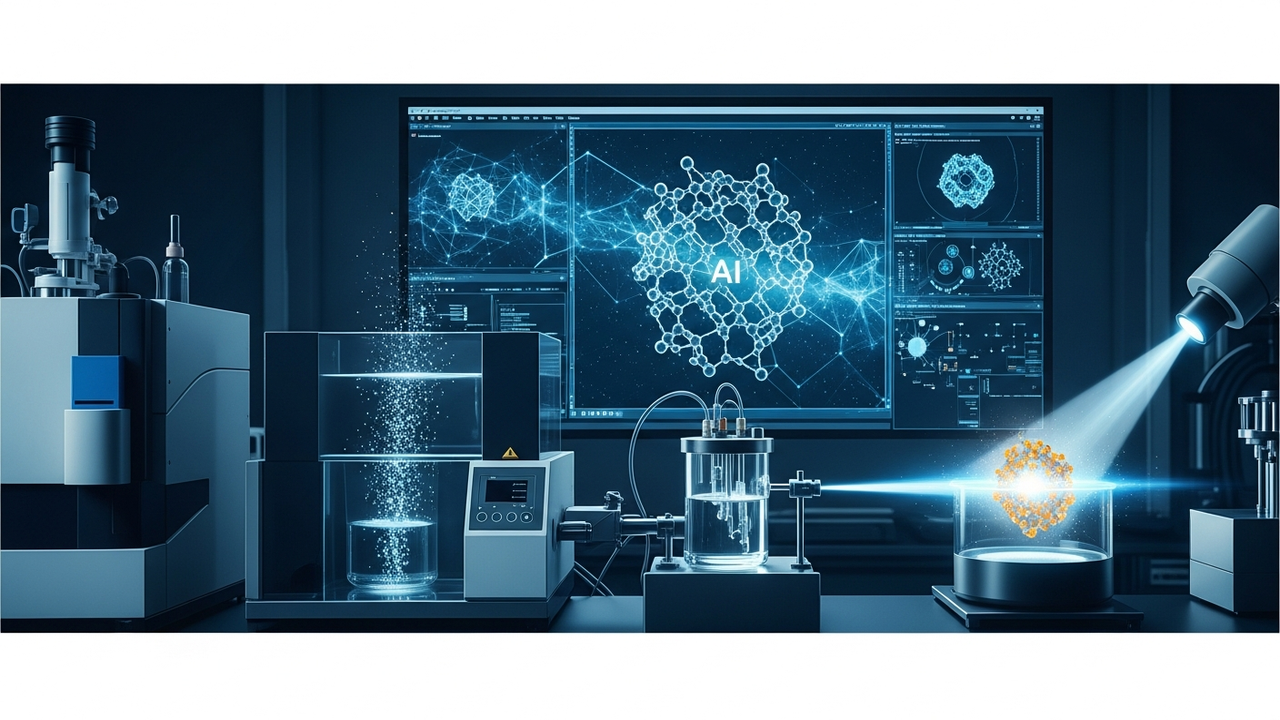
The AI-driven computational approach developed by the CASUS research team integrates machine learning models, high-accuracy quantum chemical calculations, and large-scale virtual screening. First, machine learning models learn patterns influencing catalytic performance from existing material databases, predicting promising structures from millions of potential candidates. Next, quantum chemical calculations precisely analyze the electronic structure and reaction mechanisms of these candidates at an atomic level, providing accurate evaluations of catalytic activity and stability. Finally, high-throughput screening techniques rapidly assess the efficiency of the selected candidates. This process enabled the efficient identification of noble-metal-free catalyst materials at a speed and scale impossible with traditional experimental methods. Experimental validation confirmed that these AI-proposed catalysts demonstrate significant performance improvements over conventional catalysts in both hydrogen generation and CO2 reduction reactions, opening new avenues for sustainably converting abundant materials like CO2 into useful chemical fuels.
Background & Context
Global warming and the energy crisis highlight the urgent need for sustainable energy sources and fuel production technologies. While solar energy is abundant, developing solar fuel catalysts that efficiently convert it into chemical energy remains a significant technical challenge. Notably, many conventional solar fuel catalysts rely on scarce and expensive noble metals (e.g., platinum, ruthenium), hindering their widespread adoption. By integrating AI with computational science, it becomes possible to search for high-performance catalysts based on cheaper and more abundant elements, anticipating breakthroughs in this field.
Strategic Significance & Outlook
CASUS’s discovery of AI-driven solar fuel catalysts holds the potential to profoundly influence the future of clean energy technologies. Catalysts that reduce noble metal usage and effectively utilize abundant resources like CO2 will enable cost-effective hydrogen production and synthetic fuel manufacturing from CO2, contributing significantly to energy sustainability. This approach is applicable not only to solar fuel catalysts but also to catalyst design in other energy conversion materials and chemical processes, expected to dramatically enhance R&D efficiency. If this technology achieves industrial-scale implementation in the future, it could reduce reliance on fossil fuels and serve as a powerful driving force towards achieving a carbon-neutral society.
Get our weekly technology intelligence — free
Receive an infographic that lets you judge at a glance whether each field’s analysis report is worth reading.
Subscribe Free — Weekly Tech Intelligence
By subscribing, you’ll receive Troy-Technical’s weekly technology intelligence newsletter.
- Your email and selected fields are used only to deliver the newsletter.
- We never share your information with third parties.
- You can unsubscribe anytime via the link in each email.
See our Privacy Policy for details.
Takes about a minute · Unsubscribe anytime






Comments