Key Findings
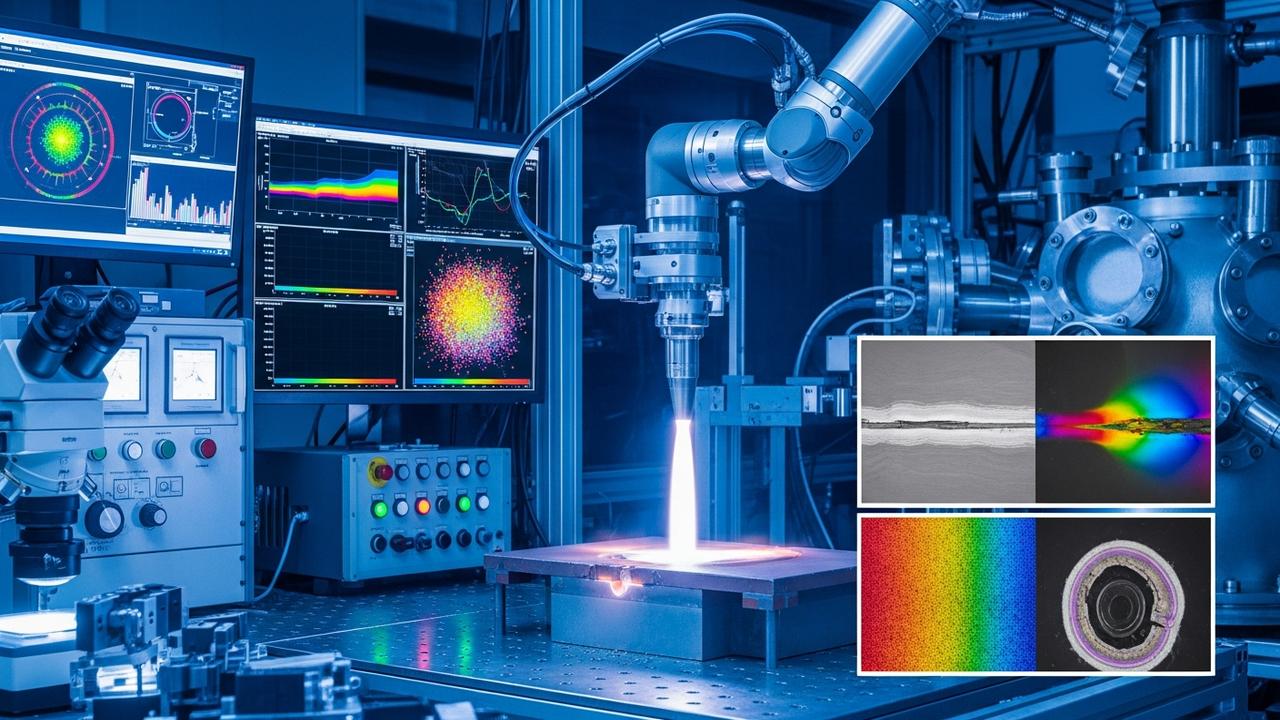
Research on FeCoCrNi high-entropy alloy (HEA) coatings fabricated by Atmospheric Plasma Spraying (APS) has been published, with detailed analysis of their microstructure and tribological properties. This study demonstrated that optimizing spray power and titanium (Ti) content significantly enhances the microhardness, wear resistance, and corrosion resistance of the coatings. Notably, HEA coatings with optimal Ti content showed significant improvements in both wear rate and corrosion current compared to conventional alloys, with excellent performance confirmed in high-temperature environments. This holds the potential to improve the lifespan and reliability of components used in harsh conditions across heavy industry, aerospace, and marine engineering.
Technical / Clinical Details
In the study, FeCoCrNi HEA powder was used as a feedstock, and APS processes were conducted with varying spray powers and Ti contents. The microstructure of the obtained coatings was characterized using X-ray diffraction (XRD) and scanning electron microscopy (SEM), confirming a solid solution structure primarily composed of a face-centered cubic (FCC) phase and partially a body-centered cubic (BCC) phase. As Ti content increased, microhardness improved due to solid solution strengthening, reaching a maximum Vickers hardness of up to 600 HV under optimal spraying conditions. Pin-on-disk friction and wear tests showed that coatings with optimal Ti content (e.g., FeCoCrNiTi0.2) exhibited a wear rate reduced to approximately one-third of conventional stainless steel. This superior wear resistance is attributed to the stabilization of the friction coefficient and the formation of a hard oxide film (e.g., TiO2, Cr2O3) on the worn surface. Electrochemical corrosion tests in a 3.5% NaCl solution confirmed that HEA coatings with optimal Ti content significantly improved corrosion resistance, reducing the corrosion current density by about 50% compared to conventional alloys. This is believed to be a synergistic result of the ‘cocktail effect’ of high-entropy alloys and Ti’s ability to form oxides.
Background & Context
Surface wear and corrosion are primary causes of mechanical component failure and limit the lifespan and reliability of equipment in many industries. Particularly in environments exposed to high temperatures, high pressures, or corrosive media, material degradation accelerates, increasing maintenance costs. High-entropy alloys are attracting attention as a new class of materials that exhibit excellent mechanical strength, wear resistance, corrosion resistance, and heat resistance by mixing multiple principal elements in equimolar or near-equimolar ratios. APS is a promising technique for efficiently coating existing substrates with these high-performance alloys, contributing to enhanced component performance and extended lifespan.
Strategic Significance & Outlook
This FeCoCrNi HEA coating technology is expected to have broad applications in fields requiring high reliability and long lifespan, such as aircraft engine components, marine propellers, power plant turbine blades, and chemical plant reactors. Future research will focus on further optimizing the spraying process, exploring different HEA compositions, and long-term performance evaluation under more complex environmental conditions. Furthermore, scaling up to mass production and improving cost-efficiency will be essential for the commercialization of this technology. The widespread adoption of this innovative coating technology is expected to dramatically improve the performance and sustainability of industrial equipment worldwide, potentially generating billions of dollars in economic benefits.
Get our weekly technology intelligence — free
Receive an infographic that lets you judge at a glance whether each field’s analysis report is worth reading.
Subscribe Free — Weekly Tech Intelligence
By subscribing, you’ll receive Troy-Technical’s weekly technology intelligence newsletter.
- Your email and selected fields are used only to deliver the newsletter.
- We never share your information with third parties.
- You can unsubscribe anytime via the link in each email.
See our Privacy Policy for details.
Takes about a minute · Unsubscribe anytime





Comments