Key Findings
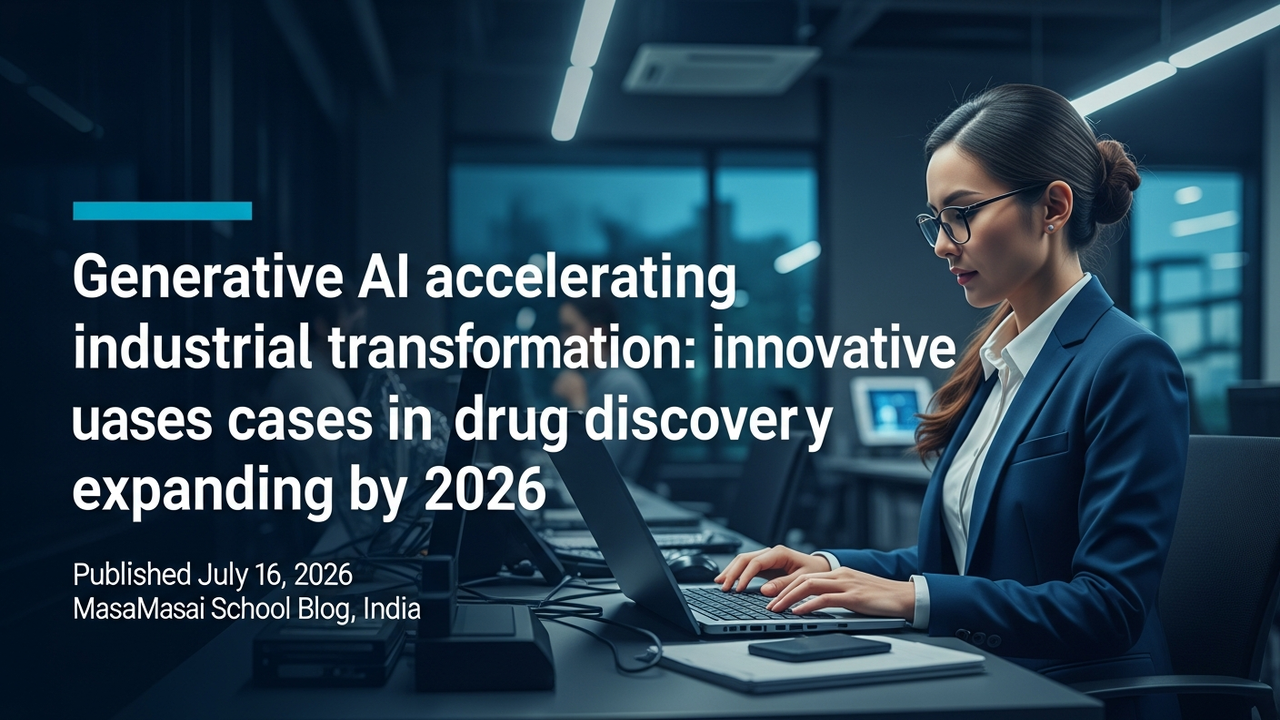
The latest blog post from Masai School highlights how Generative AI is expanding innovative use cases across various industries in 2026, with particular emphasis on its transformative impact in the drug discovery sector. Generative AI is accelerating key stages of the drug discovery process, from designing new drug candidates to optimizing existing compounds, bringing unprecedented efficiency and creativity.
Technical / Clinical Details
The article outlines specific use cases of Generative AI in drug discovery, including: 1) **Novel Molecule Design**: Generative AI models (e.g., Transformer-based models and GANs) can autonomously generate ‘never-before-seen’ molecular structures with high binding affinity for specific target proteins and favorable pharmacokinetic properties. This enables efficient exploration of vast chemical spaces and rapid identification of promising lead compounds. 2) **Compound Library Optimization**: The AI analyzes existing compound libraries and proposes molecular modifications to enhance specific properties (e.g., potency, selectivity, safety). This can significantly shorten iterative lead optimization cycles. 3) **Clinical Trial Design Optimization**: By learning from historical clinical data and patient characteristics, the AI suggests clinical trial designs with higher success probabilities and assists in patient stratification strategies, improving trial efficiency and cost-effectiveness. It is estimated that by leveraging Generative AI, drug discovery researchers can reduce the novel drug discovery cycle by up to 60% and substantially lower development costs compared to traditional trial-and-error approaches.
Background & Context
Pharmaceutical development has long been challenged by high risks and significant time and financial costs. Particularly, many hurdles exist in the early stages of designing promising molecules and moving them into the development pipeline. The advancements in Generative AI are anticipated to be a groundbreaking tool for overcoming this bottleneck. AI can perform tasks that would take human researchers years in just months, and it can propose creative molecular structures that humans might not foresee. This is a classic example of AI extending human capabilities and broadening the possibilities of drug discovery research. The pharmaceutical industry is accelerating investment in AI to establish competitive advantages.
Strategic Significance & Outlook
Generative AI holds the potential to fundamentally transform the entire drug discovery process. In the future, AI will be more deeply integrated into pharmaceutical development, beyond initial molecule design, extending to synthesis pathway prediction, quality control, and even the entire manufacturing process. This will accelerate the discovery and market introduction of therapies for intractable diseases, allowing patients faster access to more innovative treatment options. The Masai School blog provides a crucial perspective for understanding the overall picture of this transformation brought by AI and preparing for future technological trends. Progress in this field is expected to dramatically reshape the pharmaceutical industry landscape in the coming years.
Get our weekly technology intelligence — free
Receive an infographic that lets you judge at a glance whether each field’s analysis report is worth reading.
Subscribe Free — Weekly Tech Intelligence
By subscribing, you’ll receive Troy-Technical’s weekly technology intelligence newsletter.
- Your email and selected fields are used only to deliver the newsletter.
- We never share your information with third parties.
- You can unsubscribe anytime via the link in each email.
See our Privacy Policy for details.
Takes about a minute · Unsubscribe anytime


Comments