Key Findings
This review article concludes that cost-effective and environmentally sustainable serum-free media are indispensable for dramatically improving the cost and sustainability of cultivated meat and seafood production. Currently, cell culture media expenses constitute a staggering 55% to 95% of total production costs for cultivated meat, serving as the primary barrier to commercial-scale viability.
Technical and Clinical Details
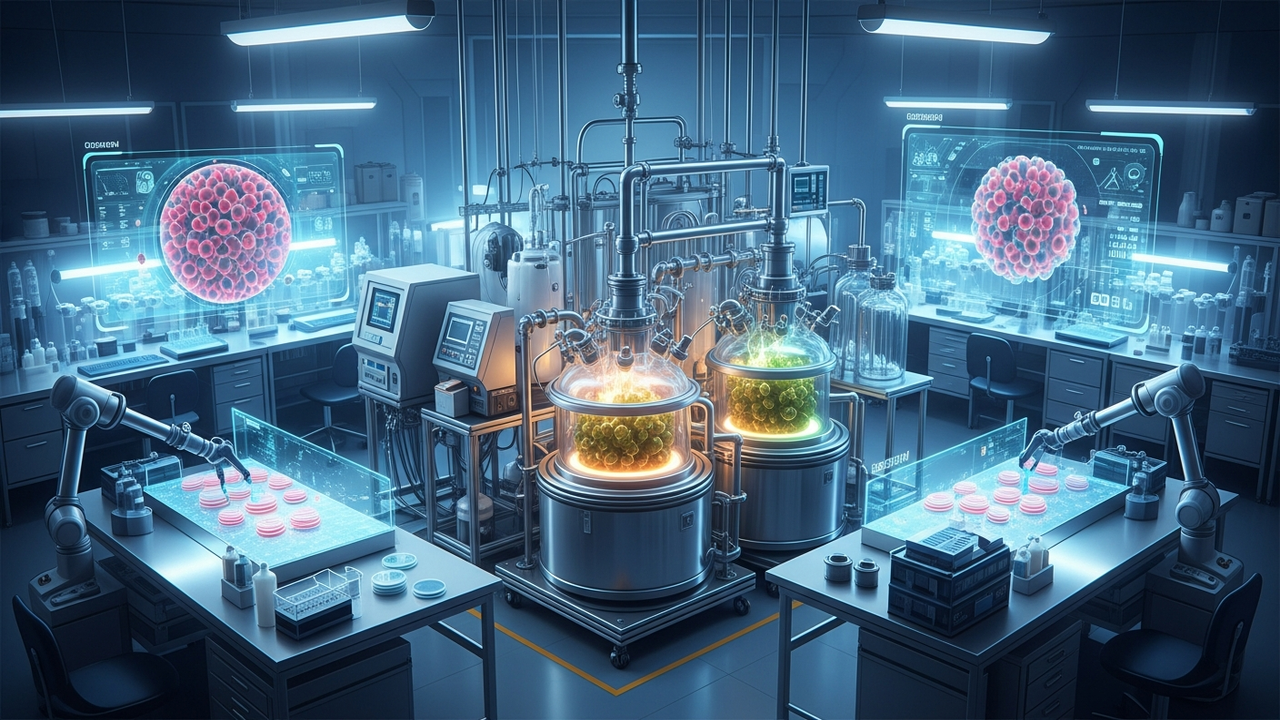
Producing cultivated meat necessitates serum-free media that do not contain animal-derived components. However, developing universal chemically defined media that efficiently support cell proliferation and differentiation while significantly reducing production costs remains an formidable challenge. The review meticulously analyzes the cost drivers of existing media components, discussing strategies to replace expensive ingredients such such as growth factors, cytokines, insulin, and transferrin, or to enhance productivity. Approaches like plant-derived components, microbial fermentation, and media recycling systems are being explored for both sustainability and cost reduction. Nevertheless, fulfilling the diverse nutritional requirements across different cell lines and animal species, alongside ensuring consistent quality, demands deeper understanding and technological innovation from basic to applied research.
Background and Industry Context
Cultivated meat offers a promising solution to environmental, animal welfare, and food security challenges posed by conventional livestock farming. Yet, the high cost of cell culture media presents a critical bottleneck, hindering large-scale production and widespread consumer adoption. Consequently, both academic and industrial sectors have prioritized media cost reduction as a paramount research and development objective globally. Governments are also increasing investments in alternative protein research, recognizing this area as crucial for the future trajectory of the cultivated meat industry.
Strategic Significance and Outlook
Looking ahead, advancements in machine learning and AI for media optimization, synthetic biology for novel growth factor production, and precision fermentation for supplying affordable media components are expected to accelerate serum-free media development. The concurrent establishment of versatile media platforms capable of supporting multiple cell types and the development of cell-line-specific customized media will significantly enhance the commercial feasibility of cultivated meat. Regulatory bodies are also progressing with safety assessment criteria for cultivated meat, making cost-efficient media development an indispensable element for smooth product market entry.
Source: https://www.mdpi.com/2304-8158/15/14/2494
Get our weekly technology intelligence — free
Receive an infographic that lets you judge at a glance whether each field’s analysis report is worth reading.
Subscribe Free — Weekly Tech Intelligence
By subscribing, you’ll receive Troy-Technical’s weekly technology intelligence newsletter.
- Your email and selected fields are used only to deliver the newsletter.
- We never share your information with third parties.
- You can unsubscribe anytime via the link in each email.
See our Privacy Policy for details.
Takes about a minute · Unsubscribe anytime




Comments