Key Findings
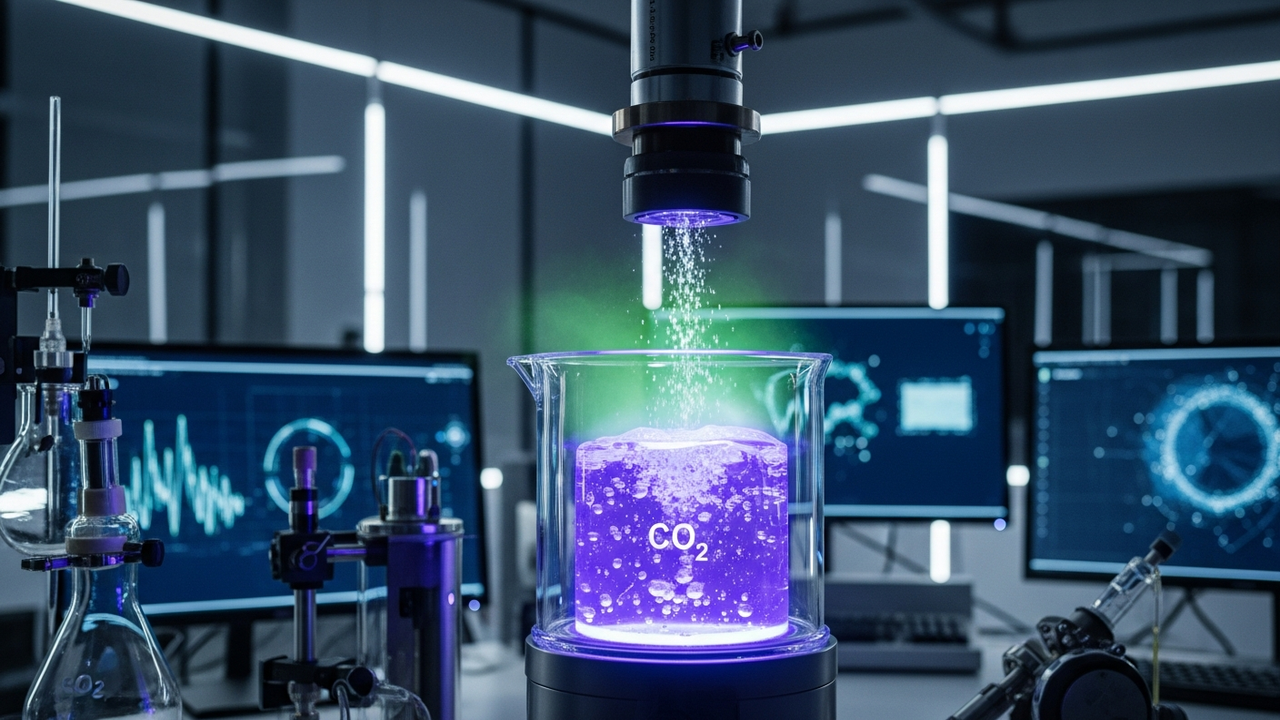
This research has identified a niobium-based metal-organic gel (Nb-MOG) as an exceptional photocatalyst for the efficient conversion of carbon dioxide (CO2), a greenhouse gas, into methanol, a renewable fuel, under ultraviolet (UV) light irradiation. This breakthrough holds significant potential for offering innovative solutions in both reducing CO2 emissions and advancing sustainable energy production.
Technical / Clinical Details
The research team employed a two-factor experimental design, focusing on sodium carbonate concentration and catalyst loading, to thoroughly evaluate the performance of the Nb-MOG catalyst. The results confirmed that, under specific conditions, Nb-MOG efficiently converts CO2 to methanol. It is believed that the unique structure of Nb-MOG, particularly its high porosity and the catalytic active sites on its niobium atoms, promotes the adsorption and activation of CO2 molecules, enabling efficient reduction reactions using photo-excited electrons and holes. The produced methanol is highly valuable as a fuel, chemical feedstock, and hydrogen carrier, making this process critically important from the perspective of ‘carbon recycling’ – converting CO2 into useful products.
Background & Context
With the escalating severity of global warming, the urgent challenges of reducing atmospheric CO2 concentrations and developing clean energy sources to replace fossil fuels have become paramount. Photocatalytic reduction of CO2, utilizing solar energy to convert CO2 into chemical fuels, is a promising and environmentally friendly technology actively researched worldwide. While conventional catalysts have faced challenges in efficiency and stability, novel nanomaterials like metal-organic gels (MOGs), with their flexible design and high catalytic activity, are opening new possibilities in this field.
Strategic Significance & Outlook
The high-efficiency conversion of CO2 to methanol using Nb-MOG catalysts will significantly contribute to the advancement of renewable fuel production technologies. The findings of this research lay the groundwork for further R&D towards large-scale carbon capture and utilization (CCU) systems. In the future, the realization of a more sustainable and economical process that directly converts CO2 into fuel using only solar energy is anticipated. Furthermore, optimizing the composition and structure of Nb-MOGs could lead to even higher conversion efficiencies and selective conversion to other high-value chemicals such as methane or formic acid. This technology holds the potential to become a crucial pillar in achieving a carbon-neutral society.
Source: https://www.mdpi.com/2624-781X/7/3/40
Get our weekly technology intelligence — free
Receive an infographic that lets you judge at a glance whether each field’s analysis report is worth reading.
Subscribe Free — Weekly Tech Intelligence
By subscribing, you’ll receive Troy-Technical’s weekly technology intelligence newsletter.
- Your email and selected fields are used only to deliver the newsletter.
- We never share your information with third parties.
- You can unsubscribe anytime via the link in each email.
See our Privacy Policy for details.
Takes about a minute · Unsubscribe anytime







Comments