Key Findings
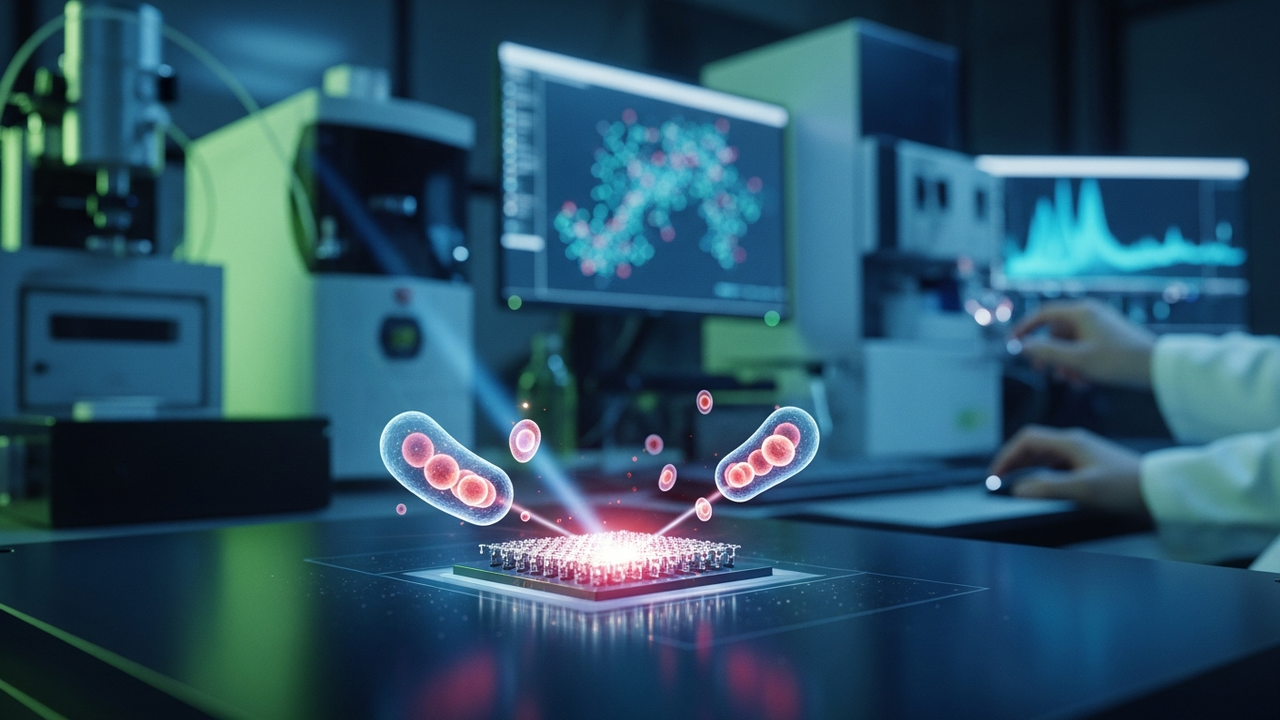
A research paper published in ‘Scientific Reports’ has proposed an innovative design for a graphene-assisted one-dimensional (1D) defect-mode photonic crystal biosensor aimed at non-invasive early detection of oral cancer. This theoretical model operates in the mid-infrared (MID-IR) spectral region and shows potential for accurately distinguishing healthy tissues from malignant lesions by highly sensitively detecting subtle changes in the refractive index of oral tissues. Achieving a remarkably low limit of detection (LOD) of 0.0104 RIU (Refractive Index Unit), the design holds significant promise for the development of a compact, label-free diagnostic system for early cancer detection.
Technical & Clinical Details
- Graphene-Assisted Photonic Crystal: This biosensor integrates the exceptional electrical and optical properties of graphene with the light confinement capabilities of photonic crystals. By embedding graphene within a photonic crystal structure, which can localize specific wavelengths of light, the sensor can amplify minute changes in optical properties induced by biomarkers.
- Mid-Infrared (MID-IR) Spectral Region: The sensor utilizes light in the mid-infrared region. Light in this spectrum resonates with the intrinsic vibrations of biomolecules, making it highly sensitive to the presence or concentration changes of specific molecular species, such as those associated with cancer cells. This enables direct, label-free detection.
- Utilization of Defect Modes: By introducing a defect layer within the photonic crystal, a ‘defect mode’ is generated, strongly confining specific wavelengths of light within a narrow region. The resonance frequency of this defect mode is extremely sensitive to changes in the surrounding refractive index, allowing for high detection sensitivity.
- Non-Invasive Detection: The proposed sensor is intended for non-invasive oral cancer detection, either by direct contact with oral tissue or by analyzing body fluids such as saliva. This approach aims to reduce the need for painful and uncomfortable biopsies, thereby alleviating patient burden.
- Limit of Detection (LOD) and Sensitivity: The study achieved a remarkably low LOD of 0.0104 RIU and demonstrated high sensitivity (S = 9600 nm/RIU). These performance metrics suggest sufficient capability to detect the subtle biochemical changes that characterize the early stages of oral cancer.
Background & Industry Context
Oral cancer prognosis is highly dependent on early detection and treatment; however, early stages often lack clear symptoms, leading to delayed diagnosis. Current diagnostic methods primarily involve visual inspection, palpation, and biopsy, with biopsy being invasive. Consequently, there is a strong demand for non-invasive, highly sensitive diagnostic technologies capable of detecting cancer at much earlier stages. Optical biosensors, due to their non-invasiveness and real-time detection capabilities, are emerging as next-generation technologies for cancer diagnosis. The integration of new materials like graphene and novel structures like photonic crystals holds the potential to significantly enhance the performance in this field.
Strategic Significance & Outlook
The theoretical design of this graphene-assisted MID-IR biosensor is highly promising, with prototype development and clinical validation as the next crucial steps. If successfully commercialized, it could significantly improve early detection rates of oral cancer by serving as a screening tool in dental offices and general clinics, thereby contributing to enhanced patient survival rates. Furthermore, this platform technology is versatile and could be applied to detect biomarkers for various other diseases, driving advancements across optical-based diagnostic technologies. Future integration into wearable or handheld devices could also lead to more accessible diagnostic solutions.
Source: https://www.azosensors.com/news.aspx?newsID=17882
Get our weekly technology intelligence — free
Receive an infographic that lets you judge at a glance whether each field’s analysis report is worth reading.
Subscribe Free — Weekly Tech Intelligence
By subscribing, you’ll receive Troy-Technical’s weekly technology intelligence newsletter.
- Your email and selected fields are used only to deliver the newsletter.
- We never share your information with third parties.
- You can unsubscribe anytime via the link in each email.
See our Privacy Policy for details.
Takes about a minute · Unsubscribe anytime






Comments