Key Findings
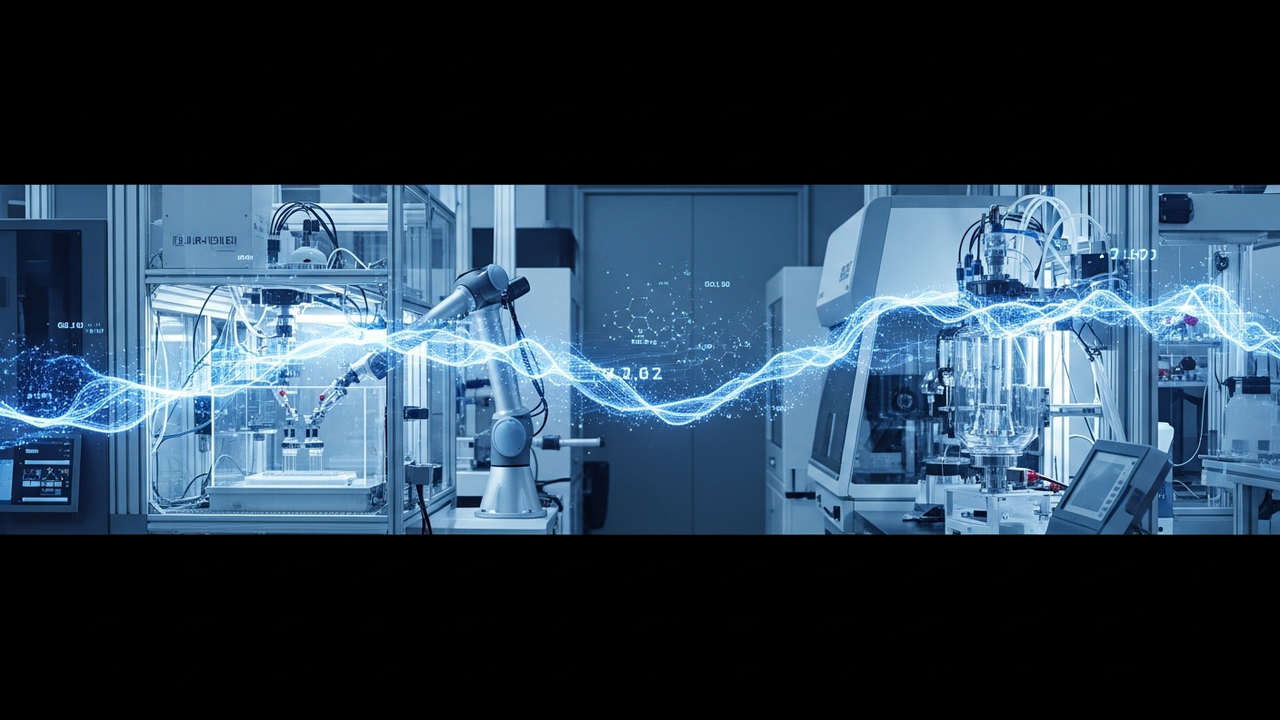
The emergence of Self-Driving Labs (SDLs), integrating machine learning (ML) with advanced automated experimental platforms, is revolutionizing the pace of molecular and materials discovery in chemical and materials sciences. SDLs enable unprecedentedly rapid exploration of chemical design spaces, promising to significantly shorten development cycles.
Technical / Clinical Details
SDLs operate by using AI algorithms to identify complex correlations and hidden patterns within large datasets, thereby generating novel hypotheses. Robotic high-throughput experimental systems then synthesize and characterize materials based on these hypotheses, feeding the results back into the AI models. This closed-loop iterative optimization cycle drastically reduces the time and cost associated with traditional human-driven trial-and-error processes. For instance, an AI might propose promising candidate molecules, robots synthesize them, and analytical instruments evaluate their properties—all executed autonomously. This allows researchers to focus on more strategic problem-solving and higher-level scientific inquiry.
Background & Context
The discovery of new molecules and materials typically requires decades of effort and substantial resources. Identifying optimal candidates from an immense combinatorial space, especially when seeking materials with specific functionalities, has traditionally been an arduous task. SDLs have emerged as a powerful tool to address this challenge, holding the potential to accelerate innovation across diverse sectors, including pharmaceuticals, electronic materials, energy materials, and catalysts. Early success stories are already demonstrating their efficacy, highlighting a paradigm shift in scientific research methodologies.
Strategic Significance & Outlook
While still in its nascent stages, with current applications often confined to specific domains, SDL technology is projected to significantly expand its scope by integrating more complex experiments, diverse material systems, and sophisticated AI reasoning capabilities. As society faces urgent needs for sustainable materials, new drug therapies, and environmental technologies, SDLs are expected to play a central role in their development. Ongoing research and development efforts are focused on overcoming current limitations and maximizing the full potential of SDLs to drive future scientific breakthroughs.
Get our weekly technology intelligence — free
Receive an infographic that lets you judge at a glance whether each field’s analysis report is worth reading.
Subscribe Free — Weekly Tech Intelligence
By subscribing, you’ll receive Troy-Technical’s weekly technology intelligence newsletter.
- Your email and selected fields are used only to deliver the newsletter.
- We never share your information with third parties.
- You can unsubscribe anytime via the link in each email.
See our Privacy Policy for details.
Takes about a minute · Unsubscribe anytime







Comments