Background
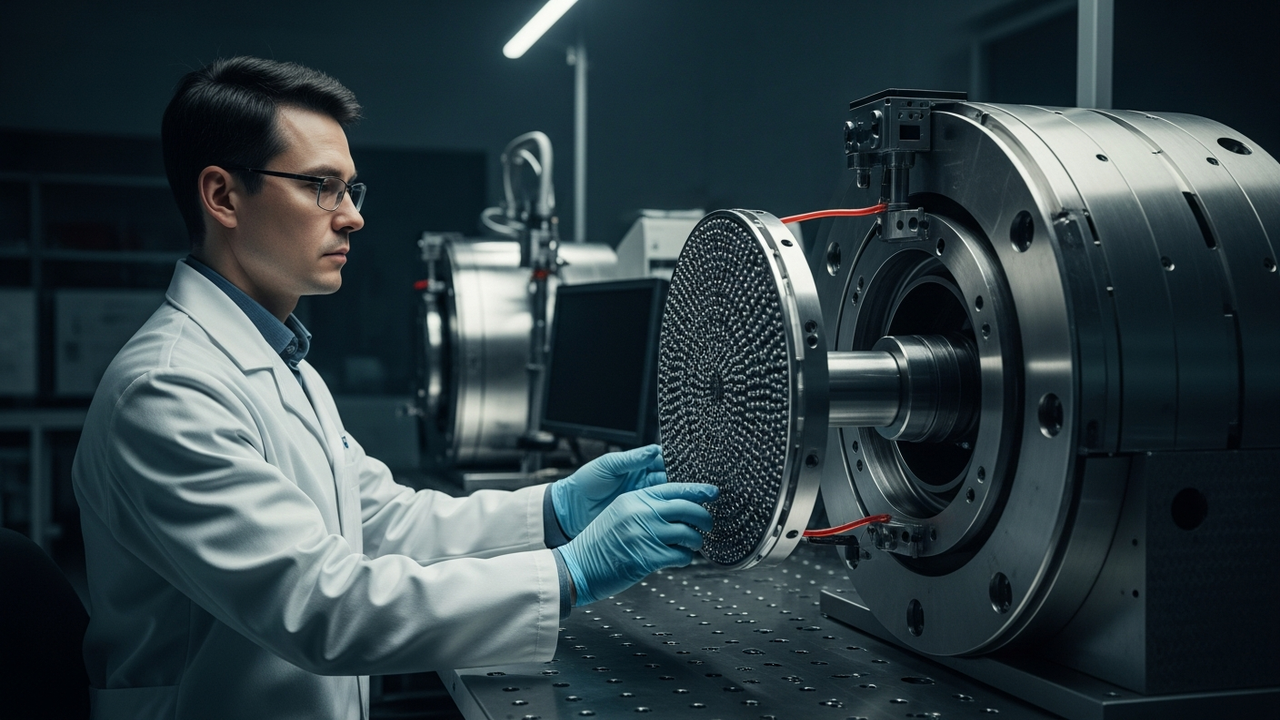
Fatigue fracture and microcrack formation represent critical failure modes in metallic materials, posing significant safety and operational challenges across industrial sectors. Industries like aerospace, defense, and power generation face particularly high costs associated with component replacement and substantial economic losses due to downtime, making material lifespan extension a paramount concern. Self-healing materials offer a transformative solution to these persistent problems, promising to mitigate the need for extensive preventive maintenance and enhance operational reliability. While the development of self-healing metallic systems has historically proven challenging, the intricate compositional and structural tunability inherent in high-entropy alloys (HEAs) has recently opened compelling new avenues in this research domain.
Key Findings
Researchers at South Ural State University (SUSU) have successfully engineered a novel class of self-healing high-entropy alloys (HEAs) designed to autonomously repair microcracks upon thermal activation. This breakthrough involves uniformly dispersing precisely controlled low-melting inclusions within a robust, refractory HEA matrix. Upon the formation of microcracks and subsequent heating, these inclusions melt and are drawn into the damaged areas. As the material cools, the molten inclusions solidify, effectively sealing the cracks. This mechanism not only restores the material’s structural integrity but also actively suppresses fatigue crack propagation, thereby substantially extending the overall service life of components.
Crucially, the SUSU team has validated the excellent self-healing efficacy of these alloys at temperatures up to 700°C – a vital characteristic for high-performance applications such as aircraft engines and gas turbines. Comprehensive mechanical testing has demonstrated significant improvements post-healing, including an impressive up to 40% enhancement in both tensile strength and fatigue life compared to un-repaired samples. This innovative material promises to deliver mechanical performance on par with, or even surpassing, existing high-performance materials, but at a projected lower manufacturing cost.
Looking ahead, the SUSU research team is focused on optimizing this self-healing HEA technology and scaling up production processes. Future work will involve rigorous long-term performance evaluations under real-world industrial conditions and validating its applicability to intricate component geometries. The team is also exploring diverse combinations of low-melting inclusions and matrix materials to broaden the portfolio of self-healing alloys for tailored applications. Commercialization of this technology holds the potential to dramatically enhance the durability and safety of critical infrastructure, including aircraft, spacecraft, military vehicles, and high-efficiency engines, with projected economic benefits reaching billions of dollars across related industries.
Source: https://www.susu.ru/en/news/2026/07/15/metal-heals-cracks-researchers-develop-new-class-alloys
Get our weekly technology intelligence — free
Receive an infographic that lets you judge at a glance whether each field’s analysis report is worth reading.
Subscribe Free — Weekly Tech Intelligence
By subscribing, you’ll receive Troy-Technical’s weekly technology intelligence newsletter.
- Your email and selected fields are used only to deliver the newsletter.
- We never share your information with third parties.
- You can unsubscribe anytime via the link in each email.
See our Privacy Policy for details.
Takes about a minute · Unsubscribe anytime




Comments