
Background
Malaria remains a devastating global health crisis, impacting hundreds of millions and claiming hundreds of thousands of lives annually, predominantly in sub-Saharan Africa. Effective disease control critically depends on rapid and accurate diagnosis, a challenge compounded in endemic regions by limited access to skilled microscopists, reliable electricity, and cold chain infrastructure. While existing rapid diagnostic tests (RDTs) are widely deployed, they often struggle with inconsistent sensitivity and the inability to differentiate specific parasite species, creating significant bottlenecks in timely and effective intervention.
A Novel Diagnostic Solution
Addressing these critical diagnostic gaps, the Vall d’Hebron Research Institute (VHIR) has unveiled an innovative portable diagnostic device engineered to drastically simplify malaria detection in resource-limited endemic areas. This breakthrough enables rapid, accurate, and field-deployable diagnosis, eliminating the need for highly specialized laboratory personnel or costly infrastructure. This advancement is anticipated to profoundly reshape malaria control strategies, particularly in regions grappling with inadequate healthcare systems.
Technical Deep Dive
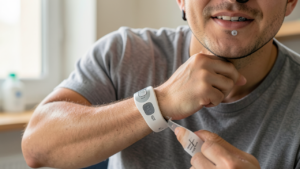
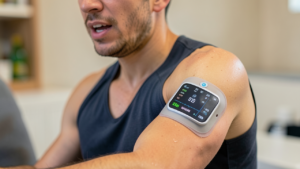
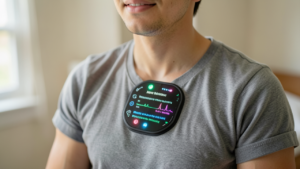
The VHIR device leverages advanced biosensor technology, employing either electrochemical or immunochromatographic principles, to detect specific malaria parasite biomarkers—such as HRP2 antigen or lactate dehydrogenase—from a minimal blood sample. Designed for portability, the compact unit integrates seamlessly with a smartphone application, delivering results in minutes through intuitive color or digital displays. It boasts sensitivity comparable to or surpassing traditional RDTs, coupled with high specificity to minimize false positives. Critical for field deployment, the system incorporates solar-chargeable batteries and utilizes reagents that do not require cold chain storage, making it robust for remote areas and regions with unreliable power grids. Rigorous clinical trials have validated its high accuracy, even in identifying early-stage malaria infections characterized by low pathogen loads.
Strategic Impact & Future Outlook
This novel diagnostic device represents a critical leap forward in bolstering global malaria control initiatives. VHIR intends to collaborate with strategic partners to scale up mass production and ensure widespread deployment in the most affected regions. Looking ahead, the underlying platform offers significant adaptability, potentially extending its diagnostic capabilities to other tropical diseases, including dengue fever and chikungunya. Moreover, the integration of artificial intelligence (AI) and Internet of Things (IoT) technologies could facilitate real-time epidemiological monitoring of outbreaks at a regional scale, empowering public health authorities with actionable data for more effective intervention strategies. Ultimately, this technology holds immense promise for narrowing global health disparities and accelerating progress toward sustainable development goals.
Get our weekly technology intelligence — free
Receive an infographic that lets you judge at a glance whether each field’s analysis report is worth reading.
Subscribe Free — Weekly Tech Intelligence
By subscribing, you’ll receive Troy-Technical’s weekly technology intelligence newsletter.
- Your email and selected fields are used only to deliver the newsletter.
- We never share your information with third parties.
- You can unsubscribe anytime via the link in each email.
See our Privacy Policy for details.
Takes about a minute · Unsubscribe anytime





Comments