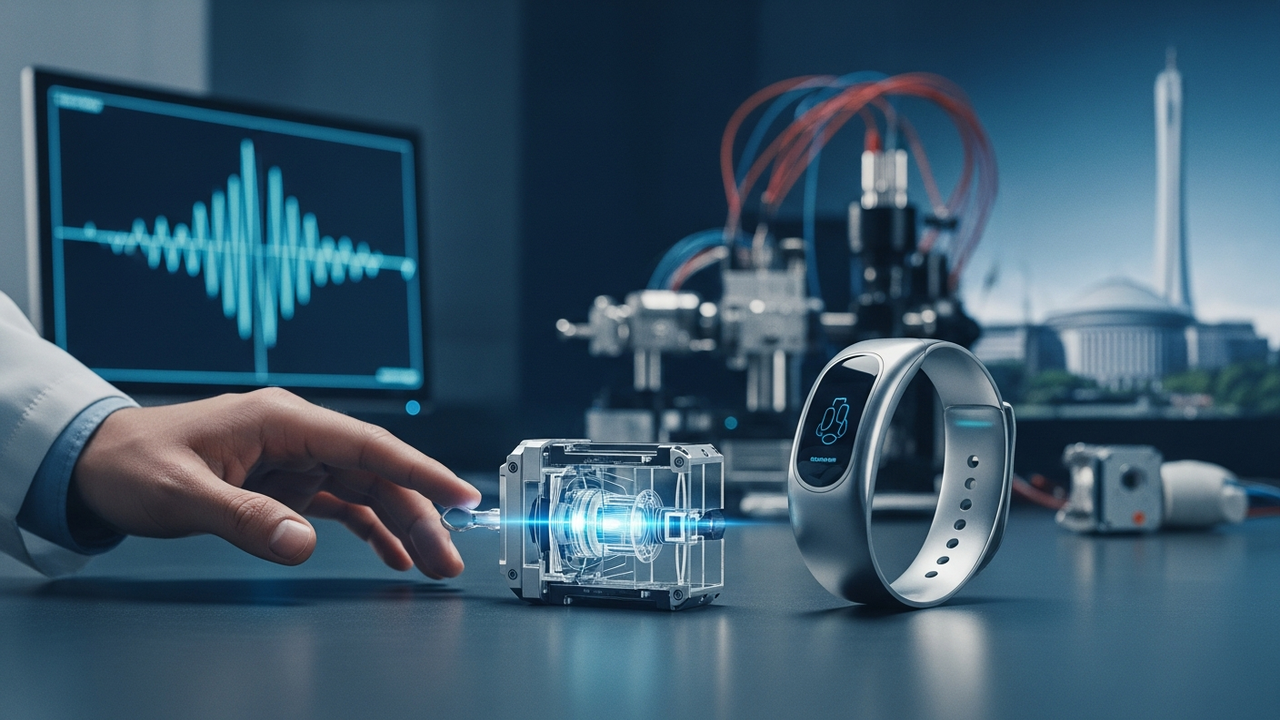
Background and Importance of Non-invasive Glucose Monitoring
Daily glucose monitoring is essential for diabetes patients, but conventional blood sampling methods impose physical and psychological burdens. To alleviate this burden and enable more patients to consistently manage their glucose levels, there is a strong global demand for non-invasive glucose monitoring technologies. The research team at Tokyo University has proposed a novel approach to meet this need.
Technical Overview of the Dielectric-loaded High Transmission Electromagnetic-wave Sensor (DES)
The Dielectric-loaded High Transmission Electromagnetic-wave Sensor (DES), presented by Bingyi Zhang, Ryo Natsuaki, and Akira Hirose from Tokyo University, is a groundbreaking technology that measures glucose levels non-invasively using electromagnetic waves. This sensor uses the properties of dielectric materials to estimate glucose concentration from changes in the frequency and phase of electromagnetic waves transmitted through skin tissue. Compared to existing non-invasive technologies, it is expected to achieve more sensitive and stable measurements, specifically aiming for high accuracy data acquisition while minimizing signal loss through high transmission and dielectric loading.
Clinical Value and Future Prospects
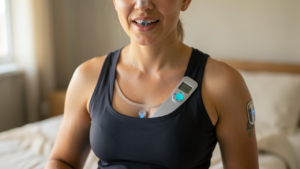
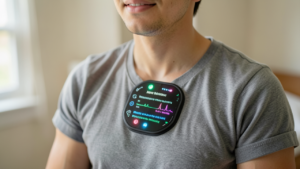
The DES technology holds significant promise for improving the daily lives of diabetes patients. Its non-invasive nature eliminates the need for painful blood draws, which will likely enhance patient adherence to monitoring and consequently lead to better glycemic control. Furthermore, this technology is being considered for application in continuous glucose monitoring (CGM), with expectations that it could form the basis of a new generation of glucose measurement devices that are calibration-free and stable for long-term use. While currently in the applied research stage, further clinical validation, miniaturization, and cost reduction are future challenges. However, its realization could profoundly transform diabetes management.



Comments