
Key Findings
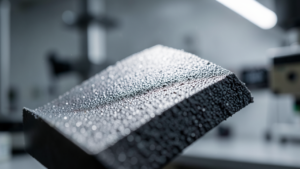
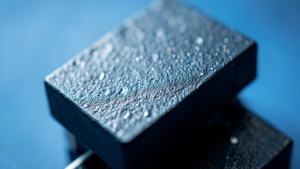
In a groundbreaking study, a ‘Refractory High-Entropy Alloy’ (RHEAD), composed of hafnium, niobium, tantalum, titanium, and zirconium, has been developed as the world’s first ‘super alloy.’ This remarkable new alloy has been confirmed to possess extraordinary strength, approximately twice that of existing steel and three times that of aluminum. It holds the potential to fundamentally transform manufacturing methods in sectors requiring operation under extreme conditions, such as aerospace and energy systems. This discovery represents a significant breakthrough in materials science, contributing to the realization of lighter and more robust structural components.
Technical / Clinical Details
The developed RHEAD is a multi-element alloy that overturns conventional alloy design paradigms. The research team precisely controlled the atomic ratios of the five constituent elements (hafnium, niobium, tantalum, titanium, and zirconium) and the processing parameters to optimize the atomic arrangement within the alloy’s microstructure. This suppressed the movement of defects and dislocations within the crystal structure, achieving both exceptionally high strength and excellent ductility. Specific mechanical tests have shown that the tensile strength of this RHEAD exceeds approximately 1500 MPa, which is roughly double that of typical high-strength steels. While its density is higher than aluminum alloys, its strength-to-density ratio surpasses many conventional superalloys. Notably, it exhibits superior stability and strength retention in high-temperature environments, demonstrating excellent mechanical performance even at temperatures up to 1200°C. This suggests immense promise for applications such as jet engine components and structural materials in high-temperature gas reactors.
Background & Context
The aerospace and energy industries constantly demand lighter, stronger, and more heat-resistant materials to improve operational efficiency and ensure safety. Traditional alloys primarily relied on adding small amounts of limited elements to enhance performance. However, high-entropy alloys like RHEAD, by mixing multiple principal elements, offer unique combinations of properties that were previously difficult to achieve with conventional materials. This contributes to reduced fuel consumption, increased payload capacity, and extended system lifespan, positioning RHEAD as a strategically important technology in these highly competitive sectors.
Strategic Significance & Outlook
The discovery of this ‘super alloy’ RHEAD opens a new paradigm in materials design. Future research will focus on improving the scalability and cost-efficiency of RHEAD manufacturing processes, and exploring the applicability of additive manufacturing techniques for producing components with complex geometries. Furthermore, optimizing element combinations and microstructure control could lead to even greater performance enhancements. In the long term, commercialization is anticipated for a wide range of high-performance applications, including aircraft engines, rocket structural components, internal components of nuclear power plants, and next-generation energy storage systems. This technology is expected to generate billions of dollars in economic value for global industries and play a critical role in solving some of humanity’s most challenging engineering problems.
Source: https://www.sciencealert.com/world-first-super-alloy-could-transform-the-way-metals-are-made
Get our weekly technology intelligence — free
Receive an infographic that lets you judge at a glance whether each field’s analysis report is worth reading.
Subscribe Free — Weekly Tech Intelligence
By subscribing, you’ll receive Troy-Technical’s weekly technology intelligence newsletter.
- Your email and selected fields are used only to deliver the newsletter.
- We never share your information with third parties.
- You can unsubscribe anytime via the link in each email.
See our Privacy Policy for details.
Takes about a minute · Unsubscribe anytime







Comments