Key Findings
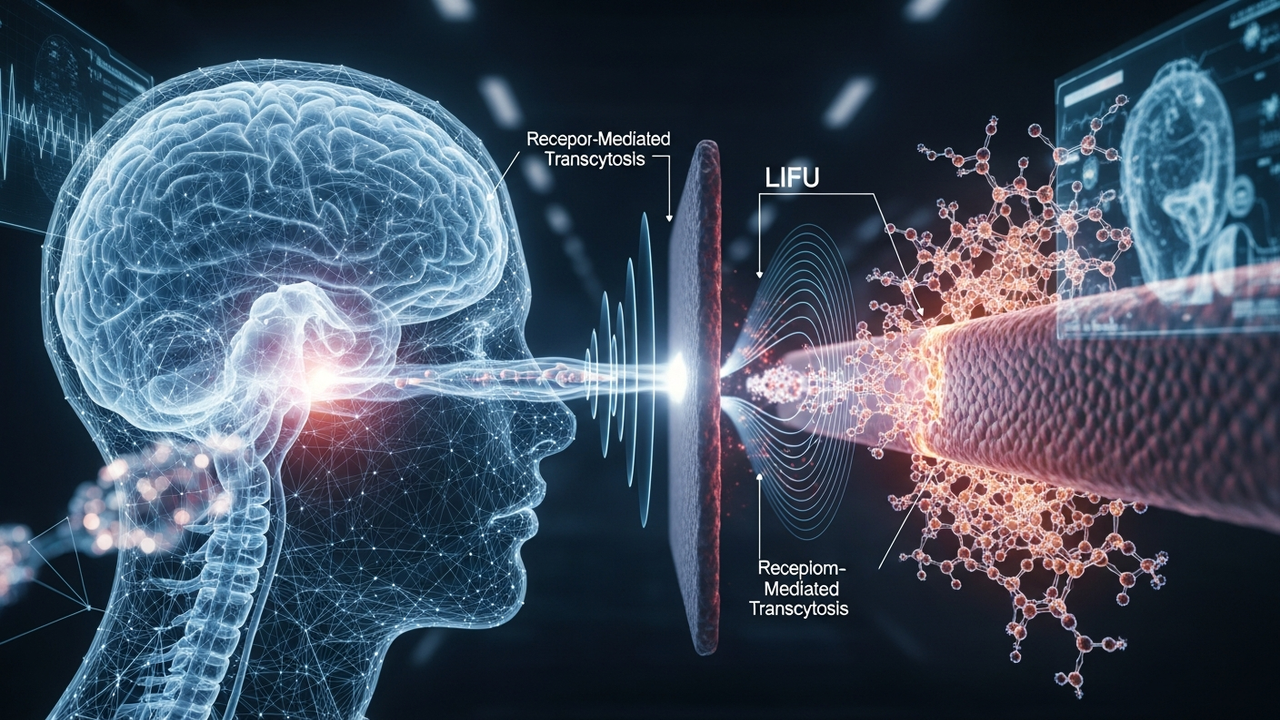
According to analysis by Alcimed, a French consulting firm specializing in life sciences, drug delivery to the brain remains one of modern medicine’s most complex challenges, primarily due to formidable barriers such as the blood-brain barrier (BBB). Nevertheless, innovative approaches, including receptor-mediated transcytosis and low-intensity focused ultrasound (LIFU), are now opening new avenues to circumvent these obstacles, enabling the delivery of larger therapeutic molecules, such as biologics, across the BBB, which promises to revolutionize neurological disease treatments.
Technical / Clinical Details
The brain is protected by the BBB, a specialized structure composed of endothelial cells tightly sealed by tight junctions, forming a highly selective barrier. This barrier prevents over 98% of small-molecule drugs and virtually all biologics from crossing from the bloodstream into the brain, thus hindering the development of therapies for numerous neurological conditions like Alzheimer’s, Parkinson’s disease, and brain tumors.
However, recent advancements are focusing on several innovative BBB penetration strategies:
- Receptor-Mediated Transcytosis (RMT): This approach utilizes specific receptors (e.g., transferrin receptors, insulin receptors) expressed on the surface of BBB endothelial cells. Therapeutic molecules or their delivery systems (e.g., nanoparticles) are engineered with ligands that bind to these receptors, inducing receptor-mediated internalization and subsequent transport across the BBB.
- Adsorption-Mediated Transcytosis (AMT): This involves leveraging the surface charge of therapeutic molecules or carriers (e.g., cationic nanoparticles) to promote their adsorption to the negatively charged surface of BBB endothelial cells, leading to non-specific cellular uptake and transport.
- Low-Intensity Focused Ultrasound (LIFU): LIFU, often combined with microbubbles, can temporarily and reversibly increase the permeability of the BBB in a localized manner. This allows large therapeutic molecules, previously unable to cross, to be delivered into specific brain regions. LIFU is a non-invasive technique with the advantage of precise spatial control over BBB opening.
- Intranasal Delivery: A non-invasive method that exploits direct pathways from the nasal cavity to the brain (via olfactory and trigeminal nerves), bypassing the BBB to deliver drugs directly to the central nervous system.
These techniques hold the potential to enable the delivery of drugs to brain diseases that were previously untreatable, thereby improving therapeutic outcomes.
Background & Context
Brain diseases are a leading cause of death and disability globally, making the development of effective treatments an urgent priority. The BBB has, for decades, represented a significant bottleneck in drug discovery for neurological disorders. Advancements in brain drug delivery technologies will profoundly impact a wide range of conditions, including neurodegenerative diseases like Alzheimer’s and Parkinson’s, brain tumors, stroke, and multiple sclerosis. Pharmaceutical and biotechnology companies are heavily investing in this research area, with high expectations for breakthrough innovations.
Strategic Significance & Outlook
The progress in brain drug delivery technologies holds the potential to revolutionize the treatment of neurological diseases. Approaches such as RMT-mediated delivery systems, LIFU, and intranasal delivery are expected to be further optimized and validated for safety and efficacy in human clinical trials. In the future, it is anticipated that these technologies will be integrated to establish personalized drug delivery strategies tailored to individual patient’s brain disease characteristics and BBB status. This will lead to dramatic improvements in treatment outcomes and quality of life for patients with brain disorders. The continuous evolution in this field is opening new frontiers for precision medicine in neurology.
Source: https://www.alcimed.com/en/insights/brain-drug-delivery/
Get our weekly technology intelligence — free
Receive an infographic that lets you judge at a glance whether each field’s analysis report is worth reading.
Subscribe Free — Weekly Tech Intelligence
By subscribing, you’ll receive Troy-Technical’s weekly technology intelligence newsletter.
- Your email and selected fields are used only to deliver the newsletter.
- We never share your information with third parties.
- You can unsubscribe anytime via the link in each email.
See our Privacy Policy for details.
Takes about a minute · Unsubscribe anytime








Comments