Key Findings
AtlasPCB has released a comprehensive guide on BGA (Ball Grid Array) underfill selection as part of its blog series offering deep insights into Printed Circuit Board (PCB) engineering. This guide provides invaluable information for engineers to select the optimal material for specific application requirements, particularly through a detailed comparative analysis of key underfill technologies such as capillary flow, molded underfills, and reworkable formulations.
Technical & Business Details
- Importance of BGA Underfills: BGA packages, while offering superior electrical performance for high-density integrated circuits, are susceptible to thermal and mechanical stresses. Underfill materials are dispensed beneath the solder joints to mitigate stresses caused by Coefficient of Thermal Expansion (CTE) mismatches and suppress solder fatigue, significantly enhancing package reliability and lifespan.
- Comparison of Key Underfill Technologies:
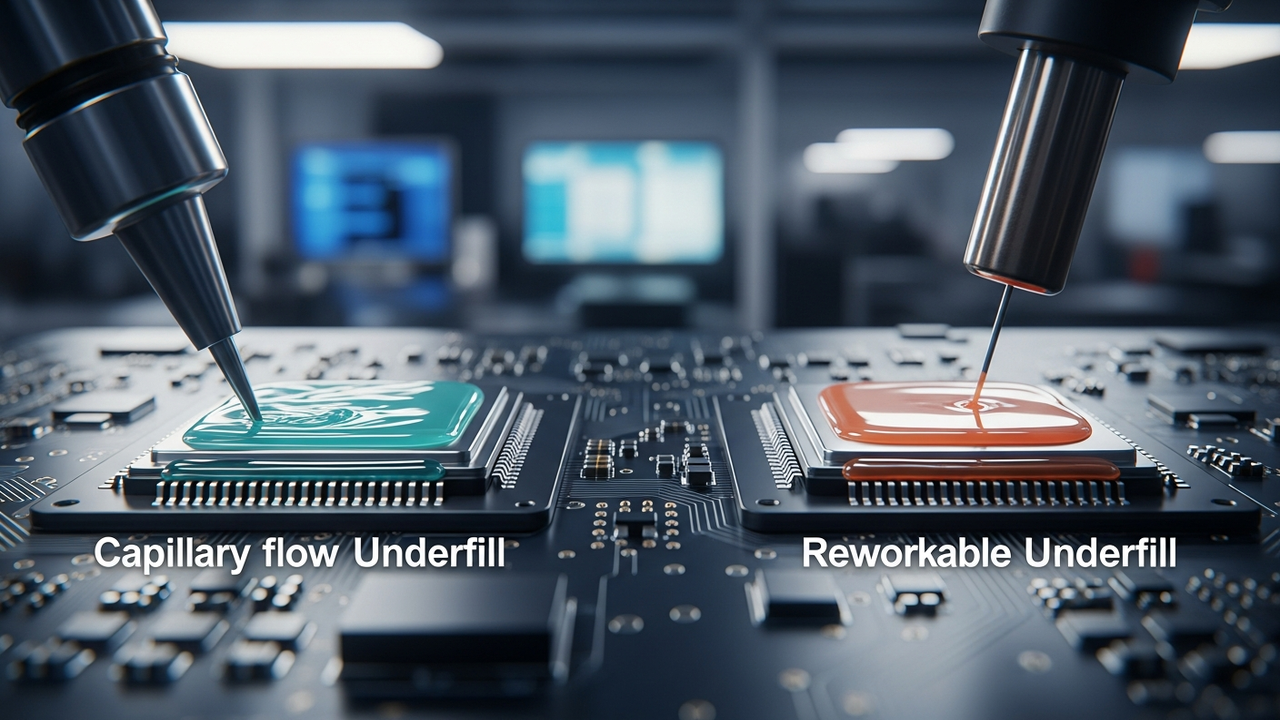
- Capillary Flow Underfill (CUF): This traditional method involves dispensing material around the perimeter of the BGA package, which then flows under the solder balls via capillary action. It provides high reliability but can have longer flow times and risks of void formation.
- Molded Underfill (MUF): In this method, the material is filled under the solder balls during the encapsulation of the entire package with molding compound. While it can reduce process steps, rework is often difficult.
- Reworkable Formulations: These underfill materials can be removed through specific temperature or chemical treatments, offering flexibility to repair defective packages and reduce costs. However, they might have lower initial adhesion strength or reliability compared to non-reworkable materials.
- Application in Automotive and Aerospace: These industries demand extremely high reliability against extreme temperature variations, vibrations, and shocks. The guide provides detailed data on process parameters, optimal CTE matching, and long-term reliability to ensure performance in such harsh environments.
Background & Industry Context
Semiconductor packaging continues to evolve, driven by constant demands for miniaturization, higher performance, and lower costs. BGA packages are a leading solution to meet these requirements, but the selection and application technology of underfill materials are crucial for achieving high reliability. Especially in self-driving vehicles and mission-critical aerospace equipment, where failures are unacceptable, the demands for underfill material quality and reliability are exceptionally high.
Strategic Significance & Outlook
Guides like those provided by AtlasPCB are indispensable resources for PCB design and manufacturing engineers to overcome complex BGA underfill challenges and develop next-generation high-performance, high-reliability electronic products. In the future, underfill materials are expected to continue evolving towards shorter cure times, even lower CTE, superior reworkability, and environmental compatibility. These technological innovations will support the overall development of the electronics industry and unlock new application areas.
Source: https://www.atlaspcb.com/blog/
Get our weekly technology intelligence — free
Receive an infographic that lets you judge at a glance whether each field’s analysis report is worth reading.
Subscribe Free — Weekly Tech Intelligence
By subscribing, you’ll receive Troy-Technical’s weekly technology intelligence newsletter.
- Your email and selected fields are used only to deliver the newsletter.
- We never share your information with third parties.
- You can unsubscribe anytime via the link in each email.
See our Privacy Policy for details.
Takes about a minute · Unsubscribe anytime









Comments